
• Home
  • Contact
  • Site Map
George Weigel - Central PA Gardening
  • Landscape 1
  • Landscape 2
  • Landscape 3
  • Landscape 4
  • Garden Drawings
  • Talks & Trips
  • Patriot-News/Pennlive Posts
  • Buy Helpful Info

Navigation

  • Storage Shed (Useful Past Columns)
  • About George
  • Sign Up for George's Free E-Column
  • Plant Profiles
  • Timely Tips
  • George’s Handy Lists
  • George's Friends
  • Photo Galleries
  • Links and Resources
  • Support George’s Efforts


George’s new “50 American Public Gardens You Really Ought to See” e-book steers you to the top gardens to add to your bucket list.

Read More | Order Now


George’s “Survivor Plant List” is a 19-page booklet detailing hundreds of the toughest and highest-performing plants.

Click Here


Has the info here been useful? Support George’s efforts by clicking below.


Looking for other ways to support George?

Click Here

George's Current Ramblings and Readlings

So What’s a Plant Know?

November 6th, 2012

   I’m fascinated by the findings in a new book from Israeli bioscientist Daniel Chamovitz that shows how plants “know” a whole lot more than we think they do.

Plants are more like us than we think.

   In “What a Plant Knows” (Scientific American, $23, www.whataplantknows.com), Chamovitz makes the case that plants lead “rich, sensual lives” and that they’re more like people than we realize.

   He says plants send signals to each other, they respond to smells, they “see” lights and colors, and they even have memories. I’ve written a column on the scientific details behind it all, if you’re interested in that.

   But Chamovitz’s observations got me to wondering… if plants are more aware than we think, what do they “think” about us and some of the crazy stuff that goes on in a typical garden?

   For a long time, I’ve suspected that plants have the ability to conspire against gardeners.

   Some of them are so stubborn (you know who I’m talking about, Mrs. Wisteria) that they just aren’t going to reward us with a bloom until they’re good and ready.

   Others are so finicky they won’t thrive until we move them for the fifth time into just the right spot.

   Have mountain laurels all agreed to sacrifice themselves in home gardens until we let them alone in the woods?

   If plants are so good at communicating like Chamovitz says, why don’t they just tell us what they want? That’d make it a lot easier on everyone. They could at least spell out their demands in the dirt, kind of like Mr. Ed used to do with his hooves.
Read More »


Yard Cleanup After Sandy

October 30th, 2012

   Didn’t we just go through all of this? First Irene, then Lee, now Sandy… not to mention the unnamed weather woes before and between.

Lots of wind, water and wet leaves.

   Here’s hoping you aren’t facing disastrous difficulties this time around and are looking only at some garden-variety yard cleanup as Sandy blows away. Indications are that this “superstorm” could’ve been a lot worse than it turned out.

   Some tips on assorted post-Sandy situations:

 Fixing Washouts

   If rushing water cut channels in bare soil, rake and tamp what you can salvage back into place. Then prevent a repeat by: 1.) rerouting or mitigating the source of the gusher; 2.) grassing or mulching bare soil, or 3.) laying stone on top of landscape fabric to create a dry stream bed that won’t wash out in the next storm.

   For newly planted shrubs and perennials that washed out, retrieve and replant them ASAP. Also check plants for soil or mulch that partially washed out, exposing roots. If you get these surrounded by soil quickly, most washouts will be fine.

   If you can’t get washed-out plants back into their permanent home yet because the soil is still soggy, at least get them in a pot or planted in higher, drier ground.

 Soggy Soil

   Some plants tolerate occasional “wet feet.” Others, such as many conifers and plants native to dry meadows, begin to root-rot after a day or two in standing water.

   Cutting a single drainage channel to release backed-up water might be helpful. But poking a lot of holes around your plants in an attempt to “air out” the soil faster probably will do more root harm.

   Stay off soggy soil so you don’t compact it and compound the problem even after the water drains.

   Make a note to watch trees that were in soggy soil. Partial root death can compromise the tree’s stability. That might not be apparent until next spring when trees re-leaf and become more at risk from blow-over related to a greater “sail effect” with a full canopy.

Leaf Mess

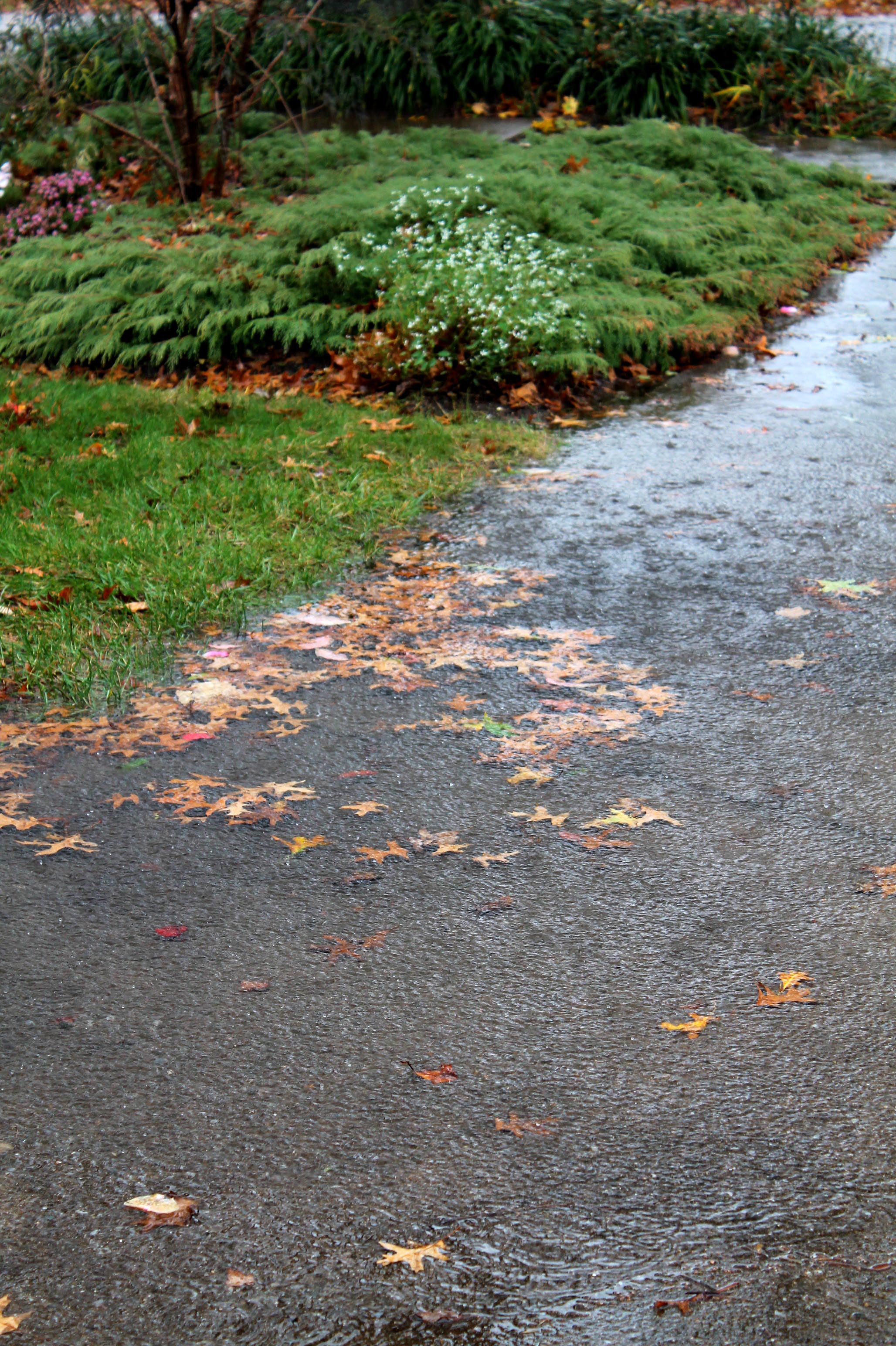
   Sandy came at a time when leaf drop was peaking. Her winds also blew off a lot more, resulting in gobs of wet leaves everywhere now. That became a problem for drivers since wet leaves on the road make for slippery conditions. Be careful of that if you’re out on the road until the leaves dry and get collected.

   Once you get outside, first clear the way to storm drains and unblock gutters and drains before another rain comes along.

   Then rake off or blow off piles and mats of leaves that are covering the lawn and groundcover beds. Thin layers can be mowed into the lawn once it dries. Two- to 3-inch layers are fine left as insulation in tree, shrub and perennial beds.

   Compost whatever leaves you don’t mow in or let behind as mulch. At least hold off raking and blowing leaves to the curb until you’ve got word that your municipality is resuming leaf collections.

Read More »


Ready for Sandy?

October 27th, 2012

We’ve got a day or so to get ready for what could be some heavy rain and wind from the approaching Hurricane Sandy.

Get leaves out of the gutters and away from storm drains.

   Here’s a 5-point to-do list for the landscape:

  • Get the leaves out of the gutters. Leaves started dropping fast this past week. Ones that slid down the roof could be clogging the gutters, which can drop water along your foundation instead of carrying it away. Be careful on those ladders!
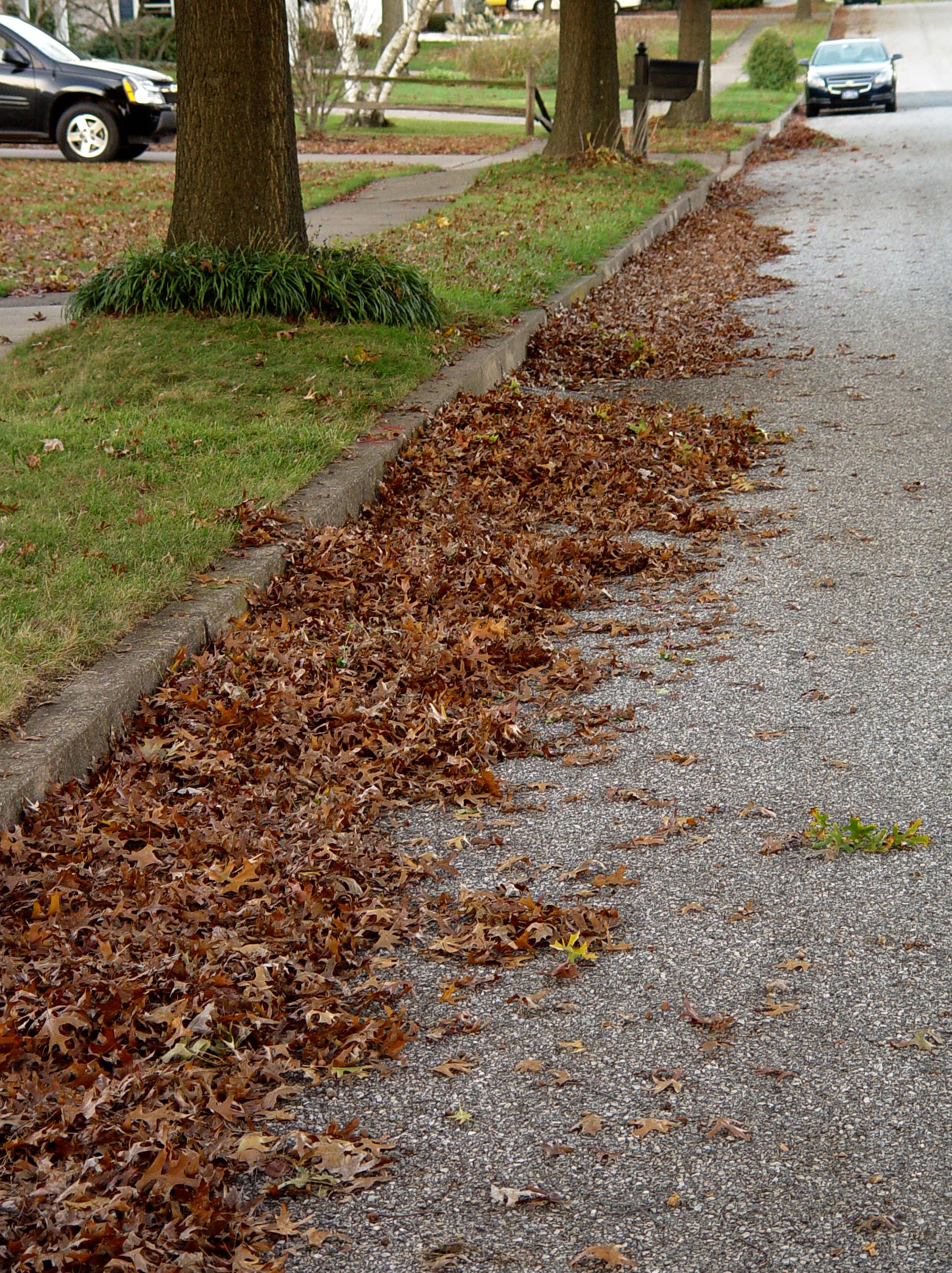
  • Unclog storm drains. All of those leaves that everyone has been raking and blowing to the curb have potential to clog storm drains, which could back up water in streets. At least clear the drains and consider  moving the leaves to a pile in the yard for now or better yet, into your compost pile. Some municipalities have suspended their leaf pickups during the storm.
  • Bring in the blow-aways. Check the yard for anything that might blow around, over or away. Either bring it in or secure it. That includes patio umbrellas, light-weight furniture, gas-grill covers, top-heavy flower pots, small ornaments, election signs and trash cans.
  • Survey your trees. It’s probably too late at this point to hire a tree company to remove any dead or overgrown trees that are threatening targets, such as power lines or your house. Don’t attempt to remove big trees yourself or to go up on a ladder with a chainsaw. It’s just too risky. Stick with small trees, stay on the ground and don’t try to prune anything that’s contacting a power line. If you see potential trouble, make a call and at least get on the ASAP list.
  • Check the rain barrels. Are your barrels securely in place and hooked up correctly? Is your overflow plan in place? Barrels will fill quickly and spill over without a way to direct overflow from the house.


Love ‘Em and Leave ‘Em

October 23rd, 2012

   One of the many perplexities of humans that I haven’t figured out yet is why we spend so much time in fall trying to get rid of every last leaf in the yard, then turn around in spring and pay for products such as fertilizer, mulch and soil amendments.

Trash or free resource?

Leaves are all of those things. They’re an excellent and free resource that drops from the sky – nothing short of a gardening gift from God.

They’re not nature’s trash, and I think it’s time we rethink our leafy habits.

I see a lot of yardeners this time of year using noise-polluting, air-polluting, gas-powered leaf blowers to move their leaves to the curb. The American Lung Association will tell you that’s a huge source of allergens – not only fine particulates but molds, toxins, bird poop, etc. stirred up from the ground.

Then we add to our blower, gas and antihistamine bill by paying even more money for our municipalities to come around in gas-eating trucks to suck up the leaves and haul them away.

When the wind blows before the truck comes, the leaves blow over the street, where they become a driving hazard in wet weather.

Then there’s leaf-caused car fires. I remember the late Camp Hill Borough Manager Andy Janssen telling me about the many fires that happen every fall when people park over curbside leaf piles and set the dry leaves on fire with their hot engines.

Even when the piles stay in place, rain leaches nutrients from the leaves and carries this brew into the storm-sewer system, where it ultimately adds to nitrogen and phosphorus excesses in the Cheasapeake Bay.

Curbside leaves are also notorious for clogging storm sewers.

On the other hand, leaves make a wonderful natural blanket to insulate our gardens over winter (i.e. free mulch).

They’re an ideal ingredient in the compost pile when mixed with year-end grass clips and frost-killed plants (i.e. free soil).

Instead of polluting water with leached nutrition, leaf nutrition is much better redirected onto our lawns and gardens (i.e. free fertilizer).

And when worked into soil, leaves are one of the best materials to break up our lousy clay and shale (i.e. free soil amendment).

Rather than blow my leaves away, I gather them or use them in place. Most years, I’ll even go out to my curb to retrieve leaves that have fallen there.

Read More »


Make Your Own Free Plants

October 16th, 2012

   Much of the Harrisburg area got at least a partial killing frost overnight last Friday, which knocked out our annuals and other tender plants for the season. That’s actually a couple of weeks earlier than the norm.

   If you weren’t ready for the season to come to an end, hopefully you either covered the tender stuff, potted it and brought it inside, or did what I’ve been doing for the last couple of weeks — taking cuttings.

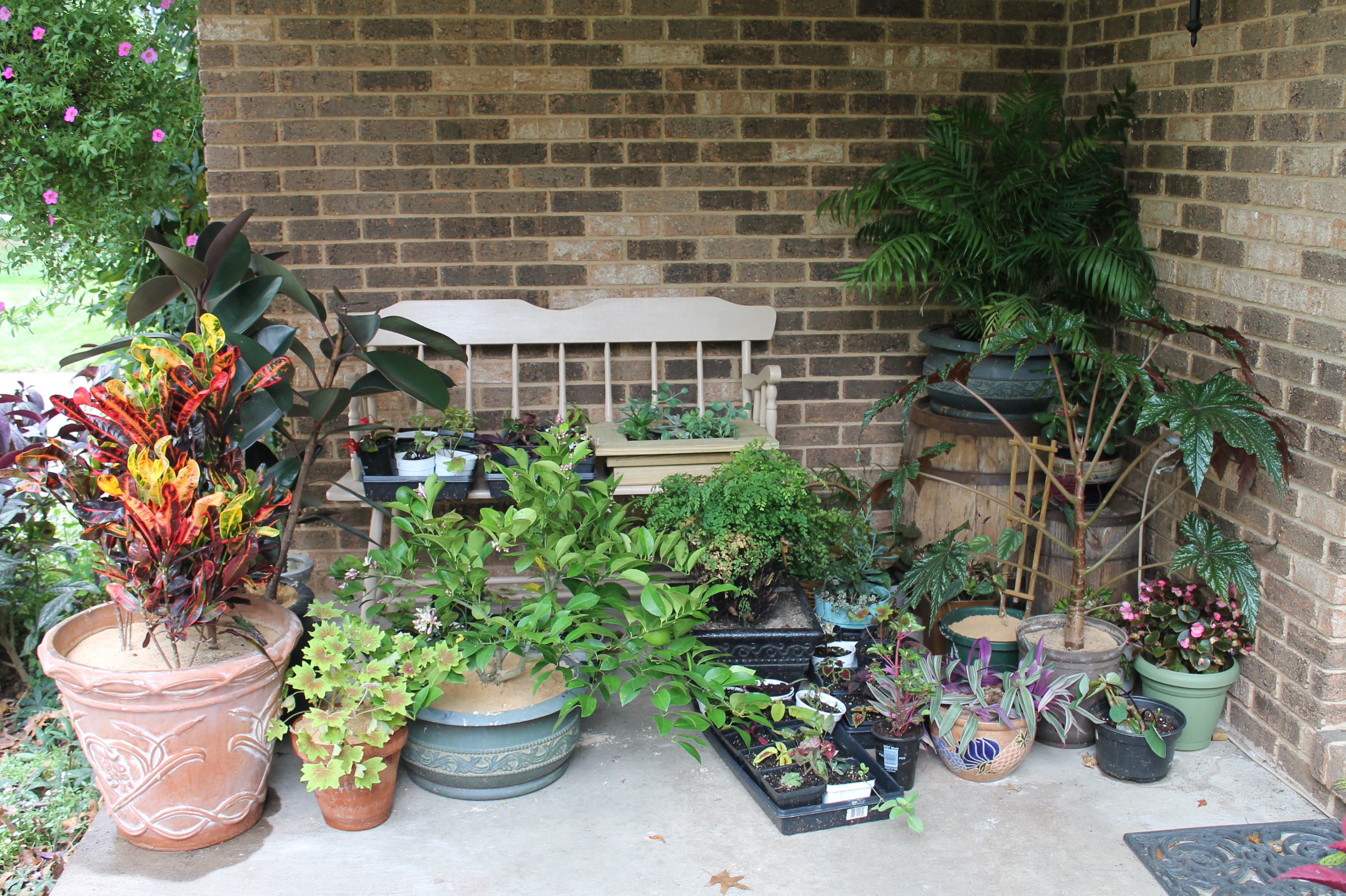
Cuttings and tender plants ready to go inside for winter.

   I think back to the peak beauty of these tender things in summer… to how they bloomed their heads off for months… and especially how I sprang for $4.99 a pot for some of them.

   I can’t bear to watch it all die off, especially when it’s possible to get “babies” going that will turn out to be my own new next generation next spring.

   Getting tip cuttings to root is easier than most people think.

   I’ve found it works for a surprising number of plants, and you don’t need a greenhouse, special lighting, rooting hormones or any other complicated stuff. And growing little cuttings inside is easier and takes up much less space than the alternative — digging up the mother plants and taking them inside before cold weather kills them.

   The process my wife and I use is pretty simple.

   Just snip approximate 6-inch tips from the ends of plants you’d like to keep. Pinch off the lower sets of leaves until you’re left with a bare-legged stick with one or two sets of small leaves at the top.

   Next, stick the cuttings into small pots filled with a good-quality, light-weight potting mix. Some people like to dip the lower parts of the cuttings into a rooting hormone such as Rootone first, but I’ve found that most plants I’ve tried root just fine without it.

Read More »


« Older Ramblings and Readlings Newer Ramblings and Readlings »

  • Home
  • Garden House-Calls
  • George's Talks & Trips
  • Disclosure

© 2026 George Weigel | Site designed and programmed by Pittsburgh Web Developer Andy Weigel using WordPress