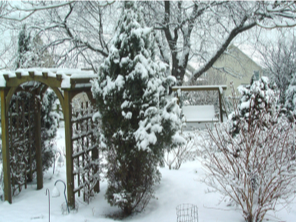


Out of the Refrigerator, Into the Oven
May 28th, 2013
We’re up, then we’re down. Then we’re back up again.
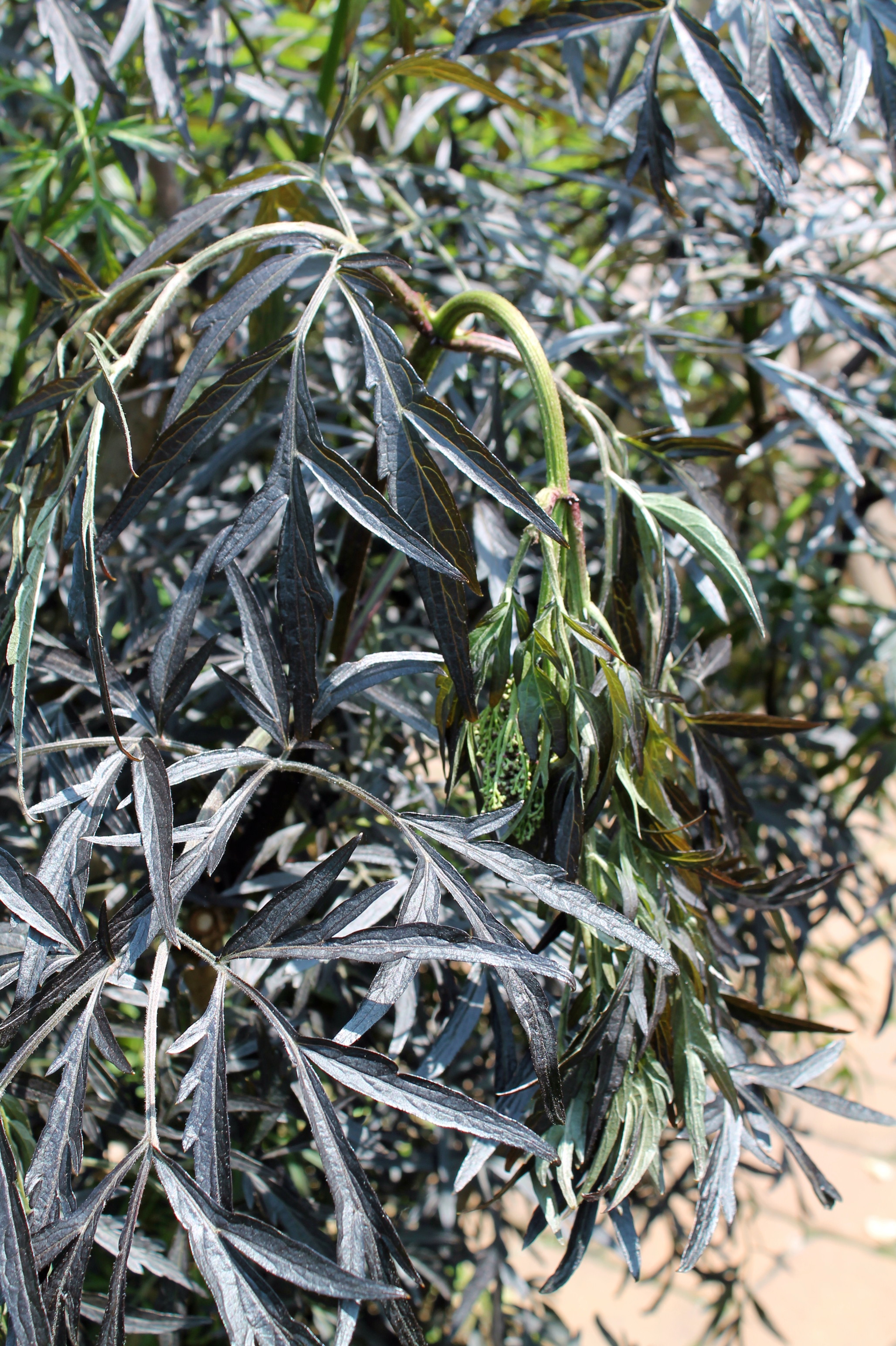
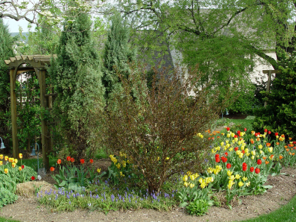
‘Black Lace’ elderberry reacts to the sudden heat and light…
This erratic but typical central-Pa. weather has us turning up the heat one day, then turning on the air-conditioning two days later.
Plants don’t react to this any better than we do (especially since they can’t run to the thermostat for help).
For one thing, this week’s 90-degree forecast should put an end to the prolonged spring blooms and perfect cool-season veggie weather we’ve enjoyed so far this spring.
My ‘Black Lace’ elderberry was the first to let me know my backyard plant family wasn’t happy with last week’s heat blast that preceded the Memorial Day weekend cool spell and windiness.
As the weather approached 90 degrees for the first time and flipped on the sun lamp, the afternoon-sun side of ‘Black Lace’ began to show wilty, flagging branch tips.
It sloughed off the adversity, but we both agreed that 70-degree days are better.
At least the cool weekend was good for making the transition from spring to summer.
I’ve been cutting back the bulb foliage to make way for this year’s annual flowers and new trial perennials.
The variety I’m most anxious to check out is brunnera ‘Sea Heart,’ a shade perennial with big, heart-shaped, silvery leaves and baby-blue, forget-me-not-like spring flowers. This one is supposed to be an improvement over one-time Perennial Plant of the Year ‘Jack Frost,’ which a lot of people have found melts out in high summer heat and humidity.
That’s exactly what happened to my ‘Jack Frost.’ It did fine for a couple of years and then just browned out two summers ago and never came back.
Brunnera ‘Sea Heart.’
‘Sea Heart’ has green veins and a thicker, more leathery leaf texture that’s supposed to help with heat tolerance.
I’m also trying a sister brunnera called ‘Silver Heart,’ which has even more pronounced silvery leaves, similar to ‘Looking Glass.’
An interesting new annual is Ball Horticultural’s ‘Fuseables Strawberry Wine’ petunia, which is a two-toned cream and rosy-pink flower that I’m trying both in a basket and in the ground.
I’ve bypassed impatiens this year (except for one sacrificial 4-pack to monitor downy mildew disease) and trying a variety of other shade annuals, including torenia, browallia, hypoestes, New Guinea impatiens and several kinds of begonias and coleus.
In the vegetable garden, I’m growing popcorn for the first time. Fellow gardener Duane Greenly of Silver Spring Twp. gave me a saved ear from his garden last year, and I just planted the kernels last week. I plan to grow pole beans up the stalks and a new trial melons from Harris Seeds underneath (the classic “Three Sisters” grouping).
Tomatoes, potatoes, a cabbage and three hot peppers are planted in three straw bales in a test I’m doing of that system.
I’ve mulched half of my beds and hope to get to the rest once I get done with the bulb-clearing and pruning of the spring flowering shrubs (‘Mellow Yellow’ spirea, ‘Ken Janeck’ rhododendrons, dwarf lilacs, deutzia, etc.)
And I’ve also been yanking a fair amount of young weeds that I try to have out of the way before putting down that fresh coat of mulch.
If the heat is here to stay this time, I’ll soon find myself doing more watering than anything else.
Check your soil moisture (index fingers are an ideal tool) because it’s a little drier than you might guess. Despite a lot of coolness and cloudiness up to now, we really haven’t had all that much rain to go with it.
The calendar might still say May, but I think we just screeched around the corner to summer…



My black elderberry looks good except that the blossoms are drying up and falling off. No bees seem to be visiting it. Could be lack of rain also. It’s partly beneath a Norway Maple. This is its 3rd year here.
Hi Penny,
You should be getting at least some fruit by the third year if all’s going well.
Some varieties just don’t fruit very well no matter what, and most others set fruit best when they’re cross-pollinated by a second elderberry of a different variety.
Lack of bees is an increasing problem that’s causing poorer fruit set on a lot of shrubs. If there are bees around, you should’ve seen plenty of them working the flowers while the blooms were open. Flowers that aren’t pollinated will drop off, which sounds like what you’re now seeing.
Root competition and shade from the maple can stunt growth of the whole elderberry. If that were the main problem, I think you’d see poor flowering and fruiting… not good flowering and little to no fruiting. Watering in dry weather will help the plant even if this isn’t the cause of the lacking fruit.
I’d say try doing everything you can to encourage bees (i.e. avoid pesticide use and plant a variety of bee-attracting plants with varying bloom times) and maybe add a second black elderberry of a different variety.
George