

Maryland, Virginia, D.C.
These are gardens I’ve been to in Maryland, Virginia and Washington, D.C., and believe are worth a visit. I’d highly advise double-checking on hours before visiting since not all are open every day or year round.
BROOKSIDE GARDENS
Location: 1800 Glenallen Ave., Wheaton, Md.
Overview: This is a Montgomery County park disguised as a botanic garden. The grounds are open for free – daily from dawn to dusk – and the place features 50 acres worth of display gardens.
Highlights: Start at the visitor center (gift shop inside) and spend hours walking through the woodland path, the Fragrance Garden, the annual-flower trial beds, a formal water garden, a perennial garden, a rose garden and more. There’s also a butterfly house in summer (small fee for that) and a spectacular “Garden of Lights” Christmas light show (bigger fee) that’s second only to Longwood’s.
George’s Take: Another of my favorite public gardens and hard to believe it’s really a park owned and operated by Montgomery County. I like the Gude Garden best with its Japanese tea house on a small island jutting out into Brookside’s lake. Excellent plant collection, too – all labeled.
Contact info: http://www.montgomeryparks.org/brookside. 301-962-1400.
COLONIAL WILLIAMSBURG
Location: Center of Williamsburg, Va., about an hour southeast of Richmond
Overview: Plant-lovers and history buffs come together in this living-history re-creation of the Colonial capital of Virginia, set about 1760. Colonial-era gardens are all over 90 acres of this fascinating place.
Highlights: See what a Colonial farm was like at the Great Hopes Plantation. See several kitchen gardens and boxwood and flower gardens of the “middling sort” behind a variety of homes. Then check out the formal garden that the governor had behind the palace. Guided garden tours are offered regularly.
George’s Take: One of my favorite places on Earth. I can spend hours alone in the Colonial Nursery on Duke of Gloucester Street ogling the heirloom veggies and the techniques that Colonial gardeners used to grow them. You’ll need a ticket to get into the buildings, but there’s no charge to walk the restored-area grounds. I never get tired of Williamsburg.
Contact info: http://www.colonialwilliamsburg.com. 800-447-8679.
DUMBARTON OAKS
Location: 1703 32nd St. NW in Washington’s Georgetown section
Overview: Dumbarton is the estate of one-time U.S. diplomat Robert Woods Bliss and his wife, Mildred. Famous landscape architect Beatrix Farrand was hired to design what was then the 53-acre grounds, beginning in the 1920s.
Highlights: The house and its art collection and the 27-acre grounds are open for tours but at limited hours (check before you go). The site is divided into terraced rooms, which makes for some interesting exploring and views. Most of the gardens are formal in style, i.e. a Pebble Garden, a Rose Garden and a boxwood walk.
George’s Take: You’ll like this one a lot if you lean more toward formal plantings and geometric design. If you’re more into plants than design, then less so. I like the overlooks and vistas best here.
Contact info: http://www.doaks.org. 202-339-6401
GREEN SPRING GARDEN PARK
Location: 4603 Green Spring Road, Alexandria, Va.
Overview: Green Spring Garden Park is 27 acres located in the bustling Alexandria suburbs, but you would never know it once you walk through its gates. This is more like an oversized back-yard garden that shows off the practical side of gardening. Owned and operated as a county park, Green Spring for a long time was farm land that provided the “back-drop” for the highly fertilized soil.
Highlights: There’s a lot going on at this outdoor classroom. The grounds have some 20 different demonstration gardens (rock garden, vegetable garden, native-plant woods, drought-garden), a greenhouse where you can buy plants and an auditorium and gift shop. Paved paths make it a nice place to just stroll and sit.
George’s Take: I wish our county parks were like this! It’s hard to tell whether this is a park landscaped with theme gardens or a botanic garden that doubles as a county park. It’s free, too.
Contact info: http://www.fairfaxcounty.gov/PARKS/gsgp. 703-642-5173.
Formal parterre garden outside Hillwood mansion.
HILLWOOD ESTATE, MUSEUM AND GARDENS
Location: 4115 Linnean Avenue NW, Washington, D.C.
Overview: This 13-acre estate overlooking Rock Creek Park was the home of Marjorie Merriweather Post, heir to the Postum Cereal Co., which later became General Foods. After her death in 1973 at Hillwood, she donated the estate to become an education museum and public garden.
Highlights: Start with a tour of the grand mansion, which is filled with art, collectibles and even a movie theater. The gardens were designed as a series of outdoor rooms, including a formal French parterre garden (Mrs. Post’s favorite), a crescent-shaped lawn that gives a spectacular view of the Washington Monument, a multi-level Japanese garden, a putting green, cutting gardens, a greenhouse and even a pet cemetery.
George’s Take: I like the Japanese garden best here. It’s on a hillside and involves navigating steps and slopes, but it’s a beautiful setting with water everywhere. Spring is especially nice.
Contact info: www.HillwoodMuseum.org. 202-686-5807.
LADEW TOPIARY GARDEN
Location: 3535 Jarrettsville Pike, Monkton, Md.
Overview: 22 acres of eclectic gardens and a 1747 Manor house that was home to the free-spirited artist, traveler and fox-hunter Harvey S. Ladew in the mid-1900s.
Highlights: The uber-wow attraction is the elaborate and plentiful topiary evergreens, which the Garden Club of America once labeled “the most outstanding topiary garden in America.” The signature scene is topiary hounds chasing topiary foxes while topiary riders on topiary horses follow. But Ladew has 15 garden rooms that really are worthy attractions in their own right, such as a hillside iris and perennial garden, a rose garden, a Victorian garden and a cutting garden.
George’s Take: You’ll be stunned at the size and complexity of the topiaries, but don’t let them overshadow the rest of the gardens. This place is way more than sculpted yews. I especially like the Yellow Garden of all yellow, golden and limey-white plants.
Contact info: www.ladewgardens.com. 410-557-9570.
LEWIS GINTER BOTANICAL GARDEN
Location: 1800 Lakeside Ave., Richmond, Va., off I-95 near I-64 and I-295.
Overview: 50 acres of gardens on land once owned by Patrick Henry. Maj. Lewis Ginter, who made his fortune in cigarettes, bought the property in 1884, and his niece, Grace Arents, built a convalescent home for kids there and added gardens. She willed it to the city of Richmond for use as a botanical garden. Gardens didn’t actually start developing until 1984, so this is a fairly young, still-getting-better public garden.
Highlights: Best visitor center anywhere – a spacious Colonial mansion-style brick building with a café, large gift shop and meeting room. More than a dozen theme gardens (Healing Garden, Rose Garden, Sunken Garden, Asian Valley, etc.) along with beautiful conservatory patterned after Longwood, a butterfly house, a tea house and Children’s Garden with lots of water and a big treehouse.
George’s Take: Unsung and not nearly as regarded as it should be, probably because of its young age. Much to see here, and it’s very well groomed. Excellent plant variety. One of my top 10. See a Photo Gallery of Ginter pictures I took a few years ago.
Contact info: www.lewisginter.org. 804-262-9887.
Vegetables in the Upper Gardens at Mount Vernon.
MOUNT VERNON
Location: 3200 Mount Vernon Memorial Highway, Mount Vernon, Va.
Overview: Mount Vernon, the home of George Washington, is considered the most popular historic estate in America. The Colonial mansion sits on 8,000 acres along the Potomac River and includes 50 acres of fruit, flower and vegetable gardens, a greenhouse and many outbuildings. There’s also a museum, shops and dining at the entrance of the property.
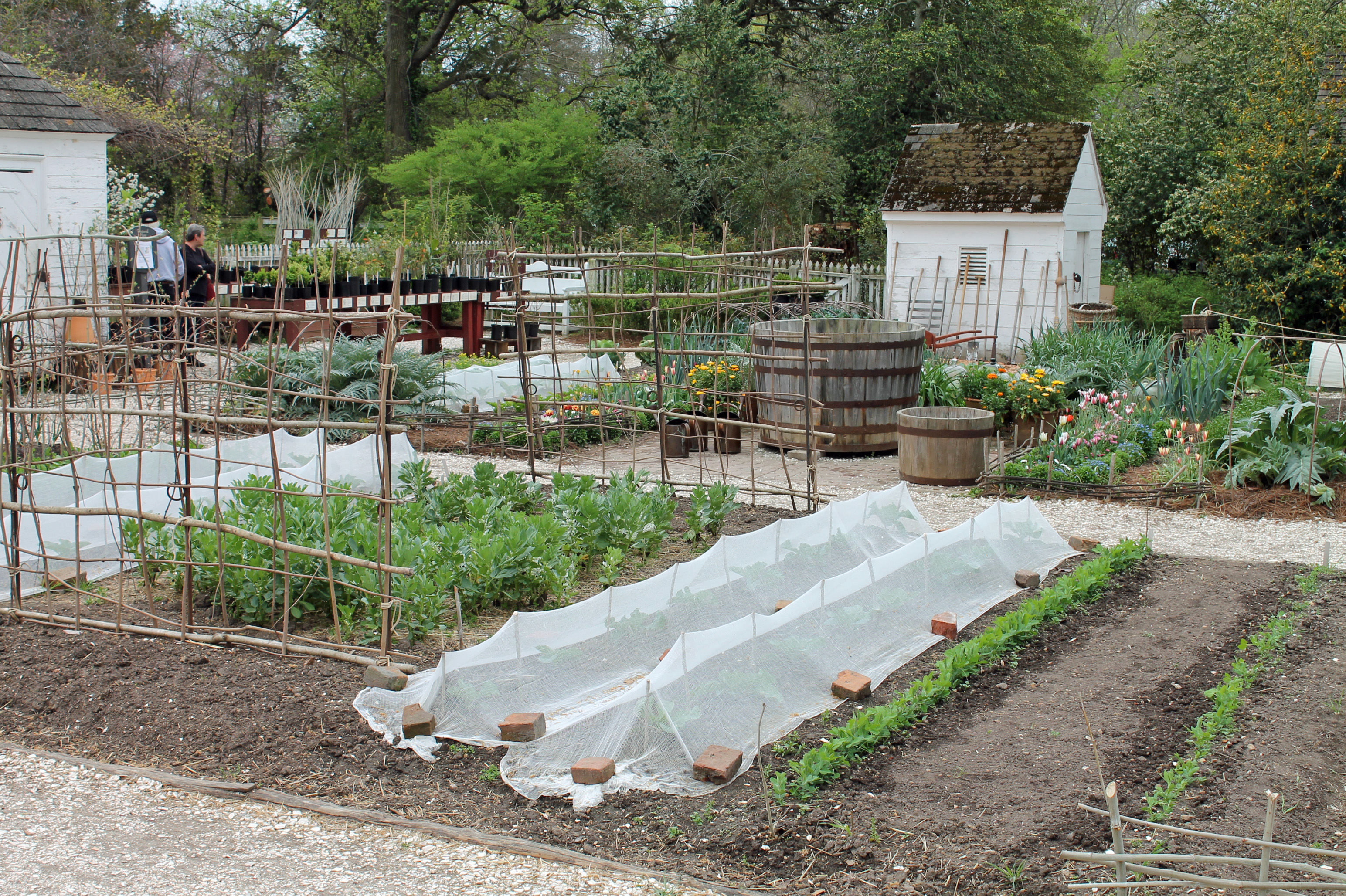
Highlights: The lawn on the opposite side of the mansion has breathtaking views of the Potomac. Trek down a winding path to see GW’s 16-sided barn and a 4-acre pioneer farmer site, where there are hands-on demonstrations. George and Martha are both buried on the grounds. Especially worth seeing are the restored Colonial-era vegetable and flower gardens.
George’s Take: You’ll get lost in time here. I’m particularly fascinated by gardening in the past. This place and Colonial Williamsburg and Thomas Jefferson’s Monticello make up the Big 3 Garden-History Holy Grail.
Contact info: www.mountvernon.org. 703-780-2000.
Norfolk Botanical Garden’s Japanese Garden.
NORFOLK BOTANICAL GARDEN
Location: 6700 Azalea Garden Road, Norfolk, Va.
Overview: 155 acres with a nice variety of settings, including wooded walks, formal beds, native plantings and several overlooks. Built in 1930s as a WPA project by Norfolk.
Highlights: One of the biggest and best rose gardens I’ve seen, a large and action-packed “World of Wonders” children’s garden, Japanese garden, flowering-tree collection, conifer collection, forest of camellias, butterfly house, cut-flower garden, nice perennial garden, boat ride and more.
George’s Take: Lots to see. It’s a big place with many gardens and good plant variety. It’s almost into the same impressive league as the world-class botanical gardens in New York, Missouri and Chicago.
Contact info: www.norfolkbotanicalgarden.org. 757-441-5830.
The Enid Haupt Garden behind the Smithsonian Castle.
SMITHSONIAN GARDENS
Location: National Mall, Washington, D.C.
Overview: Everyone knows the Smithsonian museums, but not all are aware of how many impressive gardens are tucked between and behind many of the buildings. All are free and have their own themes – usually related to the museum nearby.
Highlights: Eight main gardens. Examples: a butterfly garden next to the Natural History Museum, a “Victory Garden” of edibles at the American History Museum, a lake surrounded by native plantings next to the American Indian Museum, and formal gardens behind the Smithsonian Castle. You’ll also find a sculpture garden, a rose garden, a mixed collection of cutting-edge shrubs, annuals and perennials in the Ripley Garden and flower pots and hanging baskets galore.
George’s Take: You could spend a day on the mall just looking at these under-appreciated gardens – plus the U.S. Botanic Garden and grounds at the Capitol end of the mall.
Contact info: www.si.edu. 202-633-1000.
U.S. BOTANIC GARDEN
Location: National Mall, Washington, D.C.
Overview: First established by Congress in 1820, the U.S. Botanic Garden has been in its current location at the foot of the U.S. Capitol since 1933. The recently renovated glass and aluminum conservatory is a D.C. landmark, filled with tropicals and specimens from all over the world. The National Garden right outside features native plantings of the region, a large rose garden, a butterfly garden and a formal pond. The USBG staff also maintains Bartholdi Park across the street – a beautifully landscaped city block well worth strolling through.
Highlights: The conservatory has more than 5,000 orchid varieties and is home to settings ranging from rainforests to deserts with plants native to each. It’s lush, impressive and welcomingly warm in winter. Check out the 30-foot-tall fountain in Bartholdi Park that was sculpted by Frederic Auguste Bartholdi at the same time he was working on the Statue of Liberty (an obvious over-achiever there). Admission is free.
George’s Take: Along the lines of Longwood’s conservatory, you’ll see plant after plant you’ve never even heard of. It’s especially nice decorated for Christmas in December. You’ll forget you’re in the heart of D.C. strolling through the regional-plant outdoor gardens… and take the time to cross the street behind the conservatory to check out Bartholdi Park and its fountain.
Contact info: www.usbg.gov. 202-225-8333.
U.S. NATIONAL ARBORETUM
Location: Northeast Washington at 24th and R streets, off Bladensburg Road
Overview: Sprawling 446 acres that can be driven through, with pull-off points near highlighted gardens and plant collections. It’s America’s official and only federally funded arboretum. The National Arboretum is free, but check open days and hours due to budget cutbacks.
Highlights: Most famous is the National Bonsai and Penjing Museum with its iconic collection of bonsai plants and Japanese gardens. The arboretum also has collections of hollies, azaleas, boxwoods, magnolias and dogwoods as well as one of the country’s best conifer collections and a grove of official state trees from across the United States. Also has sizeable herb and perennial gardens and a new section dedicated to lawns and lawn care.
George’s Take: Beautiful scenery, and it’s especially nice in spring when the trees are blooming. My top three specific sights here are: 1.) the bonsai collection, 2.) the conifers, and 3.) the herb garden, which is actually a collection of many herb gardens.
Contact info: http://www.usna.usda.gov. 202-245-2726.


Comments
No comments