

Rethinking the Way We Plant, Part 1
April 2nd, 2013
You’d think we all would agree by now on the right way to plant a tree or shrub.
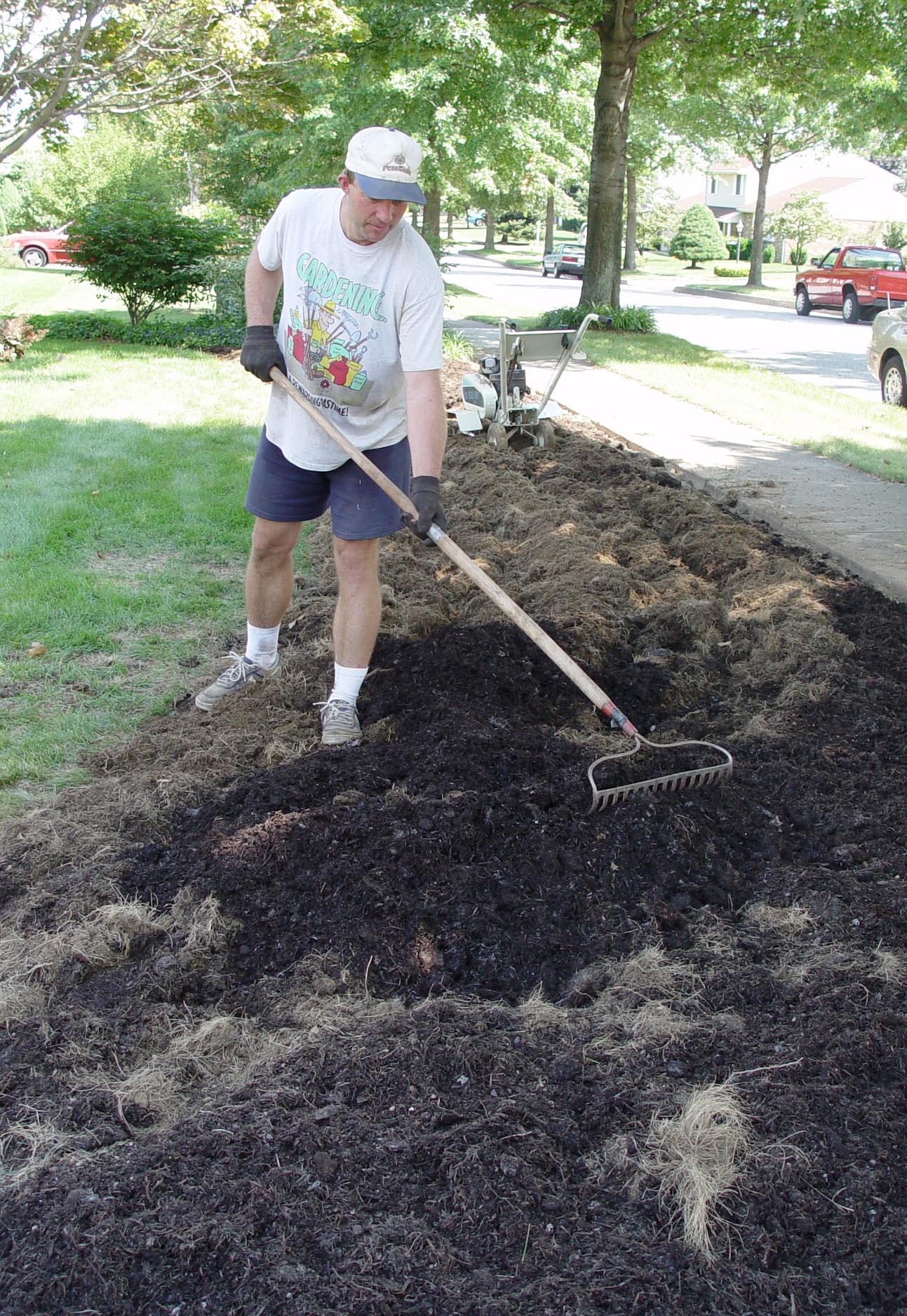
It’s better to prepare whole beds for planting than individual holes.
But the details keep changing, and even different pros dispatch different advice.
No wonder casual gardeners are confused.
The latest new twist I’m hearing is that it’s a good idea to wash all of the soil away from the root ball of a new plant and to plant it bare-root into the native soil. The advice applies mainly to container-grown plants but also to ones field-dug and sold in burlapped balls.
The rationale is that the soil removal encourages the roots to penetrate into their new home faster. It solves the issue of circling roots from too much time in pots as well as removing the “temptation” of roots sticking around in the potted good stuff instead of venturing out into your lousy clay.
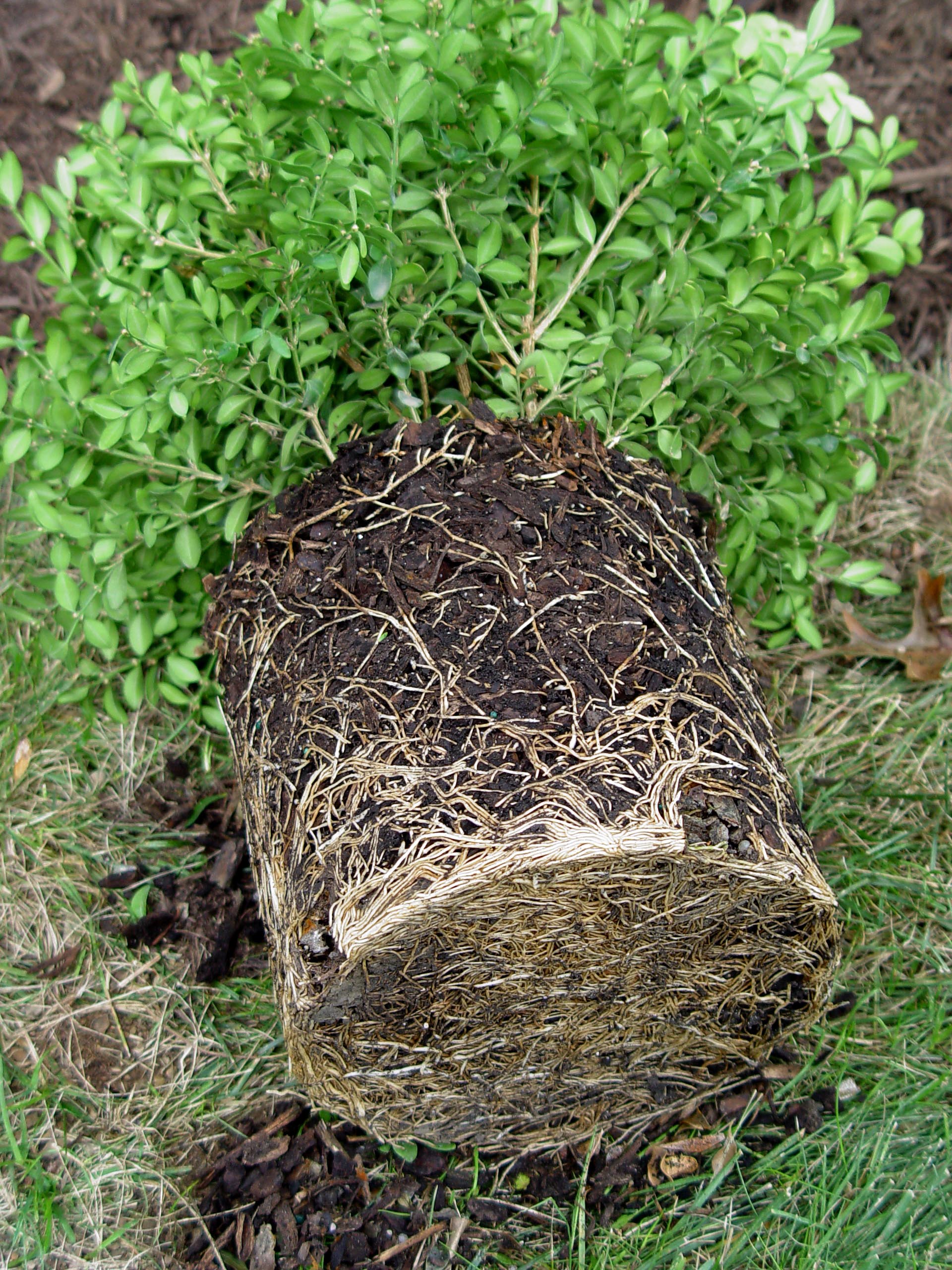
Washing off the container soil corrects circling-root problems.
I can buy that – if you’re careful not to damage the roots and you get those bared roots into the ground ASAP before they have a chance to dry. Washing the soil off in a wheelbarrow or gently hosing it off the roots is the way to go.
This same rationale has been behind the advice of not improving the soil with compost, peat moss or other amendments before planting. That can create a so-called “interface” problem.
In other words, make your hole too inviting and the roots never want to move out into the real-world soil – the horticultural equivalent of a pampered teen.
The other potential problem with over-improving planting holes is that you risk rotting the plant. When it rains, water percolates well through the improved soil but then can’t drain out into the neighboring, unimproved, compacted soil. The water backs up like a pot without holes.
Those two issues are why you’ll probably run into tree-planting instructions saying to just loosen the soil and not add anything.
I could agree with this one, too, if most of us were starting out with something close to soil.
Unfortunately, most of the yards I see are heavily graded subdivisions that are little more than packed subsoil with 4 to 6 inches of lousy clay and/or shale on top.
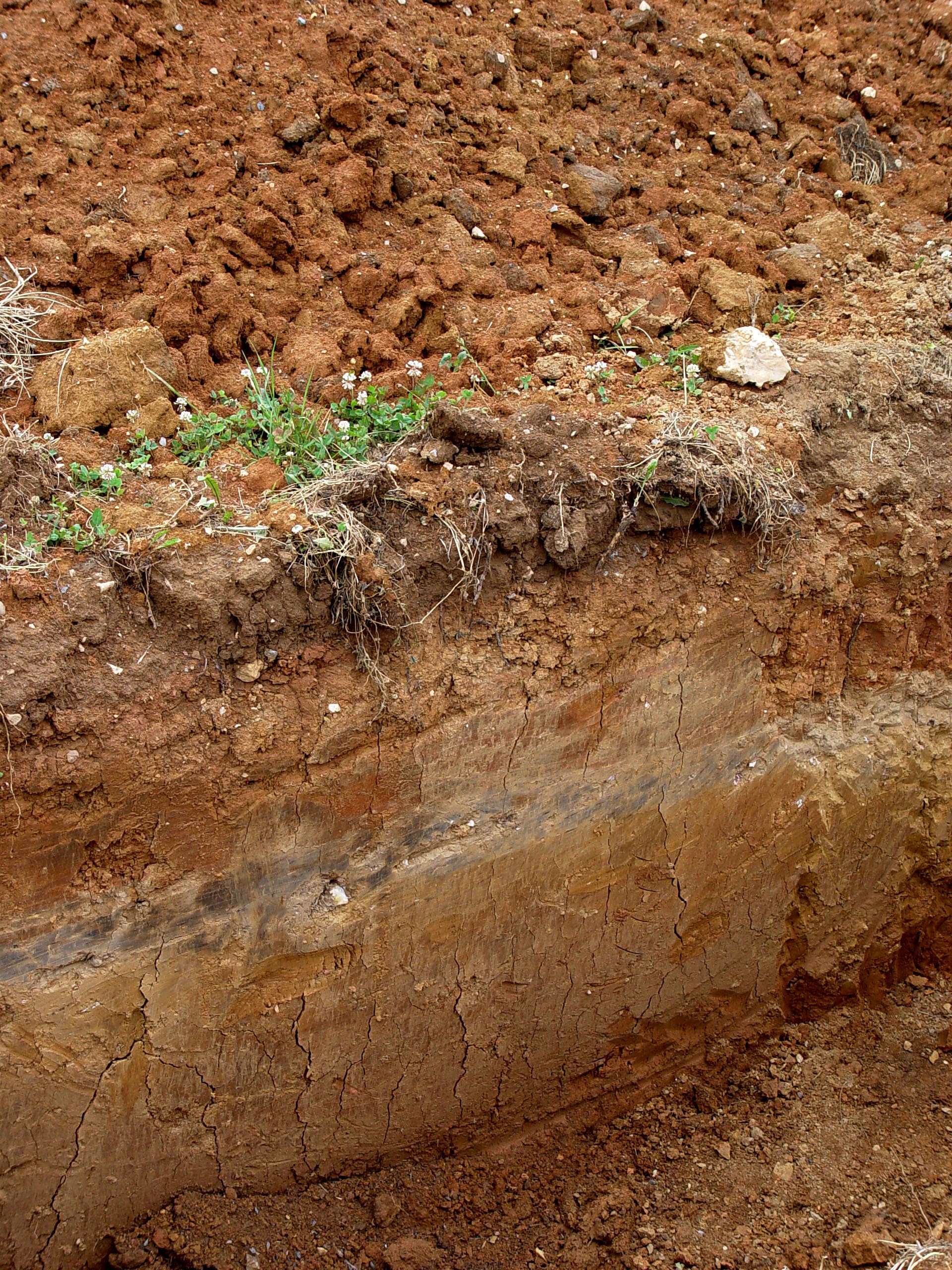
Check out the distinct layering of topsoil applied over compacted subsoil.
These are layered death traps. The structure of the soil already has been altered and all but destroyed. Accordingly, I see much higher plant death rates in cases where people just dig holes and plant. I think a better solution is to plant in beds as opposed to holes.
The idea is to improve larger areas so that instead of having isolated holes that can waterlog, you’ll have loosened, restored and improved gardens in which the roots can go out in all directions.
In my own yard, I loosen my clay, shale and subsoil to a depth of about 10 or 12 inches and then work about 2 inches of compost, mushroom soil and/or rotted leaves into that. I go over it several times to make sure everything is mixed well.
The result is a loose, raised planting bed with consistent soil texture throughout. I’ve had very little plant mortality, excellent root growth and healthy plants by using that game plan for the last 30 years, so I’m a little reluctant to tell people they really don’t need to improve their soil.
I top my beds with 2 to 3 inches of bark mulch or wood chips, then just add new mulch as the old mulch breaks down. I don’t keep tilling or digging after the initial soil preparation. That’s a once-and-done deal aimed at restoring some of the destruction from the home-building process.
If you can’t do a whole bed or if you’re just planting a single tree, at least dig a wide hole. Don’t go any deeper than the root ball (settling might cause the plant to end up too deep), but loosen the soil at least two to three times as wide as the root ball.
I’d also lighten up on the improvement volume to no more than 10 percent of organic matter in this kind of setting (i.e. 1 inch of compost per 10-inch depth of soil).
Next week I’ll fill you in on a few more planting tidbits that might surprise you.



Okay, washing soil off of the rootball - I can try that. But, your picture shows a very rootbound plant. Are you saying that if I wash the soil off, it will be easier to “tease” those bound roots so they are heading outward, and not continuing to encircle? I have always cut into a rootball that looks like that. Do I still continue to cut into the roots? It’s confusing once again because you do say . . “be careful not to damage the roots.”
Trish,
Washing off the soil will free the roots of pot-bound plants without having to cut vertical slits. At the very least, it’ll make it easier to untangle tangled roots with your fingers. Either way, it’s better to free and keep healthy roots than to damage them. The bottom line is that circling roots are bad, so if you can’t/don’t get them free to head out into the surrounding soil, that’s more of a threat to plant health than cutting them free. Washing and teasing is a better option than cutting, though.
George
Good morning, what’s that old saying if it ain’t broke…I have been planting shrubs & perennials for a “few” years now. always loosening those potbound plants, digging a nice size hole, amending the crappy soil with peat & some good garden soil & things have been growing beautifully. I have found that when i got a little lazy in doing this things would still grow but a little more slowly & seem to not tolerate the heat so well. Shrubs always get a shot of a root stimulator too. they love it. Actually I think they love it too much because some of the shrubs need a little more trimming because they want to get too big:) Got to have some humor when you are gardening & that is why I love reading your columns. Your info is always useful but I think its great that you know that sometimes no matter what you do the plants & weather are going to win. One of these days I have to get to one of your seminars, if I can ever get out of the flower beds. Thanks for doing what you do! Wendy
Thanks Wendy. I’ve had the same experience with improving the soil… when I make it nice, things thrive. When I just loosen the so-called “native” soil and plant, growth is stunted. That’s why I think the advice against improving the soil should specify that only applies when you actually are starting with something close to soil. The stuff I see most everywhere around homes is compacted subsoil lurking a few inches below crappy clay/shale that was piled up and spread back on top just after the construction is finished.
And you’re right about gardening and humor. If you can’t have a nice day in the garden, where can you?
George
Thinking longer range for the soil conditions, we should be doing everything we can to increase microbial activity and earthworms. The worms will help do the work of aerating the soil (via tunnels that facilitate root paths beyond the planting hole).
It’s a super bonus that they enriching the soil through vermicompost they leave behind at all different levels in the soil. Provide them with a food source (compost) and they will be there.
Steve