



Best New Fruits and Vegetables of 2017
January 10th, 2017
More interesting new edible plants are ready to hit the market in 2017.
Some are showing up already in seed form in catalogs, while others will debut in plant form this spring in local garden centers.
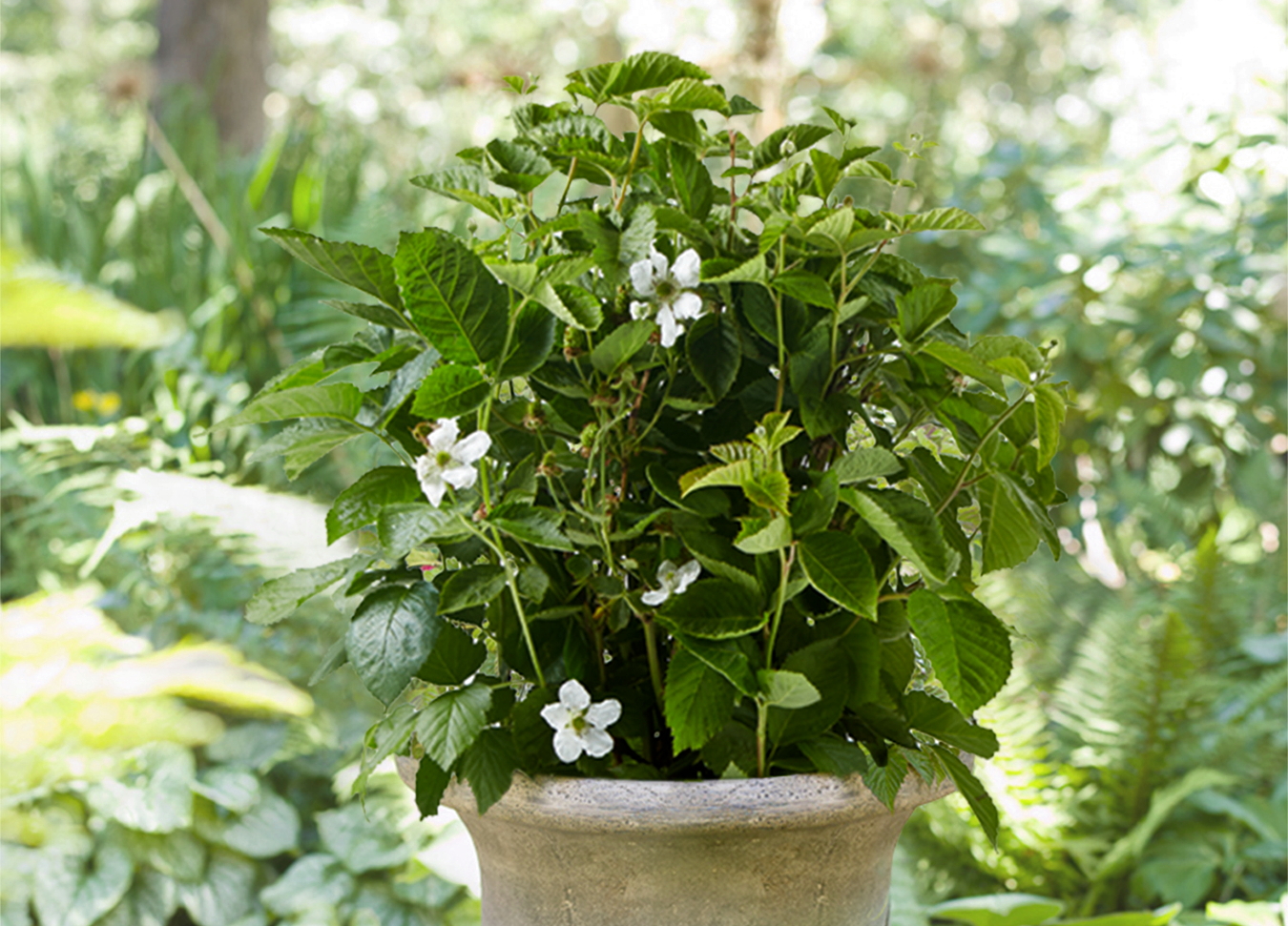
Blackberry Baby Cakes
Credit: Star Roses and Plants
Here are some of this year’s best new fruits and vegetables for your planting consideration…
Read Best New Annual Flowers of 2017
Read Best New Perennial Flowers of 2017
Read Best New Trees and Shrubs of 2017
Dwarf blackberry Bushel and Berry Baby Cakes
The latest introduction in a newly popular line of compact bush fruits for home gardeners is this dwarf and thornless blackberry.
Formerly known as BrazelBerries, the brand was bought last spring by Chester County-based Star Roses and Plants and rebranded as Bushel and Berry plants.
Baby Cakes grows only 3 to 4 feet tall and wide – much more compact than a typical wide-rambling blackberry. Like other Bushel and Berry fruits, it’s compact enough for growing in a pot.
Plants produce full-sized blackberries in mid-summer, and in most years, a second lighter crop in mid-fall. (Best in full sun.)
Strawberry Rutgers Scarlet
Chris Wallen, a grower at the wholesale Quality Greenhouses near Dillsburg, thinks this new June-bearing strawberry, bred by Rutgers University, could be “possibly the best-tasting strawberry of large size and fruit quality ever bred.”
“This variety does not keep or ship well,” he adds, “so you won’t find it in the supermarket. It’s a strawberry meant for home gardens and small local farms.”
Wallen says that besides the exceptional flavor, Rutgers Scarlet has been bred to thrive in Eastern soils and climate.
Asparagus ‘Walker Deluxe’
A challenge of asparagus-growing is that female plants don’t yield well and produce berry-laden stems that both sprawl and throw off seeds that turn into unharvestable babies.
This new mostly-male hybrid from New Jersey-based Walker Brothers, one of the nation’s biggest asparagus-crown producers, is being touted as the likely No. 1 home-garden asparagus variety of the future.
“It’s to out-perform ‘Jersey Giant’ and ‘Jersey Supreme,’” says Dave Krause, a plant buyer for Stauffers of Kissel Hill Home and Garden stores, which plans to carry limited supplies of the crowns in spring. “It has 98 percent male plants that produce a medium spear with a tight head. Get them early. They’ll go fast.”
Take 2 Tomato Combo
This is more of a new marketing idea than new plants, but the gist of it is growing two different tomatoes in a single pot.
Ball Horticultural Co. is pairing a compact slicing tomato with a compact cherry tomato and calling them “Take 2 Tomato Combos.” You’ll find three choices under the Burpee Home Gardens brand in garden centers and home centers in spring (plants only, not seeds).
“Lights” pairs the ‘BushSteak’ and ‘Patio Choice Yellow’ varieties, “Camera” pairs ‘Homeslice’ with ‘Sweetheart of the Patio,’ and “Action” pairs ‘BushSteak’ with ‘Baby Boomer.’
They’re mainly intended for growing in 14-inch or larger containers, where they’ll need lots of fertilizer and water to support two plants in a one pot. (Best in full sun.)
Tomato ‘Cloudy Day’
Bucks County’s W. Atlee Burpee Co. is always on the lookout for a new and better tomato, and for 2017, its most interesting newcomer is ‘Cloudy Day,’ an indeterminate, saladette type geared for growing in cool, short-season regions.
This 5-ounce red-fruiter ripens in 70 days, making it a good choice for gardeners who can’t wait for the season’s first ripe tomato.
‘Cloudy Day’ also is resistant to both early and late blight, and it produces on compact plants topping out around 4 feet (suitable for container-growing). Despite the name, it performs best in full sun.
Okra ‘Candle Fire’
You’ll find two differences in this new okra, which scored well enough in national trials that it won a 2017 All-America Selections award. One is that the pods are round, not ribbed. The other is that the color is a brighter red than the more typical burgundy.
‘Candle Fire’s’ 4-foot-tall plants also have red stems, making it an ornamental edible even if you’re not a fan of the “slimy” texture of okra.
The productivity of ‘Candle Fire’ also was rated excellent. Fruits start ripening about 60 days after direct-seeding in the garden. (Best in full sun.)
Fennel ‘Antares’
Looking for something a little different? Try this edible bulb that looks a bit like celery, except with a swollen bulbous base and ferny fronds at the top of the stems.
‘Antares’ is the first fennel to win an All-America Selections award, scoring well in national trials for both taste and looks.
AAS judges also noted that fennel is a favorite food of pollinators, especially swallowtail caterpillars.
Plants grow up to 2 feet tall and have a licorice/anise flavor. (Best in full sun.)
Watermelon ‘Mini Love’
Here’s a new super-sweet and small, red-fleshed watermelon that produces fruits on compact vines of 3 to 4 feet.
‘Mini Love’ averages six fruits per plant of about 8 pounds each. Its taste and crack-resistant rind added up to earn it a 2017 All-America Selections award based on nationwide testing.
Fruits are ready about 80 after planting the seed. (Best in full sun.)
Pepper ‘Mad Hatter’
A fourth All-America Selections edible winner for 2017 is this red pepper with an odd shape – a fat, flattened disc with four protruding wings or legs.
‘Mad Hatter’ is a South American variety with a sweet flavor described as “citrusy floral” with an occasional very mild touch of heat near the seed cavity.
Fruits ripen red about 3 months after plants are transplanted. Plants grow about 3 feet tall and do best in full sun.
Tomato ‘Patio Choice Yellow’
And a fifth All-America Selections edible winner for 2017 is this golden-fruited cherry tomato with a heavy production on compact plants.
Bred mainly for use as a container or basket plant, ‘Patio Choice Yellow’ is a bushy grower to about 18 inches tall.
Fruits ripen about 45 days after transplants are in the ground, and plants produce an average of more than 100 fruits each. (Best in full sun.)
Climbing nasturtium ‘Phoenix’
This edible, vining flower isn’t entirely new (it’s a 19th-century heirloom), but it is making a comeback as a new Renee’s Garden Seed variety at Highland Gardens in Lower Allen Twp. this year.
Manager Erica Shaffer calls ‘Phoenix’ a “super-cool look for nasturtiums” with its flame-like petals and mix of bloom colors. But it’s also a tasty edible.
“Add flowers to salads or as garnish,” says Shaffer. “They taste like radishes. The flower buds can be pickled for a caper-like treat.
Seeds can be planted directly into the ground in May, and they’ll climb up supports to 4 to 6 feet in full sun or part shade.
Cucumber ‘Katrina’
Grocery stores have started selling packs of tender-skinned little cucumbers – down-sized versions of the long, bitter-free English cukes that often go for $2 or more.
Maine-based Johnny’s Selected Seeds is introducing a similar type called ‘Katrina’ that you can grow from seed in your home garden.
Plants start yielding harvest-sized fruits 50 days from direct-seeding, and they’re disease-resistant, too. Ideal picking size is at 5 to 6 inches long. (Best in full sun.)



What is the best Basil plant that does not go to seed so quickly? Burpee had introduced one a couple of years ago an then stopped selling it - It was the best Basil that I had grown.
Kathy,
I don’t know first-hand if any are slower than others to not flower, but I’ve always had good luck with All-America Selections winners of basil. There are several, including some small-leafed ones and purple-leafed ones. ‘Fresca’ is a good one I grew last year and liked. It won a 2015 AAS award.
Here’s a link to an AAS page that lists basils that have won awards over the years: http://all-americaselections.org/search-results/keyword/basil/search-in/product/cat-in/all/search-other/product