

• Home
  • Contact
  • Site Map
George Weigel - Central PA Gardening
  • Landscape 1
  • Landscape 2
  • Landscape 3
  • Landscape 4
  • Garden Drawings
  • Talks & Trips
  • Patriot-News/Pennlive Posts
  • Buy Helpful Info

Navigation

  • Storage Shed (Useful Past Columns)
  • About George
  • Sign Up for George's Free E-Column
  • Plant Profiles
  • Timely Tips
  • George’s Handy Lists
  • George's Friends
  • Photo Galleries
  • Links and Resources
  • Support George’s Efforts


George’s new “50 American Public Gardens You Really Ought to See” e-book steers you to the top gardens to add to your bucket list.

Read More | Order Now


George’s “Survivor Plant List” is a 19-page booklet detailing hundreds of the toughest and highest-performing plants.

Click Here


Has the info here been useful? Support George’s efforts by clicking below.


Looking for other ways to support George?

Click Here

George's Current Ramblings and Readlings

Containers for IN the Garden

May 23rd, 2017

Container plants aren't just for use on decks and patios. They add colorful focal points within gardens as well.

Container plants aren’t just for use on decks and patios. They add colorful focal points within gardens as well.

Flower pots, you might assume, were invented so that people without in-ground space could grow plants.

While that’s the main idea, there’s no rule that says decks, porches and patios are the only places you can use pots.

Plants in containers make good sense in many other spots around the yard – including in garden beds.

The most practical purpose is for instantly filling spots where plants have met an early-season demise.

Sometimes that’s a natural occurrence, as in the case of spring bulbs going dormant in May or spring “ephemerals” such as Virginia bluebells or bleeding hearts dying back in early summer.

Other times bare spots pop up after a surprise visit from voles or groundhogs, a root-rot death from a spring soggy spell, or a June heat wave that knocked out those pretty blue annual lobelias that you thought were going to last all season.

Planted pots can go right on top of the ground to give immediate new life to the nakedness… no waiting around for replacement plants to pop up or fill in.

A bonus is that when your pot annuals peter out in the fall, you can refill the pot with fall-interest plants (mums, kale, ornamental cabbage and such) to keep the show going into Thanksgiving.

Another ideal use for in-garden pots is under and around trees where the tree roots are making it difficult to grow other plants.

Read More »


10 Good Pot Centerpiece Plants to Try

May 16th, 2017

Elephant ears Black Coral makes an impressive pot centerpiece.

Elephant ears ‘Black Coral’ makes an impressive pot centerpiece.

Lots of good plants are available these days to serve as the centerpiece plant or “star” of a big container.

Some people call them the “thriller” in the classic thriller/filler/spiller design of a pot arrangement.

If you’re looking for ideas, here are 10 showy choices that I like:

* Elephant ears (Colocasia esculenta). This tropical with the huge, ear-shaped leaves is particularly striking in black. Two very good ones: ‘Black Magic’ and Royal Hawaiian® ‘Black Coral.’ Those go with any neighboring color.

* Hibiscus (Hibiscus acetosella). ‘Panama Red’ and ‘Panama Bronze’ are two particularly nice forms of annual hibiscus that have dark, cut leaves. They don’t bloom much (if at all), but with 2-foot foliage like this, who needs it?

* Dwarf panicle hydrangea Bobo®, Little Lime® or Little Quick Fire® (Hydrangea paniculata). Lots of flowering shrubs – especially compact ones – work well in pots, but these sun-tolerant, long-blooming hydrangeas are especially striking. Cone-shaped white-to-pink flowers happen from July on.

Read More »


How Our Fore-Gardeners Gardened

May 9th, 2017

Lancaster County’s Landis Valley Village and Farm Museum is one of those attractions we tend to overlook because it’s so close to our own back yard.

Landis Valley's four-square vegetable garden.

Landis Valley’s four-square vegetable garden.

A lot of locals have never seen it, and many more have been there once – maybe on a fifth-grade elementary-school field trip.

But this bucolic 100 acres off the Oregon Pike is a fascinating living-history museum, kind of like the Colonial Williamsburg of Pennsylvania German settlers.

It has authentic and recreated buildings from the 1800s and early 1900s, demonstrations of what our region’s early settlers did from day to day, and thousands of farm and household items from that time period.

For gardeners, Landis Valley’s fields, gardens and plants give a hands-on look at how our “fore-gardeners” gardened – especially when it comes to feeding themselves in the days before Giant, Weis, Karns and Wegman’s.

Much of our central-Pennsylvania collective personality even today has inklings that trace to the Pennsylvania Germans, also known as the “Pennsylvania Dutch” because English settlers butchered the pronunciation of “Deutsch” (German for German).

The first Germans made their way to Philadelphia in 1683 and soon were swarming by the shipload because of the promise of religious freedom and the superb farmland and countryside that reminded them of Germany.

By 1700, many of them were moving into the “western wilderness” of Lancaster County, which had even better farm soil than the Philadelphia area.

One interesting guide these early settlers used to gauge good soil… walnut trees. When they saw a healthy stand of native walnuts, they knew the base was limestone and therefore a good place to till and plant.

These people were clever and hard-working, although they at first kept to themselves and purposely hung on to their language and culture. About 90 percent of them (at least originally) were farmers.

Read More »


Dogwood Comeback?

May 2nd, 2017

Is it just me, or did the dogwoods look better this spring than they have in a long time?

A pink dogwood, probably 'Cherokee Chief,' blooming in April.

A pink dogwood, probably ‘Cherokee Chief,’ blooming in April.

Our native American dogwood (Cornus florida) can be as showy as any tree when it blooms in white, pink or rose in April. This year’s show was particularly stunning – especially the dark-pink ones that I suspect are mostly ‘Cherokee Chief.’

The wacky late-winter/early-spring weather didn’t seem to faze dogwoods at all. In fact, the performance got me wondering if maybe the American dogwood is heroically overcoming the numerous attacks it’s faced in the last 20 to 30 years.

The biggest challenge has been a disease called anthracnose that causes purple splotches on the leaves and leads to branch dieback.

Borers also sometimes tunnel into dogwood trunks, causing bark to flake, branches to die, and whole trees to fail.

Lately, dogwoods usually suffer from powdery mildew later in the season, causing a white-gray cast on the leaves that then browns the leaves, putting a damper on this tree’s otherwise glowing maroon fall foliage.

For sure, I still see a lot of dead, dying and thinning dogwoods. Once the heat of summer shows up, the drawbacks become more apparent.

But covered in those half-dollar-sized, four-petaled, cross-shaped April blooms, dogwoods make it easy to overlook the troubles under the hood.

Read More »


Temperature Guessing

April 25th, 2017

Some plants like it hot. Some like it cold. But no plant is happy in heat or cold that goes beyond what its genetics will tolerate.

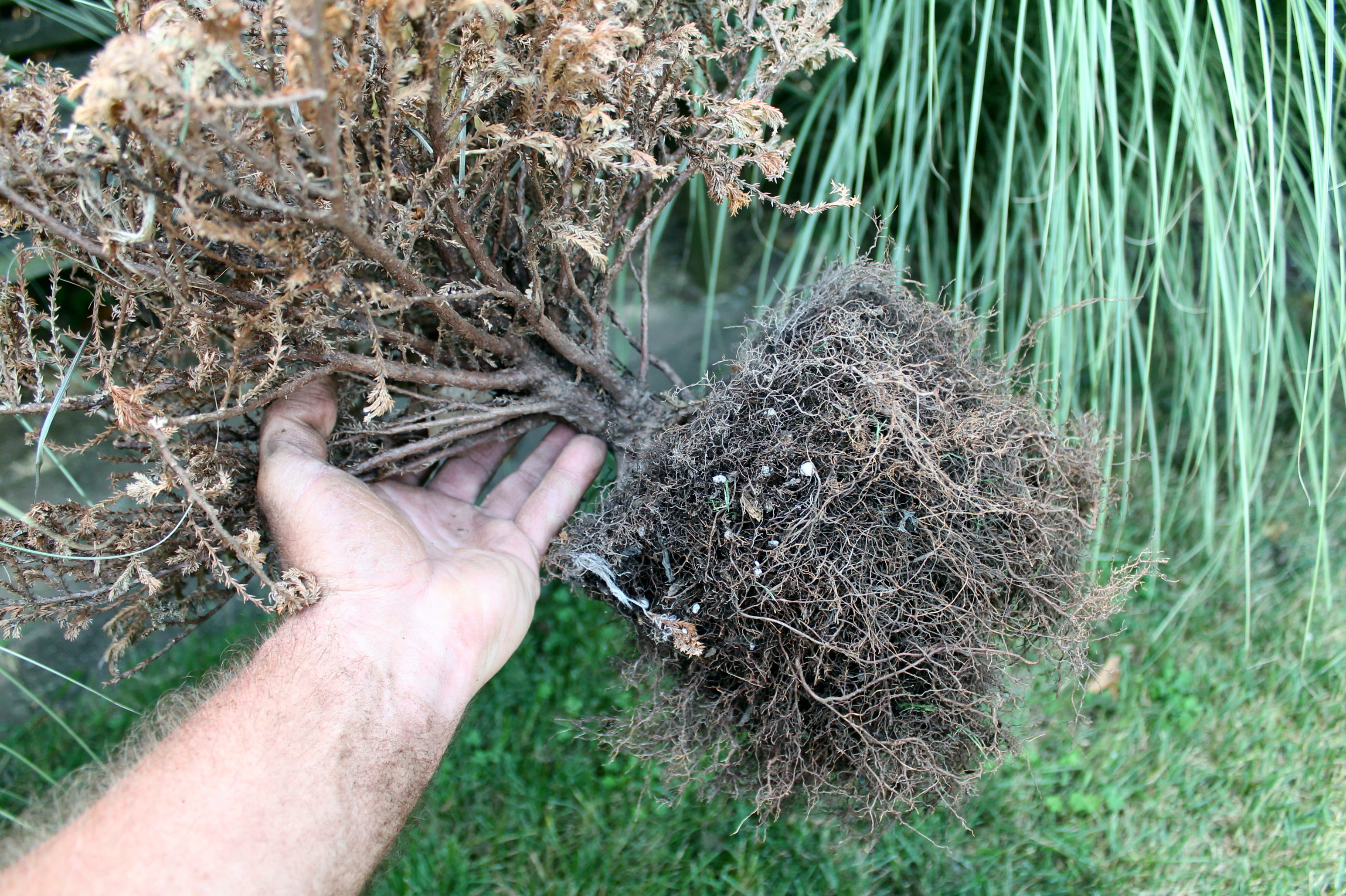
This is what Leyland cypresses look like after a Zone 5 winter hits a Zone 6 landscape.

This is what Leyland cypresses look like after a Zone 5 winter hits a Zone 6 landscape.

It’s why Pennsylvania gardeners can’t grow crotons or orange trees outside – and why Floridians can’t do lady’s mantle or Norway spruce.

Knowing a plant’s temperature tolerance is one of the most important parts of deciding what to plant where.

Guess wrong on the cold end, and the results are obvious. You end up with dead or badly damaged plants at the end of winter or on the morning after that surprise frost.

Misfiring on the hot end is more subtle. Plants may not react as suddenly and harshly, but they’ll suffer from setbacks such as stunted growth, poor leaf color, flower shutdowns, and in the case of some vegetables, bitter flavor.

So how do you know if a plant is suited temperature-wise to our yards?

One guide is what’s being offered at local garden centers and nurseries. Local garden-center buyers generally do the homework for you and, from experience, filter out plants our weather is likely to kill.

Dead plants create unhappy customers, so if you’re a garden center, it makes sense to carry likely winners and sort them into sections such as “Nursery” and “Perennials” (hardy) vs. “Annuals” and “Houseplants” (will croak outside in winter).

But what if you’re not convinced? What if you buy out-of-town? Or what about that alluring shrub that caught your eye online?

Read More »


« Older Ramblings and Readlings Newer Ramblings and Readlings »

  • Home
  • Garden House-Calls
  • George's Talks & Trips
  • Disclosure

© 2026 George Weigel | Site designed and programmed by Pittsburgh Web Developer Andy Weigel using WordPress