
• Home
  • Contact
  • Site Map
George Weigel - Central PA Gardening
  • Landscape 1
  • Landscape 2
  • Landscape 3
  • Landscape 4
  • Garden Drawings
  • Talks & Trips
  • Patriot-News/Pennlive Posts
  • Buy Helpful Info

Navigation

  • Storage Shed (Useful Past Columns)
  • About George
  • Sign Up for George's Free E-Column
  • Plant Profiles
  • Timely Tips
  • George’s Handy Lists
  • George's Friends
  • Photo Galleries
  • Links and Resources
  • Support George’s Efforts


George’s new “50 American Public Gardens You Really Ought to See” e-book steers you to the top gardens to add to your bucket list.

Read More | Order Now


George’s “Survivor Plant List” is a 19-page booklet detailing hundreds of the toughest and highest-performing plants.

Click Here


Has the info here been useful? Support George’s efforts by clicking below.


Looking for other ways to support George?

Click Here

George's Current Ramblings and Readlings

More Superb Home-Grown Gardens

June 27th, 2017

   One of the highlights of June is that it’s a peak month for garden tours.
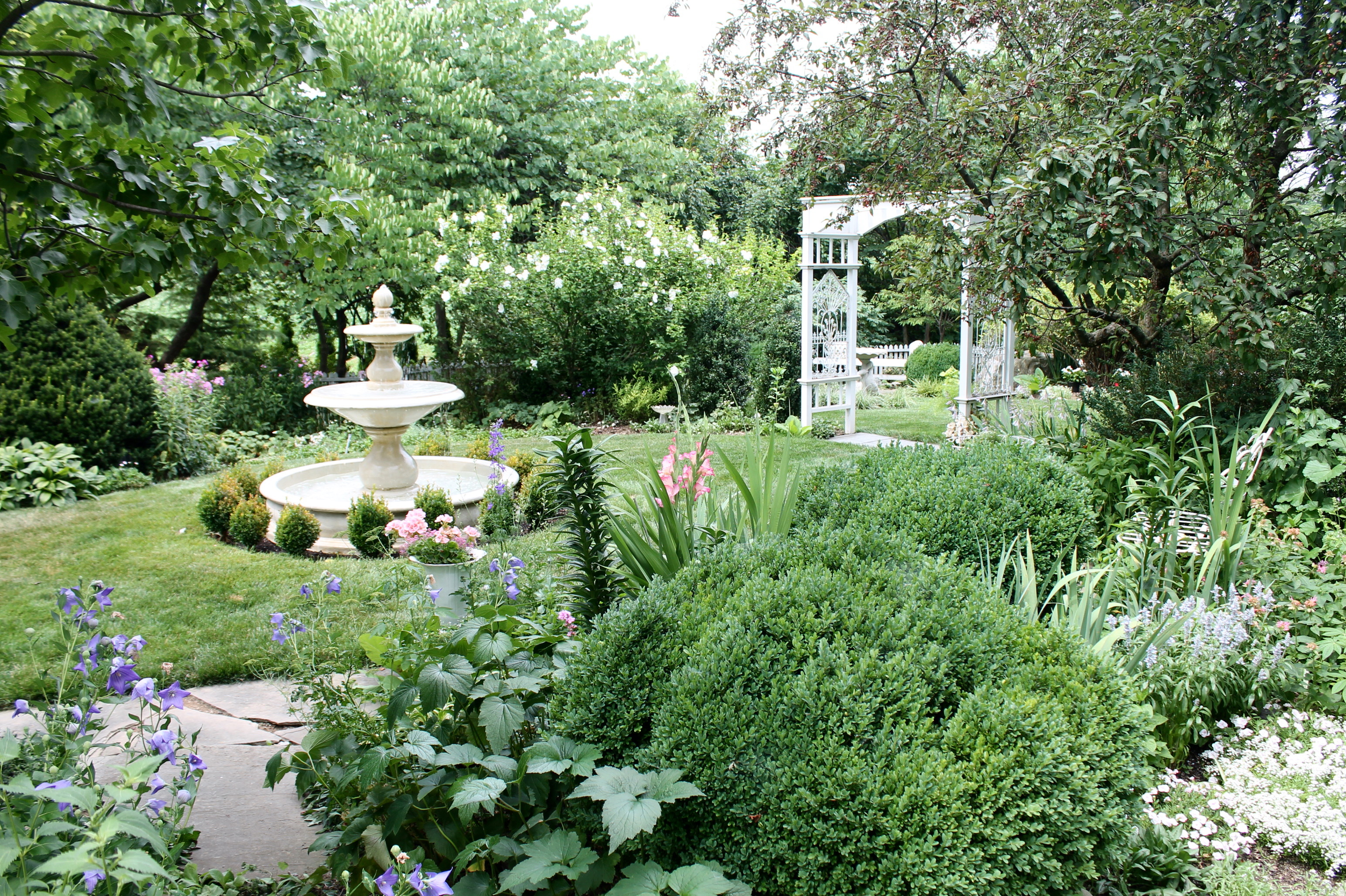
The Shippensburg back yard of Jill and John Hudock, one of the stops on our June tour of local gardens.

   In the past week, I got to see a dozen excellent home gardens in Cumberland and Perry counties – plus one under-appreciated local public garden maintained by a home gardener.

   Six of the gardens were ones we saw during Home-Grown Gardens III – the third series of home-garden visits I put together with Lowee’s Group Tours.

   Another six were at the homes of Cumberland County Master Gardeners that were part of the MGs’ June 2017 “Summer Celebration” tour.

   And another I saw on the way back from a shade-gardening talk in Waynesboro was the acre-or-so gardens of Diane Fusting, a Franklin County Master Gardener and one-time floral designer.

   Rather than bore you with a lot of words, I put together a Photo Gallery of 40 shots from these gardens that you can check out, enjoy and maybe get some inspiration and ideas.

   Shots from the previous two local tours and a lot of other tours I’ve done are also on my Photo Galleries page.

   Here’s a brief rundown on the essence of the 13 local gardens I saw last week:

   Jill and John Hudock, Shippensburg. Wow. What an impressive design and execution by former Master Gardener and designer Jill and her handy husband. Nice focal points and sitting nooks everywhere. The highlight is the 2/3-acre Sunken Garden of English-style flower beds that once was a boring grassy retention pond.
Read More »


Seas of veggies, tractor-following birds, and Clint Eastwood’s oaks

June 20th, 2017

   I ran into plenty of intriguing readling material last month on our Lowee’s/Collette tour to northern California. Maybe you’ll be as fascinated by the following as I was:

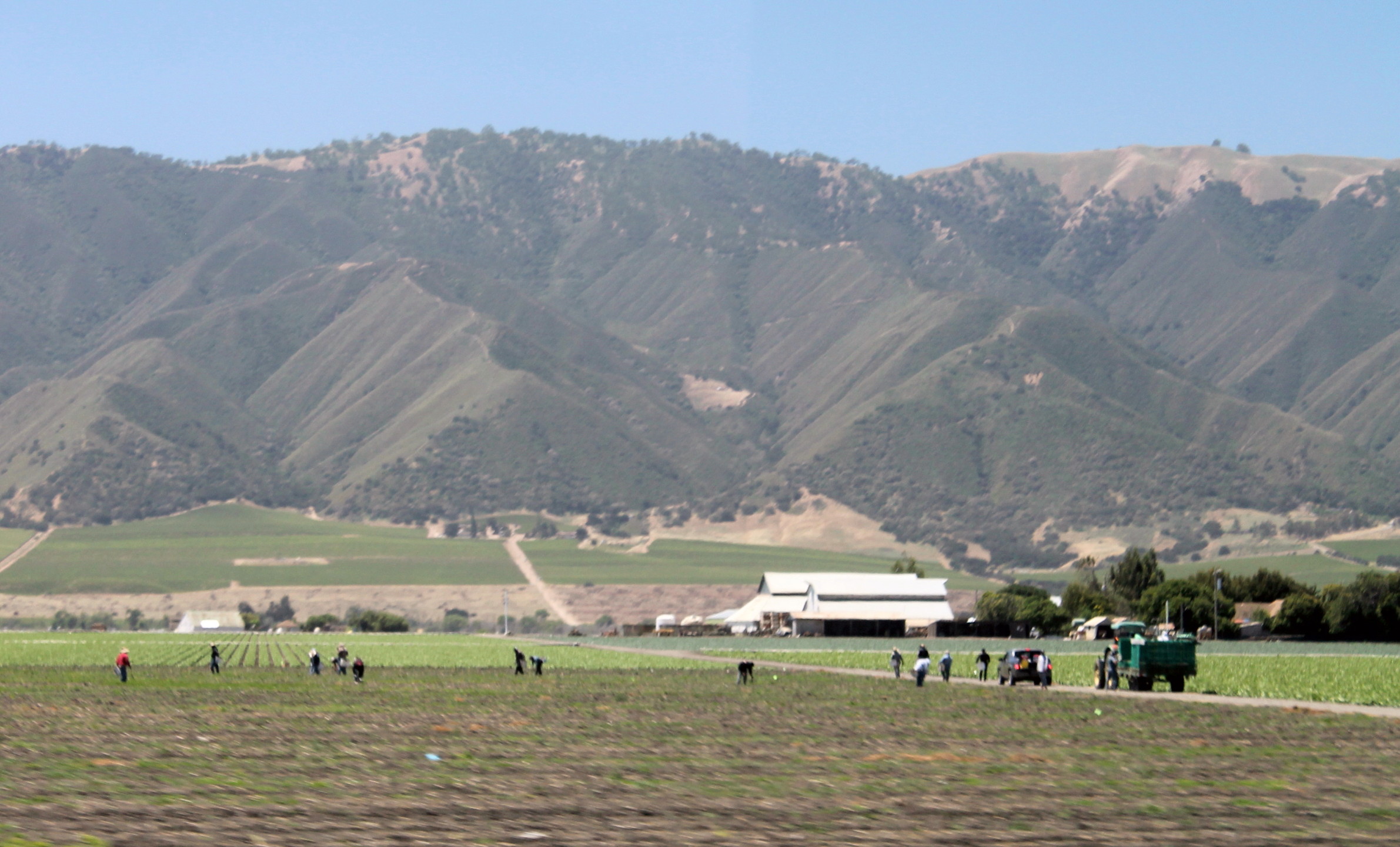
Those are workers cutting asparagus by hand with a knife and packing it right in the field.

   No-wash produce. The oceanic fields of vegetables in California’s Salinas Valley (where America gets the majority of its cool-season produce) was incredible for its scale and wall-to-wall production.

   I was surprised at how closely everything was planted (broccoli 12 inches apart, for example) but even more so by how so much of the produce is packed right in the field. Except for lettuce and small greens, most of it isn’t washed either.

   Monterey County Extension educator Evan Oakes said the reason is that “wet shortens shelf life,” which already is a big challenge when it takes three days just to get the produce to stores in the East.

   So the aim is to keep the produce (especially rot-prone species such as strawberries and tomatoes) as dry as possible and to get it out of the field and into cooling facilities ASAP.

See my photo gallery of pictures from California farms and other shots from the northern California trip.

   Winged opportunists. Ever notice how birds show up in the garden after you dig or till a bed? They’re able to hone in on disturbed soil, knowing that the odds of finding worms and/or soil-borne bugs close to the surface go way up.

   That same thing happens on a much bigger scale in the Salinas Valley. Birds swarm by the hundreds (if not thousands) behind the tractors as they go up and down the fields.

   The birds have no idea about the real purpose of tractors, but they definitely know that when one shows up, it’s buffet time.

   Clint Eastwood’s trees. We spent a day in Carmel-by-the-Sea, the quaint coastal town where actor Clint Eastwood was mayor in the 1980s. Turns out that Clint built a golf course nearby that called for the removal of several mature California live oaks.

   Averse to cutting and grinding them, Clint instead had them dug, potted and offered for sale. I saw a few of them in what looked like huge, open-topped, wooden crates at Earthbound Farms, the Carmel-based organic farm that introduced America to bagged salad mixes.

   The price tag: $40,000 each. Better get your order in now…

   Pretty and what else? Another afternoon we toured the American Takii seed facility in Salinas and met breeder Paul Readly, who’s a Penn State grad.

Read More »


Stake No More

June 13th, 2017

Here’s a job you can largely eliminate if you’re trying to cut work in the garden – staking perennials.

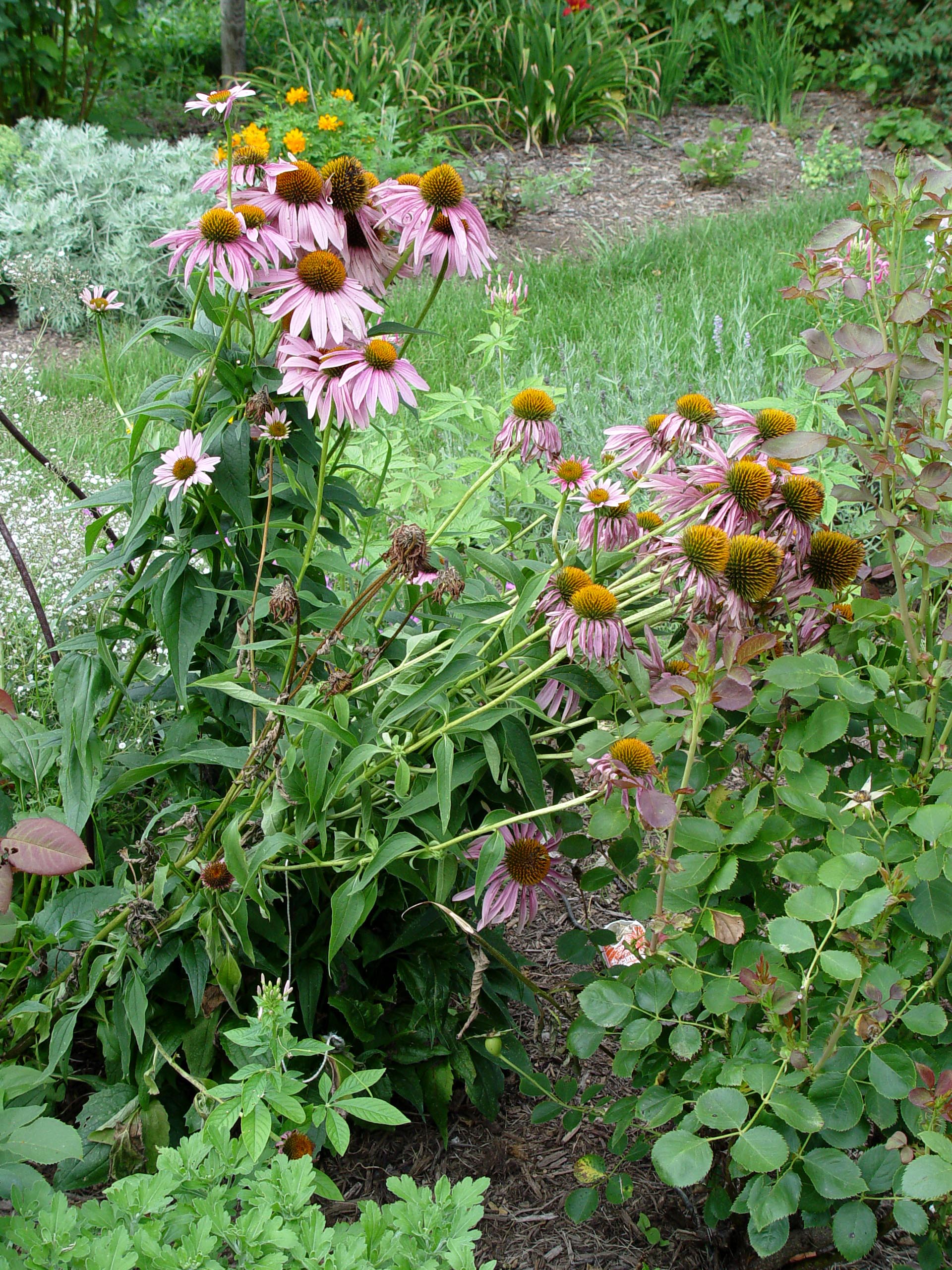
These coneflowers look like straitjacketed criminals after being tied up from flopping.

These coneflowers look like straitjacketed criminals after being tied up from flopping.

By going with some of the new compact varieties that are now available or by doing a spring cutback of the floppers you already have, you can get away from the stakes, cages and rings that are otherwise needed to head off an unruly late-summer garden.

A lot of perennials – especially old-fashioned ones – grow 3 to 4 feet tall and flop or lean from the weight of their flowers. A wind storm or a heavy rain often contributes to the floppiness.

Once a tall plant flops, it’s hard to prop it back up without snapping stems or creating a tied-up bundle that looks like a straitjacketed criminal.

Some of the most common floppers/leaners include peonies, dahlias, gladioli, heliopsis, Russian sage, mums, asters, boltonia, Japanese anemone, goldenrod, yarrow, helenium, sedum and sometimes lilies.

If you have floppers and want to keep them, now’s the time to get your support into place – before they flop.

Another trick I’ve used for years is cutting back tall late bloomers in spring.

Most people know to do that to mums. It’s called “pinching back,” although you don’t have to pinch every stem – one by one – with your fingers as the term indicates. Just shearing the whole plant in half is fine.

This sedum is being cut back by a half in late May.

This sedum is being cut back by a half in late May.

This cutback, which makes plants more compact later in the year, can be done to plants other than mums. You can’t do it to earlier-blooming perennials that are in bud or about to flower (peonies and salvia, for example), but you can do it to species that flower in August or after.

These include asters, goldenrod, boltonia, Japanese anemone, sedum and Russian sage.

Shear any of those back by one-third to one-half now (or no later than end of June). They’ll look chopped for a few weeks, but new leaves will grow, and the plants will end up more compact and non-floppy later. They’ll also bloom slightly later.

You can eliminate both cutbacks and staking by leaning toward non-leaners with your new selections.

Read More »


What If We Didn’t Have Such Wild Weather Rides?

June 6th, 2017

You can’t blame a lot of plants for not wanting to grow in central-Pennsylvania gardens.

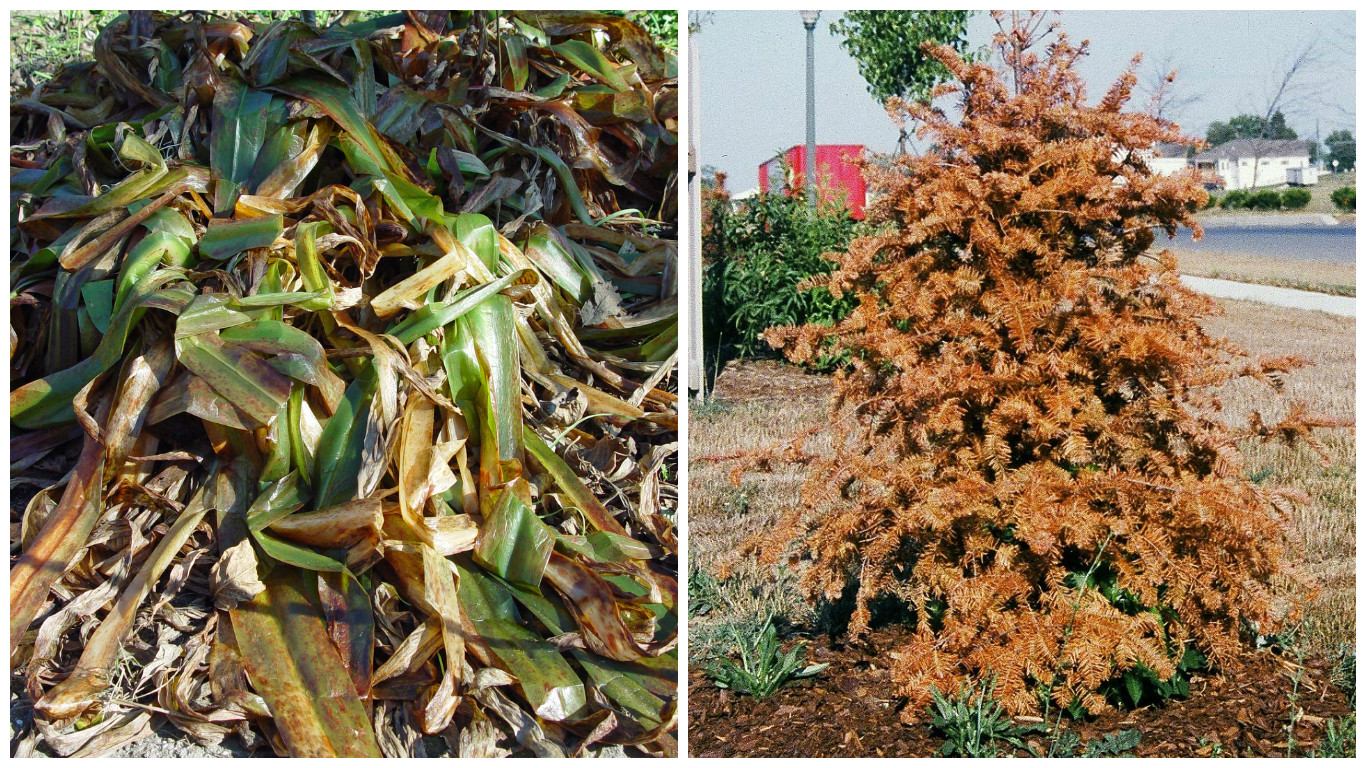
We kill plants at both ends of the spectrum -- freezing (left) and heat-baking (right).

We kill plants at both ends of the spectrum — freezing (left) and heat-baking (right).

We’ve gone as high as 107 degrees in summer and as low as minus 22 degrees in winter.

We can go from 85 degrees on a fall day down to below freezing the next night… and vice versa in spring.

Nor’ easters snap our trees, deluges rot our conifers, and droughts kill our lawns.

No wonder we lose out on being able to grow so many wonderful plants. It’s perilous territory for any plant not willing or able to roll with the punches.

But what would our landscapes be like if we didn’t have such wild weather rides?

No need to guess because I just got back from seeing the kind of plant palette that’s possible when you iron out the extremes.

The central coast of California is a rare part of the world where temperatures stay in that sweet spot of the 60s and 70s all year long.

Winters are damp but seldom much below 40 degrees, and they’re free from the snow dumpings and ice storms that create havoc with our plants.

Summers are dry but not boiling enough to melt out cool-preferring species like lady’s mantle, wallflowers, lobelia and such.

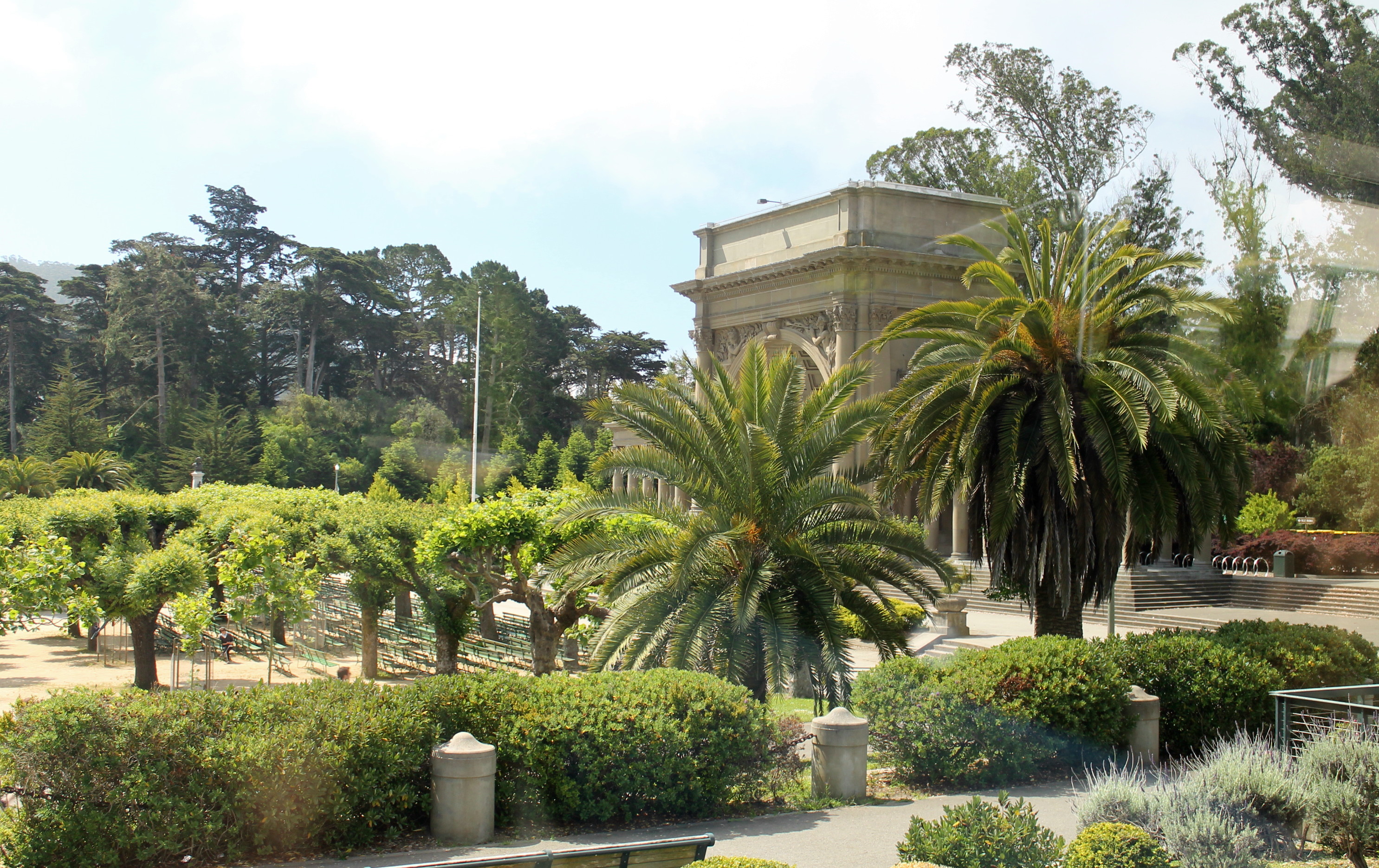
Yes, those are palm trees growing in San Francisco's Golden Gate Park.

Yes, those are palm trees growing in San Francisco’s Golden Gate Park.

Just about all plants are happy in that medium range. It explains why palm trees grow in San Francisco despite Mark Twain’s supposed quote that the “coldest winter I ever spent was a summer in San Francisco.”

Conditions may not be ideal for everything, but a huge variety of plants will grow well when freed of extremes. Moderation is a virtue.

That’s why central California is such a biodiversity hot spot, able to produce a staggering percentage of America’s grocery-store produce year round while also being mellow enough to grow ornamental trees, flowers, shrubs, and herbs from just about every corner of the Earth.

I got to see this horticultural nirvana in action last month during one of our group tours that took us from the Napa Valley wine region down to the Salinas Valley “salad bowl of America” and inland to the Central Valley fruit and nut orchards.

See a photo gallery from our California tour

Read my article on how this small part of California feeds the U.S.

Read More »


Gardens of Maine and the Canadian Maritimes

May 30th, 2017

Most public gardens are the work of wealthy benefactors or universities. Very few are started by “ordinary” people.

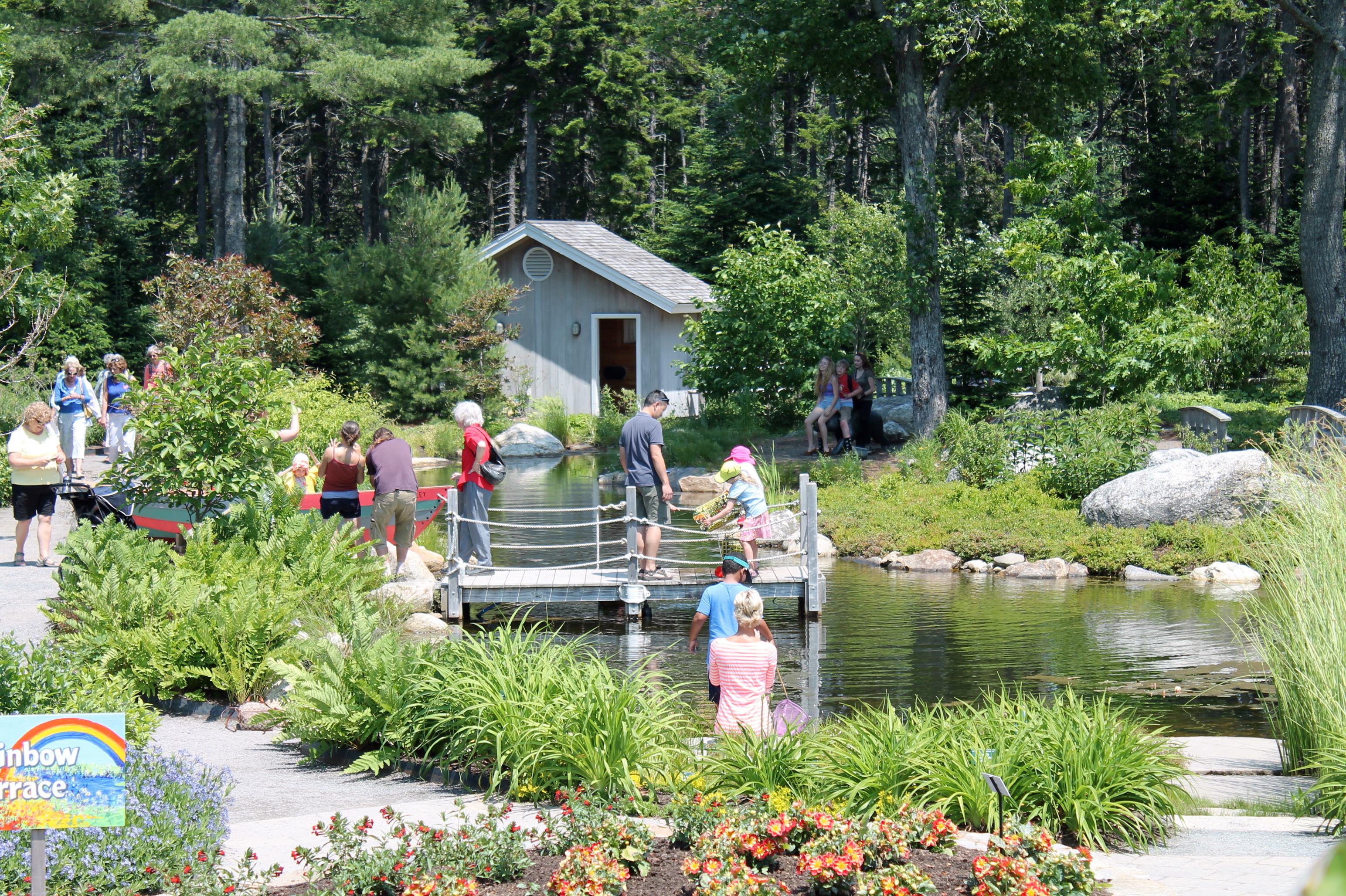
The Alfond Children's Garden at Coastal Maine Botanical Gardens.

The Alfond Children’s Garden at Coastal Maine Botanical Gardens.

The finest example of the latter that I’ve ever seen is the Coastal Maine Botanical Gardens near Boothbay, Maine, a 248-acre waterfront gem that’s on my top 10 list of favorite American gardens.

Coastal Maine has only been open for 10 years. It already has a unique, Maine-themed children’s garden, a beautifully designed five-senses garden with terraces and waterfalls, a hillside perennial garden, and a woodland shade garden featuring rhododendrons.

The place is not even close to done, but the quality so far is on a par with Longwood (my all-time favorite garden anywhere).

What’s most impressive is that this garden was founded by a handful of area residents who thought Maine should have a botanical garden. These people actually mortgaged their houses to buy the initial 128 acres and get the plantings started.

You’ll have a chance to see it yourself as part of a 10-night, 11-day bus trip that Lowee’s Group Tours and I have put together for Aug. 12-22.

Read More »


« Older Ramblings and Readlings Newer Ramblings and Readlings »

  • Home
  • Garden House-Calls
  • George's Talks & Trips
  • Disclosure

© 2026 George Weigel | Site designed and programmed by Pittsburgh Web Developer Andy Weigel using WordPress