



The Best New Trees and Shrubs of 2019
January 29th, 2019
An instant hedge in a pot, two stunning new Kousa dogwoods, and super-small versions of birch, butterfly bush, and smooth hydrangea are among the best new trees and shrubs debuting in the 2019 growing season.

Now you can buy not just a hedge plant, but a whole hedge. (Credit: InstantHedge.com)
Growers, local garden centers, and other plant experts picked the following for my annual four-part, best-new-plants series.
Today’s best new trees and shrubs of 2019 is the final installment of this year’s January series.
Part one on best new vegetables of 2019 ran Jan. 8, part two on best new annual flowers of 2019 ran Jan. 15, and part three on best new perennial flowers of 2019 ran last Tuesday, Jan. 22.
Some of the following new tree and shrub varieties are available online and in some plant catalogs. Most also will be available in selected local garden centers beginning in April.
The details:
InstantHedge
Here’s a brilliant idea for the instant-gratification gardener – a grab-and-go, already-trimmed hedge.
Dubbed InstantHedge, the sheared plants come in containers of four to five each. They were a hit with landscapers last spring and will be offered to home gardeners through the Wayside catalog this year as well as some garden centers.
Cornell University horticulture grad Brent Markus has been planting 500,000 baby hedge plants in an Oregon nursery since 2014 to create 20 different offerings of ready-to-plant hedges, including cherry laurel, yew, arborvitae, European beech, cornelian cherry dogwood, and hedge maple.
The newest (and maybe best) option is an InstantHedge of ‘Green Mountain’ blight-resistant boxwoods, trimmed 18 inches tall and five to a unit. Other hedges come trimmed to heights of between 3 and 6 feet.
Pricing is a bit salty, though. The Wayside plant catalog is asking $240 for a five-plant boxwood unit.
Kousa dogwood Scarlet Fire
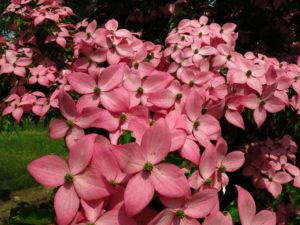
Scarlet Fire is a Kousa dogwood that blooms rich pink. (Credit: Rutgers University)
Decades of trials in Rutgers University’s iconic dogwood-breeding program yielded this holy grail – a version of Kousa dogwood that blooms rich pink.
Scarlet Fire gets its pink color from an American dogwood parent but has the disease resistance, habit, and growth durability of the Kousa dogwood, which generally blooms white.
The tree produces larger-than-usual pink bracts from late May into June, a few weeks later than American dogwoods.
It also gets bumpy red fruits in fall and has exfoliating bark to make it a good four-season performer.
It’s a fairly slow grower, too, eventually working its way up to about 15 to 20 feet tall and wide in 20 to 25 years.
Kousa dogwood ‘Summer Fun’
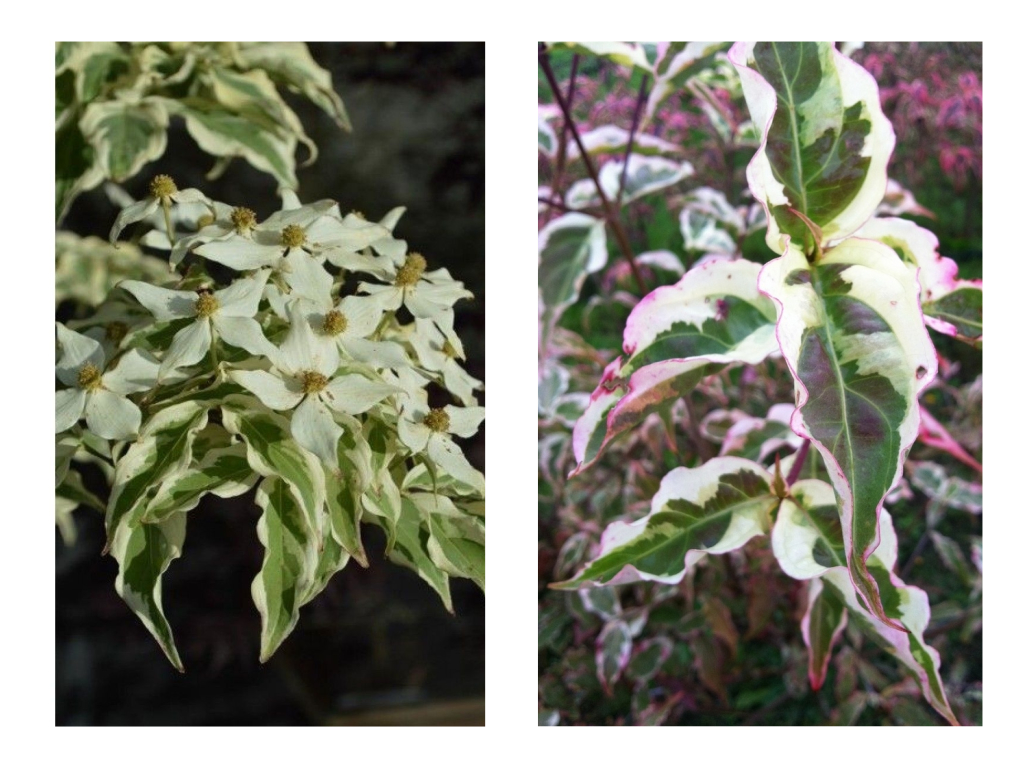
Kousa dogwood ‘Summer Fun.’ (Credit: Heritage Seedlings and Broken Arrow Nursery)
If you like variegated leaves, here’s another new Kousa dogwood to check out in 2019, according to Stauffers of Kissel Hill plant buyer Dave Krause.
Krause says ‘Summer Fun’ has leaves that are heavily variegated “with a lot of white. It really stands out at a distance.”
The new foliage of this Oriental version of our native dogwood starts out with tinges of pink to the white leaf edges, than matures to grey-green with slightly wavy white edges in summer.
It flowers white in late summer, gets bumpy red fruits in fall, and has exfoliating bark.
Like all kousa dogwoods, ‘Summer Fun’ does better in full sun and clayish soil than American dogwoods and is more disease-resistant as well. Figure on a size of about 15 to 20 feet tall and wide in 20 to 25 years.
Rose True Bloom True Passion
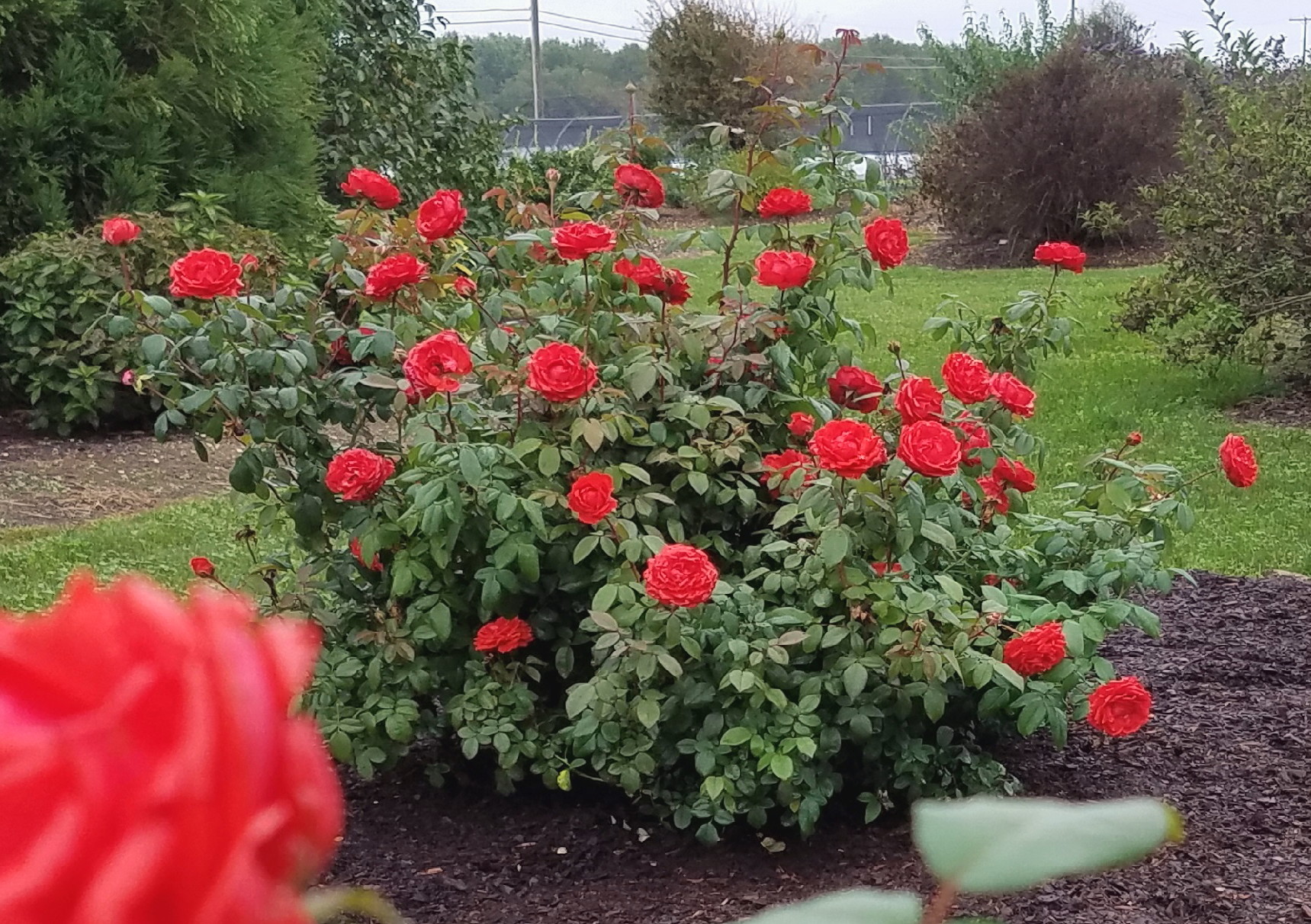
Rose True Bloom True Passion. (Credit: David Wilson/Overdevest Nurseries)
True Bloom is a new class of rose bred by famed breeder Ping Lim – a blend of the easy-care performance of shrub roses and the classic beauty of hybrid teas.
Lower Paxton Twp. horticulturist David Wilson, director of marketing for New Jersey’s Overdevest Nursery, says the flowers look like floribundas… single blooms and free-flowering.
The flowers are large, too… bigger than the single to semi-double flowers of the current disease-resistant, shrub-type favorites Knock Out and Kolorscape.
Wilson likes the variety True Bloom True Passion best, which he describes as a “luminous orangey salmon-red. It’s shouting constantly, ‘Look at me! Look at me!’”
He says the line is especially good at fighting off the bane of roses, the dreaded black-spot fungal disease.
“In a no-spray trial bed of 120 roses, most of them got black spot,” he says. “But this one got no black spot.”
True Bloom True Passion grows about 5 feet tall and flowers best in full sun. Stauffers of Kissel Hill and Ashcombe Farm and Greenhouses are two local garden centers that plan to carry it come spring.
Dwarf birch Cesky Gold
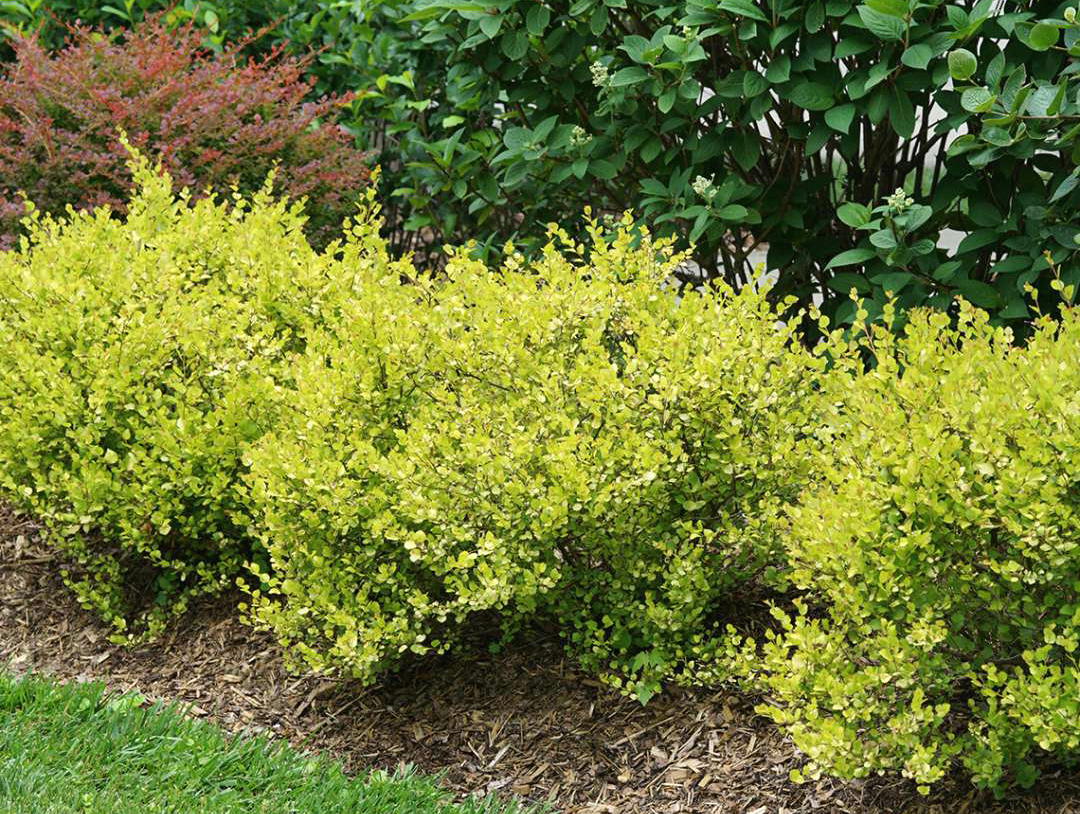
Dwarf birch Cesky Gold. (Credit: Spring Meadow Nursery)
Small is “in” this year, and this new dwarf birch is a perfect example of how breeders are working to down-size familiar trees and shrubs.
Most people know birch as those white-trunked trees with the peeling bark and multiple trunks.
Forget that image because the new Cesky Gold grows into a 4-by-4-foot mound. It’s really a landscape shrub, not a tree at all.
Bryan Benner, a grower at the wholesale Quality Greenhouses near Dillsburg, ranks Cesky Gold as his favorite new woody plant of 2019.
“The foliage emerges orange-red, then matures to a yellow-chartreuse color,” says Benner. “It can be sheared into a hedge and is also deer-resistant, easy care, and good as a container plant.”
It grows well in full sun or part shade.
Rose of sharon Pollypetite
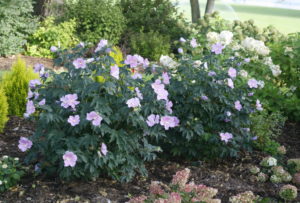
Rose of sharon Pollypetite. (Credit: Proven Winners)
Brandon Kuykendall, nursery manager at Ashcombe Farm and Greenhouses in Monroe Twp., likes this new compact version of rose of sharon (a winter-hardy, woody form of hibiscus).
Pollypetite also grows in a mound to only 4 feet tall and wide and blooms lavender-pink for weeks in mid to late summer.
“It has a combination that I like,” says Kuykendall. “It attracts hummingbirds and butterflies, stays small, and blooms for a long period of time.”
The flowers are mostly sterile so there’s little unwanted seeding, which is a drawback to older types of rose of sharon.
Pollypetite flowers best in full sun but will do reasonably well in part shade.
Dwarf butterfly bush Pugster Blue
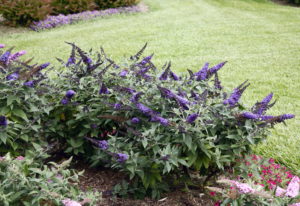
Dwarf butterfly bush Pugster Blue. (Credit: Proven Winners)
Also small and new is this super-short version of butterfly bush, which grows only about 2 feet tall with a 4-foot spread.
Proven Winners introduced Pugster Blue last year, but supply was limited.
Stauffers of Kissel Hill buyer Dave Krause likes it both for its size and “intense” blue-purple flowers spikes, which start in July and keep producing into fall.
“We had it last year, but I couldn’t get the numbers,” he says.
Pugster Blue can produce seedlings, but it’s not as prolific of a seeder as older butterfly bushes that has caused the species to show up on many states’ invasive plant lists. Snipping spent flowers as soon as they brown can further limit or prevent unwanted seeding.
Butterfly bush grow best in full sun.
Dwarf Invincibelle smooth hydrangeas
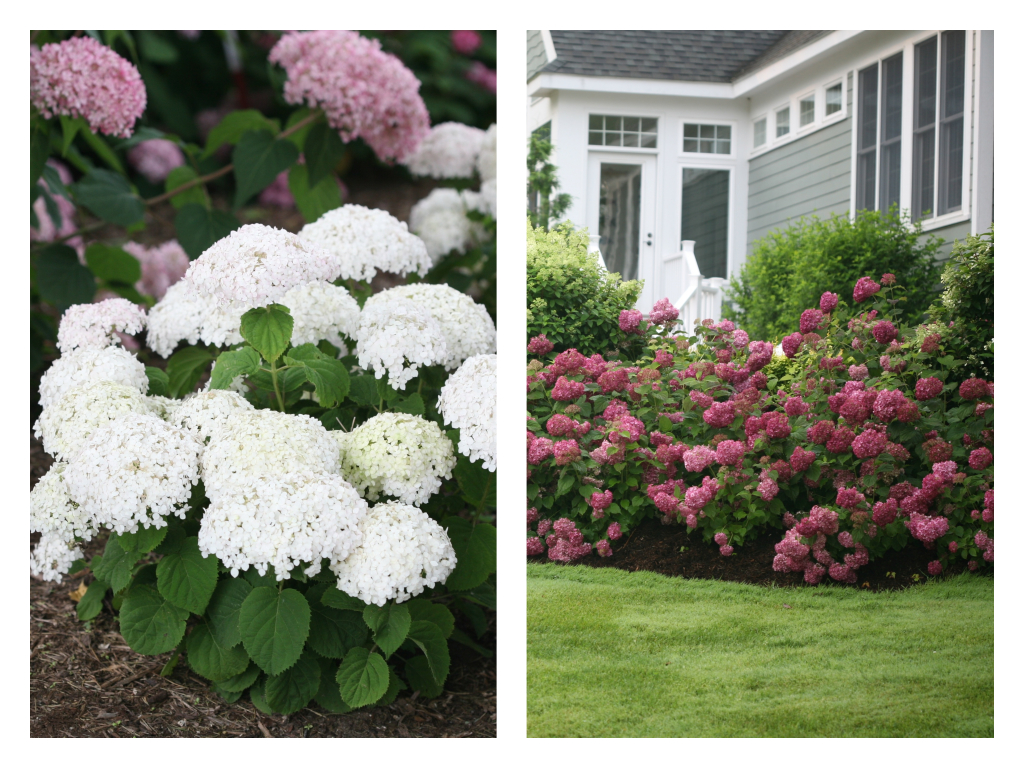
Hydrangea Wee White, left, and Mini Mauvette, right. (Credit: Proven Winners)
If you’re trying to stay native, Proven Winners also has three new dwarf varieties of our native smooth hydrangea (Hydrangea arborescens).
One is the white-blooming Invincibelle Wee White, which has the same softball-sized round flowers of the classic ‘Annabelle’ variety, except growing on 2- to 2½-feet-tall plants.
Invincibelle Limetta also has softball-sized, round flowers but of lime-white. Plants are also a bit bigger at nearly 4 feet tall and wide (although still 2 feet smaller than native smooth hydrangeas).
And Invincibelle Mini Mauvette is a compact smooth hydrangea with round pink flowers on plants that are about 3 feet tall.
All of those grow well in part to full shade.
Dwarf ninebark Raspberry Lemonade
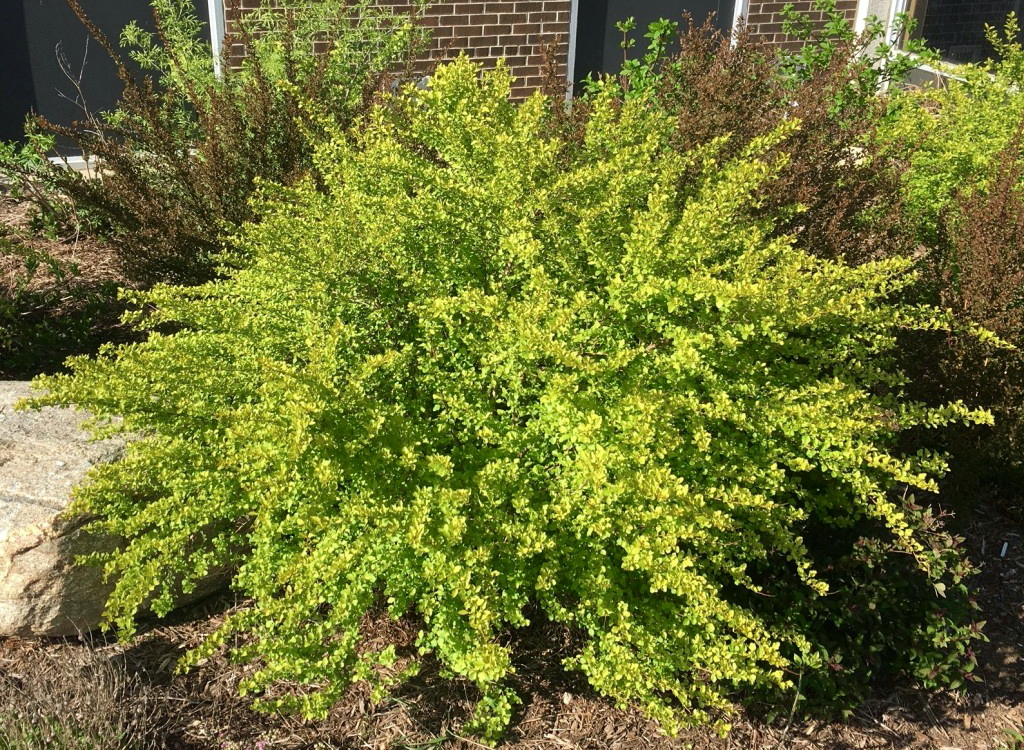
Dwarf ninebark Raspberry Lemonade. (Credit: Plants Nouveau)
One last new dwarf worth mentioning before we leave this It’s a Small World ride is another shrunken version of native shrub, this time ninebark.
Plants Nouveau is introducing Raspberry Lemonade, which is a compact version of the golden-leafed form of ninebark.
It grows about 4 feet tall and wide with an arching habit and the typical pinkish-white golfball-sized spring flowers of ninebark. The seed heads then turn coral-red in summer.
Raspberry Lemonade grows best in full sun.
If you like your ninebarks small and with dark leaves, Plants Nouveau also is introducing a 4-foot version of that called Sweet Cherry Tea.
Hydrangea Seaside Serenade Fire Island
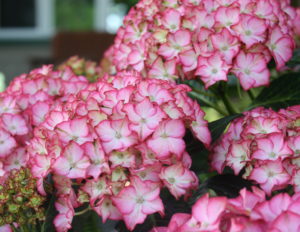
Hydrangea Seaside Serenade Fire Island. (Credit: Plants Nouveau)
Plants Nouveau’s best new plant of 2019 is this heavy-blooming mophead hydrangea, which won best new plant award at Cultivate’18, the plant industry’s annual new-plant show held each summer in Columbus, Ohio.
Seaside Serenade Fire Island is a reblooming hydrangea that starts out with coppery leaves in spring, followed by a heavy bloom of large, round, pink flowers that morph into a bicolor pink and white in early summer.
Plants grow about 4 feet tall and wide and do best in morning sun and afternoon shade.
Hydrangea Summer Crush
Another new, reblooming, mophead-type hydrangea to check out is Summer Crush, which is a new color in the top-selling Endless Summer hydrangea collection.

Hydrangea Summer Crush. (Credit: Bailey Nurseries)
Depending on your soil acidity, Summer Crush blooms either a deep raspberry red or more of a burgundy-purple color. It produces two sets of flowers per year, adding up to about three months of color.
Plants grow a compact 3 feet tall and wide and do best in morning sun and afternoon shade.
Lilac Great Wall
This lilac is a Peking type (Syringa pekinensis) – one usually grown as a single-trunk small tree growing 18 to 20 feet tall and similar to the slightly better known Japanese tree lilac.
Erica Shaffer, manager at Highland Gardens in Lower Allen Twp., likes Great Wall for its fat, white, cone-shaped flower spikes that peak in mid-June.
“It also has gorgeous, exfoliating, cherry-tree-like bark,” Shaffer says, “and the foliage doesn’t get the mildew that shrub lilacs are prone to. It’s fantastic as a street tree as it is drought tolerant and compact.”
The glossy green foliage turns golden in fall. The tree’s habit is an upright oval shape, about 20 feet tall and 15 feet wide. It grows best in full sun.
Abelia Peach Perfection
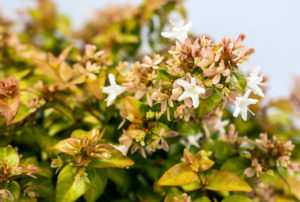
Abelia Peach Perfection. (Credit: Star Roses and Plants)
Here’s a new shrub with foliage that morphs through a blend of orange, yellow, and green.
This abelia from Chester County’s Star Roses and Plants is a compact grower of 3 to 4 feet tall and wide that starts out orange, then fades to yellow and green in summer.
Peach Perfection also has red stems and “doesn’t throw out whips or long branches, which results in significantly less trimming,” says Star Roses’ Leah Haugh.
The tubular flowers are pinkish white in summer. Plants flower best in full sun but also do reasonably well in light shade.
David Austin rose ‘Vanessa Bell’
This soft-yellow English rose is one of three new David Austin roses hitting the market in 2019.
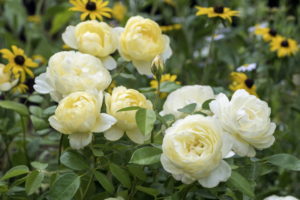
Rose ‘Vanessa Bell.” (Credit: David Austin Roses)
Michael Marriott, the British breeder’s senior rosarian, says ‘Vanessa Bell’ is one of the heaviest blooming Austin roses yet.
“It’s nearly buried in blooms from early summer till frost,” he says.
The flowers are a soft lemony color with a darker yellow eye and paler outer petals. They have medium-strong fragrance that Marriott describes as a blend of green tea, lemon and honey.
Plants grow 3½ feet tall and bloom best in full sun.
‘Vanessa Bell’ was named after the English artist of that name.
The other two new Austin roses are ‘Dame Judi Drench,’ an apricot bloomer with a tea fragrance, and ‘James L. Austin,’ a fuchsia/cerise bloomer with a fruity fragrance.
All three will be available only bare-root directly from the David Austin Roses website in 2019, showing up potted in garden centers in spring 2020.
The company’s founder and namesake, David Austin Sr., died at his home in England the week before Christmas at the age of 92. He introduced more than 200 varieties of roses in his nearly 50-year breeding career.