




The RIGHT Way to Mow
June 21st, 2007
Mowing the lawn sounds like a brainless enough thing.
You just gas up, yank the cord, walk (or ride) around in rectangles for awhile, and the deed is done.
Whoa, Sherlock. Back up the Toro.
As true lawn connoisseurs will tell you, there’s more to it than that.
How you mow, when you mow and even what you do with the clippings make a huge difference in how your lawn performs.
In fact, I’d venture to say that mowing is the most underrated and overlooked part of good lawn care. This is something we do 25 to 30 times a season, so it’d be nice to get it right.
Let’s look at four biggies:
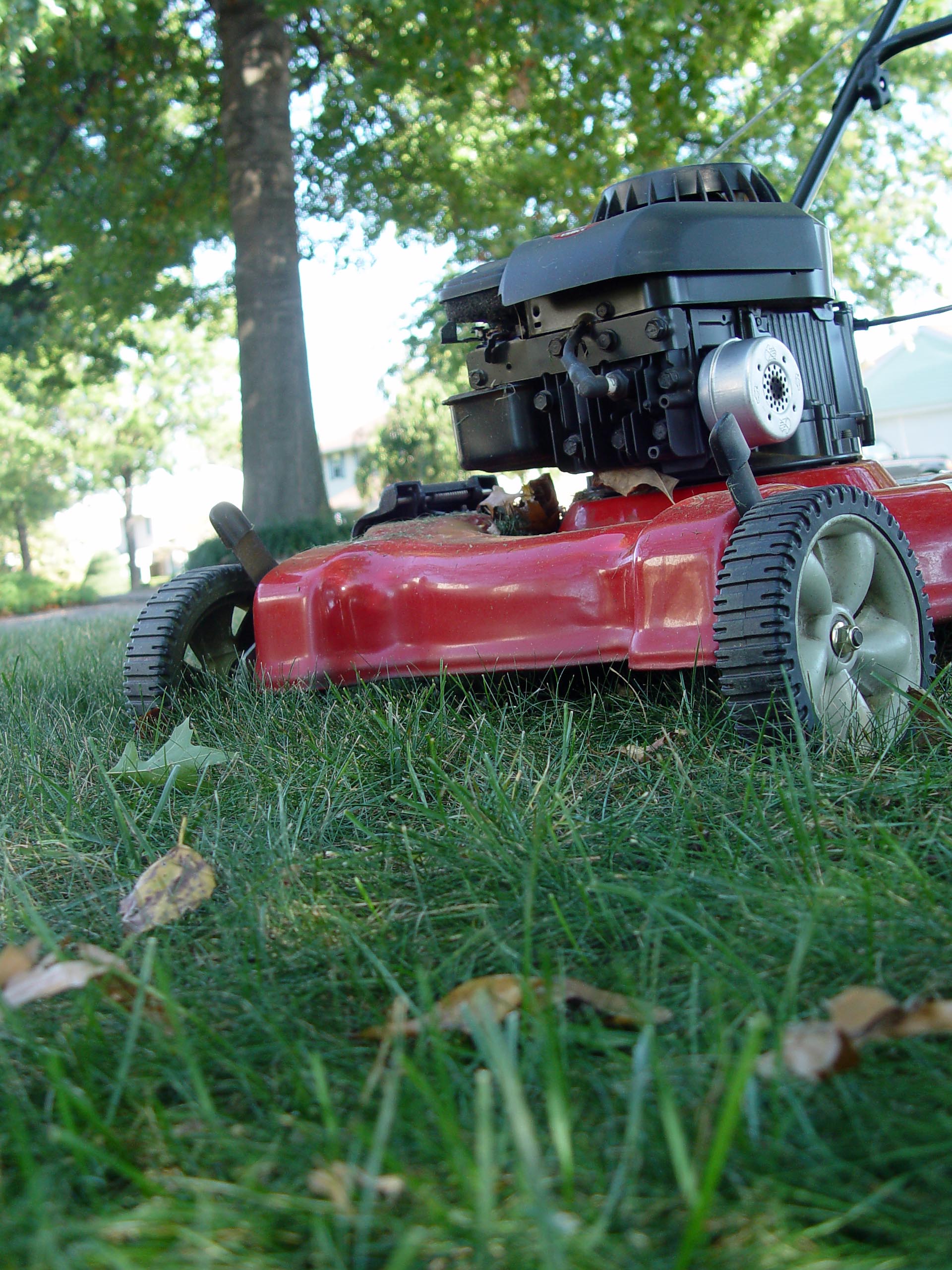
Mow on a high setting.
* MOWING HEIGHT
The Problem: People cut too short. Some downright scalp the lawn, using golf putting greens as their ideal.
Why That’s Bad: Scalping increases moisture and nutrition demands as the grass tries to fight back from near decapitation. It means less chlorophyll, which grass needs as a fuel source to rebuild. It allows the soil to dry out faster (bad news in drought). And weeds germinate better and get off to a faster start when taller grass blades aren’t in the way.
A Better Idea: Cut 2½ to 3 inches high – typically the highest setting on mowers. What makes a mown lawn look good is the evenness of the cut – not its height. Most people are just as happy with a 3-inch-tall evenly cut lawn as a 1-inch-tall evenly cut lawn.
The belief that cutting short lengthens the time between cuts doesn’t hold up, by the way. Grass actually grows faster after it’s been cut short as it tries to rebuild itself to its genetic norm.
Two exceptions to the cut-high rule: Before you overseed a lawn and toward the end of the season when it makes sense to cut shorter to head off moisture-related winter fungal problems such as snow mold.
* WHEN TO MOW
The Problem: People don’t cut often enough. The grass gets too long and so they end up whacking off long pieces that throw out clumps everywhere or create a bagging nightmare.
Why That’s Bad: Besides those aesthetic and labor-related issues, radical whackbacks are more stressful on grass than lighter cuts and require more energy to heal. If you don’t remove the clumps of cut grass, they’ll smother the living grass underneath. (Dump these clumps in the compost pile or let ’em dry for a few days and use as mulch in garden beds.)
A Better Idea: Mow often enough so you’re never removing more than one-third of the blade length at a time (i.e. time to cut when the height gets to 4 inches, not 5 or 6). This may mean mowing twice a week or every four or five days when grass is growing fastest in mid-spring.
* THE CLIPPINGS
The Problem: People bag their grass clippings and set them out with the trash.
Why That’s Bad: Not only are you unnecessarily adding to the trash stream, you’re wasting a super source of nutrients for the lawn. Those clips are filled with nitrogen, minerals and important trace nutrients that the roots have mined from the soil, and you’re going to pay to toss them, then turn around and buy new fertilizer? Makes no sense to me.
A Better Idea: First, if you mow often enough, you’ll get tiny clips that quickly disappear into the lawn, especially if you’re using a mulching mower. Turfgrass researchers at Penn State University estimate that letting the clippings decay in place supply about one-third of a lawn’s total nitrogen needs for the season, which means you can save yourself one fertilizer treatment a year.
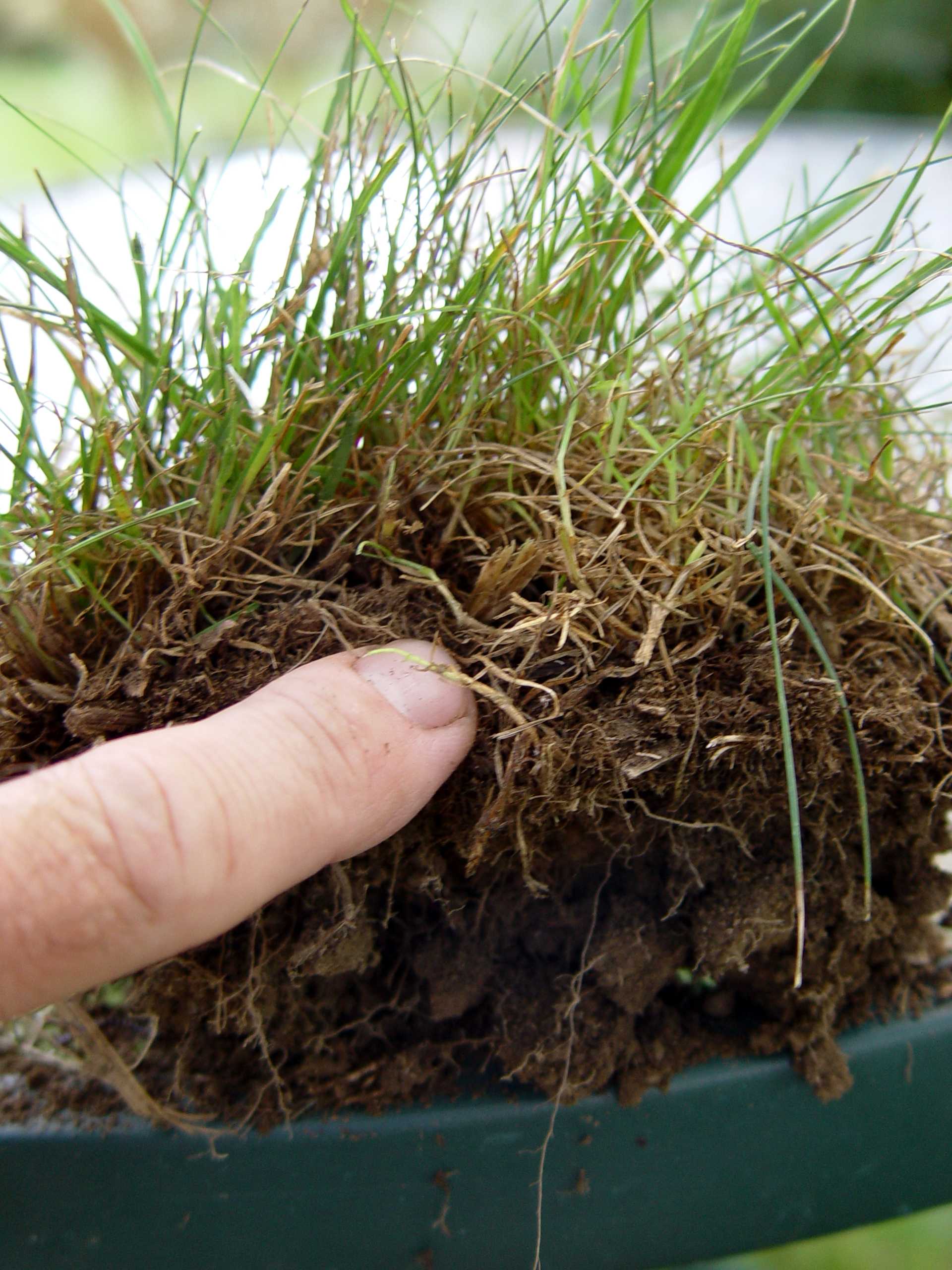
The thatch layer of a lawn. Grass clippings aren't a key component of excess layers.
Also: Decaying clippings add organic matter to the soil. Clippings are not a significant cause of thatch in the lawn. (Thatch is the spongy layer between the soil and grass blades and is primarily dead roots and dead grass crowns.) If you’re concerned about tracking grass clips into the house, consider that it may be easier to just get out the vacuum cleaner than lug those grass-clipping bags around.
* THE MOWER BLADES
The Problem: People hardly ever sharpen their mower blades. Instead of making clean, sharp cuts, the mower ends up bludgeoning or ripping off the grass tips.
Why That’s Bad: Rough, ragged cuts don’t heal as well as clean, sharp cuts, and that increases the odds of disease. Ragged cuts also result in bigger tip openings that turn brown and stand out more than sharp cuts (i.e. it looks bad). Even worse, those bigger openings cause the grass to lose more moisture, which increases drought stress in hot weather.
A Better Idea: Yeah, yeah. I know you’ve got better things to do than remember to remove and sharpen your mower blades once every 25 mowing hours (or more) like the manuals tell you. At least shoot for two or three times a season. Some people own two different mower blades so they always have one for the mower while the other is being sharpened. A bench grinder and/or a metal file let you sharpen at home.
Bonus point: Reel mowers – those old-fashioned bladed drums that go around and snip off grass blades like scissors – are excellent. But rotary mowers are perfectly fine, too – if the blades are kept sharp.
More tips to help you become an accomplished mower instead of a lawn butcher:
1.) If you fall behind, say after a vacation or rainy spell, get back to the desired height by removing one-third of the blade height in two cuttings a few days apart rather than taking it the whole way down in one fell swoop.
2.) To limit raking if you’re getting noticeable clips or clumps, mow around the perimeter of the yard, always shooting the clips inward. You’ll end up having to rake only one or two channels in the middle.
3.) Avoid cutting the grass when it’s wet. The clippings are more likely to mat and/or clog your mower; it’s harder to get an even cut (mower wheels flatten grass blades), and you may even compact the soil by walking or riding over it.
4.) Avoid mowing when the lawn is going brown and dormant in a drought – even if you’re mainly doing it to mow off weeds. Grass crowns become brittle in drought, and if you smash them with your feet or mower wheels, they may not recover.
5.) Vary the route. You’ll get more even results by making sure no particular areas keep getting pushed down while others are always cut off when you go the same route every time.
6.) If you have to stop and turn a lot, even out those areas by cutting your beds at broader, gentler curves. Also cut down on mowing around or bumping into trees by creating wide mulched or planted beds around them – and even by joining several trees together in one larger, gently curving bed.