
• Home
  • Contact
  • Site Map
George Weigel - Central PA Gardening
  • Landscape 1
  • Landscape 2
  • Landscape 3
  • Landscape 4
  • Garden Drawings
  • Talks & Trips
  • Patriot-News/Pennlive Posts
  • Buy Helpful Info

Navigation

  • Storage Shed (Useful Past Columns)
  • About George
  • Sign Up for George's Free E-Column
  • Plant Profiles
  • Timely Tips
  • George’s Handy Lists
  • George's Friends
  • Photo Galleries
  • Links and Resources
  • Support George’s Efforts


George’s new “50 American Public Gardens You Really Ought to See” e-book steers you to the top gardens to add to your bucket list.

Read More | Order Now


George’s “Survivor Plant List” is a 19-page booklet detailing hundreds of the toughest and highest-performing plants.

Click Here


Has the info here been useful? Support George’s efforts by clicking below.


Looking for other ways to support George?

Click Here

George's Current Ramblings and Readlings

Where Can I Buy That Plant?

April 26th, 2016

One of the “hazards” of being a cutting-edge plant connoisseur (a.k.a. “plant geek”) is that it’s usually not easy to find the plants you want.
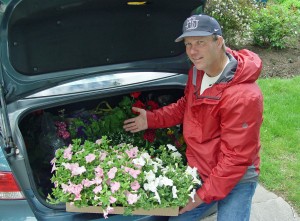
It's often not easy scoring the good stuff.

It’s often not easy scoring the good stuff.

If you’re lucky, your favorite garden center will be on the ball as much as you are and have a ready supply of your beauties of choice.

But more often than not, the cutting-edge stuff is in slim supply – if it’s available anywhere.

That’s when people like me start getting the dreaded question, “Where can I buy that cool plant you just wrote about?”

The short answer usually is, “I don’t know.”

For one thing, it’s impossible to keep track of plant sellers’ highly variable and fast-changing inventory – especially in spring when everybody is buying at the same time over a matter of several weeks.

Sometimes I find out who plans to carry a particular plant, but that doesn’t do much good because a.) the garden center might not actually get what it ordered, and b.) the plant might be gone by the time you get there – 5 minutes after a faster plant geek bought all dozen of the season’s order.

But there are other good reasons why it’s hard to score the good stuff.

A big part of it is how few plants are available to start with.

Unlike the mass growers who grow the basic year-in and year-out yews, azaleas and junipers for the box stores, it’s a whole lot tougher to deal in the new and cutting-edge arena.

You never know how well a new introduction is going to fare or how much of something to produce before you put it in the catalog.

The decision basically boils down to: Do you keep something new and different under wraps for years until you have more than enough quantity, or do you pull the trigger at the earliest point before somebody else beats you to the punch?

More often than not, plant introducers choose Door No. 2.
Read More »


This Is One Determined Gardener

April 19th, 2016

Joe Mateer isn’t about to let a little thing like the disease that caused the great Irish potato famine stand in the way of growing a decent back-yard tomato.

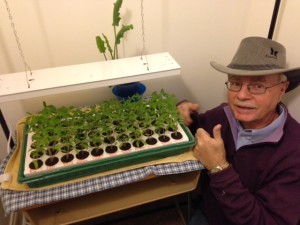
Joe Mateer nursing his 2016 tomato seedlings... so far blight-free (him and the tomatoes).

Joe Mateer nursing his 2016 tomato seedlings… so far blight-free (him and the tomatoes). (Photo by Norma Mateer)

This retired Lower Swatara Twp. middle-school principal loves his home-grown tomatoes and enjoyed bountiful harvests of them summer after summer for decades.

Until last year.

Just as he’d normally be swimming in ‘mater heaven, blackish spots started showing up on his tomato leaves and stems. Instead of ripening, the fruits started getting what looked like soggy spots. Then the plants turned sickly and began dropping leaves.

It all happened within the space of a week, too.

The culprit? A case of late blight, caused by the same pathogen (Phytophthora infestans) that took down nearly all of Ireland’s potato crops in the mid-1800s.

“This had never happened to me before in 40 years of gardening,” Joe laments.

He’s determined that it’s not going to happen again either… very determined.

In fact, Joe is the most determined tomato gardener I’ve ever seen. Mr. Phytophthora picked the wrong gardener to pick on.

“After months of soothing my ego – OK, a good few hours anyway – I decided to fight back,” Joe says. “I developed a fool-proof plan at redemption!”

He meticulously researched every detail he could find on late blight (actually he Googled it) and read tomatophile Craig LeHoullier’s 2015 book “Epic Tomatoes,” a tome that describes how to grow tomatoes that will “move you to tears.”

Armed with blight-fighting knowledge, Joe developed what sounds like the botanical equivalent of a military strike.

Read More »


Winter Comes to Spring

April 11th, 2016

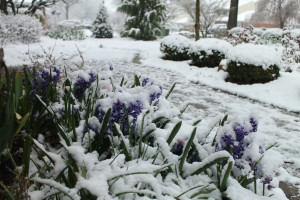
Just when we thought spring sprang, along came a couple of inches of snow this past Saturday along with near record-setting overnight low temperatures.

Just when our hyacinths and gardens thought it was spring, look what we got on Saturday.

Just when our hyacinths and gardens thought it was spring, look what we got on Saturday.

I took the snow more as an insult – a little more than a harmless, quick-melting “onion snow” but not enough to cause any lasting plant damage.

The cold was more of a problem. Temperatures dipped down into the mid-20s overnight Saturday into Sunday, close to our official all-time record Harrisburg-area low of 26 degrees for April 10.

That posed a threat to fruit trees in particular. When the flower buds on those get far enough along, they become much more susceptible to cold damage than when the buds are still tight and dormant.

Cherry trees were in full bloom heading into the weekend, and apple and pear were showing colored tips. I’m afraid it got cold enough that at least some of the buds on home fruit trees got zapped.

Cold-killed flower buds translate into no fruits later.

The good news is that even if cold kills all of this year’s flowers and fruits, it won’t harm the trees themselves. We’ll get less or no fruit this year, but trees will go back to normal production for next year.

Bush fruits such as blueberries and raspberries are slightly more cold-hardy than some of our fruit trees (especially apricots), but these also can get whacked by freeze if it gets cold enough late enough. Mine looked like they came through the cold night fine.

How much damage you see will vary depending on your location, exactly where in the yard you planted (microclimate differences) and exactly what you planted (cold tolerance varies from species to species and even variety to variety within the same species.)

Check your buds to see how everything fared. If they’re wilted or browned or “mushy-looking,” that’s bad. If they’re looking firm, vibrant and pretty much in the same shape they were late last week before the cold and snow, you’re probably good. However, if the buds drop off in a few weeks instead of forming baby fruits, it could be it was just cold enough to abort the process without being blatantly obvious.

Read More »


Musical Chairs – The Plant Version

April 5th, 2016

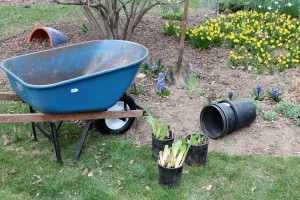
Don’t feel like a failure if you find yourself moving plants this spring – again.

Do plants enjoy a ride in the wheelbarrow every now and then?

Do plants enjoy a ride in the wheelbarrow every now and then?

This is a normal part of gardening and one that’s not only an excellent way to learn, but a key way to tweak your landscape so that it keeps getting better and better.

Think of it as the horticultural equivalent of editing.

If it makes you feel any better, know that I’m constantly playing musical chairs with my plants.

It’s something I do every fall and every spring and is one of my favorite parts of gardening.

I’ll keep an eye on how things are performing and how they look in the overall landscape.

If a plant isn’t doing well, I’ll evaluate whether it’s not getting enough sun (or too much) or whether it’s not happy near that big cherry tree or getting blasted by a little too much northwesterly wind.

A lot of the time, a move to a more suited location is like injecting it with a steroid. A happier location often turns a laggard into a decent performer – or at least a barely passable one.

If a move doesn’t help, I’ll usually try a third and different location.

By then, if the thing isn’t coming around, the fourth stop is the compost pile. A three-strikes-and-you’re-out rule seems fair to me.

Sometimes I’ll move a plant because it’s getting too big and trims are no longer an option.

This happens a lot to me because I get small trial plants every year (many of them shrubs), and I just don’t have the long-term space to grow all of them to infinity and beyond.

So what I’ll do is tuck them into a limited space to see how they do for the first few years.

If they’re doing well and showing promise, I try to find them a more spacious long-term home. If they’re marginal performers or worse, I’ll either give them to someone else to try or send them to “horticulture heaven” (a.k.a. the compost pile).

Read More »


Best Day of the Year

March 29th, 2016

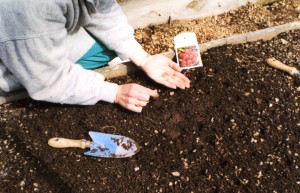
One of my favorite days of every year is planting the early-spring vegetables.

One of my favorite days of every year is planting the early-spring vegetables.

One of my favorite days of every year is cool-season vegetable-planting day.

I usually try to get peas and onions in the ground sometime around St. Patrick’s Day (which I did this year), but the “big” day is typically the last Saturday of March.

That’s when I can finally get out there and plant the year’s first glorious, frost-tolerant edibles in the warming ground… the cabbage and broccoli seedlings started under basement workshop lights, some lettuce and radish seeds, a first round of beets and carrots, and a lot more.

By the time I’m done, nearly half of my garden is planted. In another week or so, I’ll add a few more cool-season crops (cauliflower, potatoes, kohlrabi, more lettuce, more beets, more carrots, etc.) until about three-quarters of the space is filled.

Vegetable-planting isn’t a May-only thing for me. In fact, if you wait until then to start planting like a lot of gardeners do, it’s really too late to get a decent crop of the cool-preferring stuff.

Broccoli that’s trying to mature in mid-July instead of late May, for example, goes right to seed instead of forming big florets.

May-planted radishes usually end up hot and woody in 80-degree days no matter how much water you give them.

And July-picked spinach usually is bitter instead of the tender, mild leaves of a late-April harvest.

For me, May is the time to “finish off” the vegetable garden with the warm-weather tomatoes, peppers, cukes and beans… not the time to get started.

Besides the practicality of it, late-March planting is the ideal antidote to months of soil deprivation.

I like the ground black and fluffy rather than white and crunchy. And I’ll take a warm spring breeze any day over those polar vortex blasts of January.

But something else I like about planting the March veggies is that it’s a time of hope, optimism and the never-ending belief that this will be my best gardening year ever.

Read More »


« Older Ramblings and Readlings Newer Ramblings and Readlings »

  • Home
  • Garden House-Calls
  • George's Talks & Trips
  • Disclosure

© 2026 George Weigel | Site designed and programmed by Pittsburgh Web Developer Andy Weigel using WordPress