
• Home
  • Contact
  • Site Map
George Weigel - Central PA Gardening
  • Landscape 1
  • Landscape 2
  • Landscape 3
  • Landscape 4
  • Garden Drawings
  • Talks & Trips
  • Patriot-News/Pennlive Posts
  • Buy Helpful Info

Navigation

  • Storage Shed (Useful Past Columns)
  • About George
  • Sign Up for George's Free E-Column
  • Plant Profiles
  • Timely Tips
  • George’s Handy Lists
  • George's Friends
  • Photo Galleries
  • Links and Resources
  • Support George’s Efforts


George’s new “50 American Public Gardens You Really Ought to See” e-book steers you to the top gardens to add to your bucket list.

Read More | Order Now


George’s “Survivor Plant List” is a 19-page booklet detailing hundreds of the toughest and highest-performing plants.

Click Here


Has the info here been useful? Support George’s efforts by clicking below.


Looking for other ways to support George?

Click Here

George's Current Ramblings and Readlings

Scrooge: The Gardener Version

December 20th, 2016

I was dozing on the La-Z-Boy with the season’s first seed catalog when this old guy in chains wakes me up.
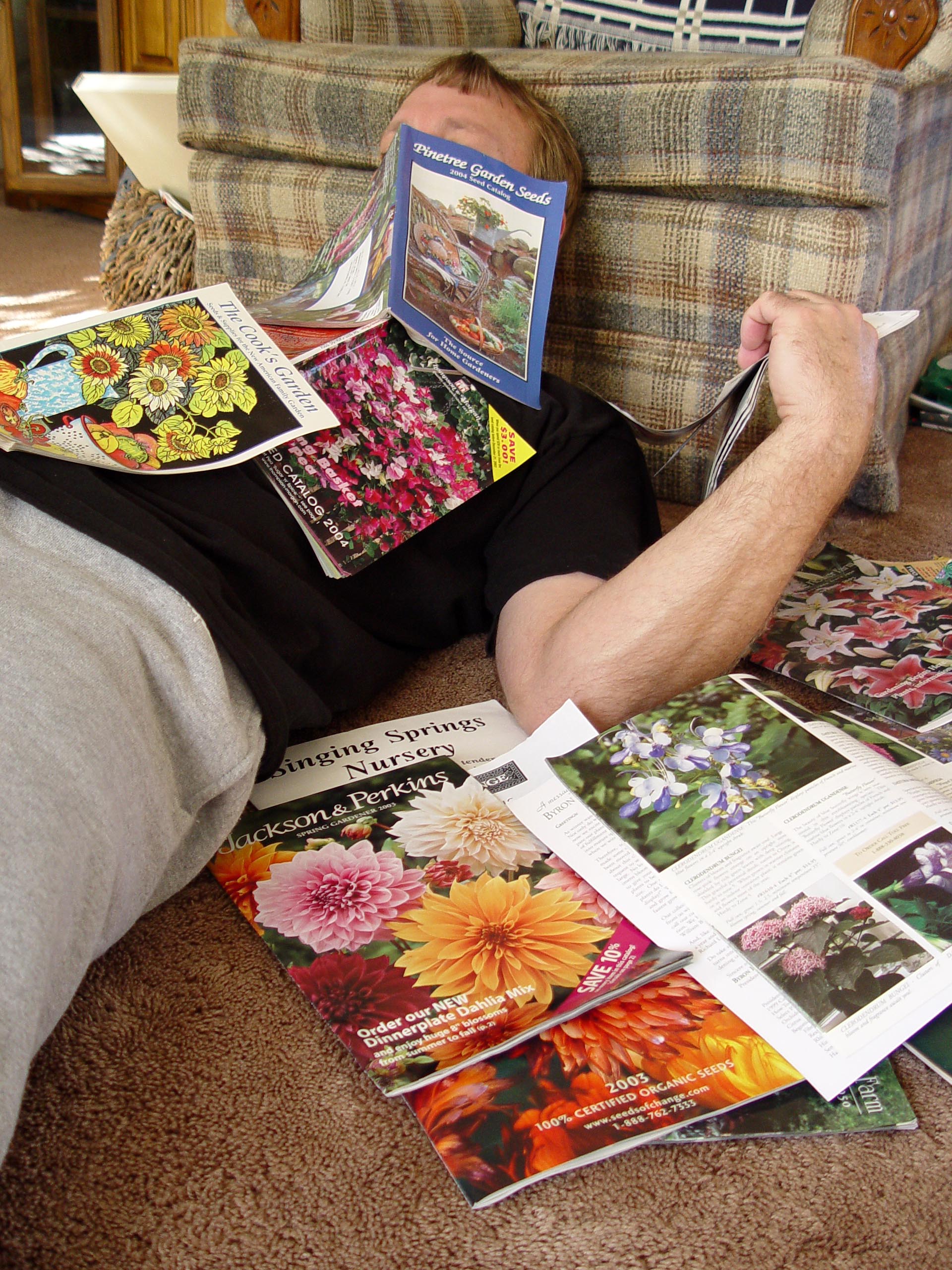
I was leafing through seed catalogs when all of a sudden...

I was leafing through seed catalogs when all of a sudden…

Before me is a scraggly, bearded fellow with compost-stained hands and what looks like worm castings on his boots.

“I am the Ghost of Gardens Past,” he says. “Behold!”

Suddenly, I’m looking at me in my first garden.

It’s a puny thing (the garden, not me).

It’s barely 10-foot square and laid out in little blocks, just like Mel Bartholomew instructed in his “Square-Foot Gardening” book.

The plants look like the “before” picture in a Miracle-Gro ad.

The soil is the consistency of brown Play-Doh.

I watch as twentysomething George proudly harvests the week’s bounty: a lollipop-sized head of broccoli, four pea pods and a radish.

A Victory Garden it is not. It’s barely an Embarrassing Defeat Garden.

Yet the smile on my face says there’s some kind of perverse satisfaction taking place.

“So what do you make of that?” asks Ghost Past.

“That I should’ve taken up handball instead?” I reply.

“Yeah,” says Ghost, “but also that in gardening, as in life, we grow from our shortcomings. We get wiser by taking stock of our mistakes and imperfections. And most of all, it’s the process that matters just as much as the results. Maybe more so.”

“Hmmm, you’re onto something there, O Soiled One,” I murmur as I doze off again.
Read More »


The Christmas Ficus

December 13th, 2016

Maybe it was the first sign of getting old… or turning Scroogey or becoming just plain lazy.

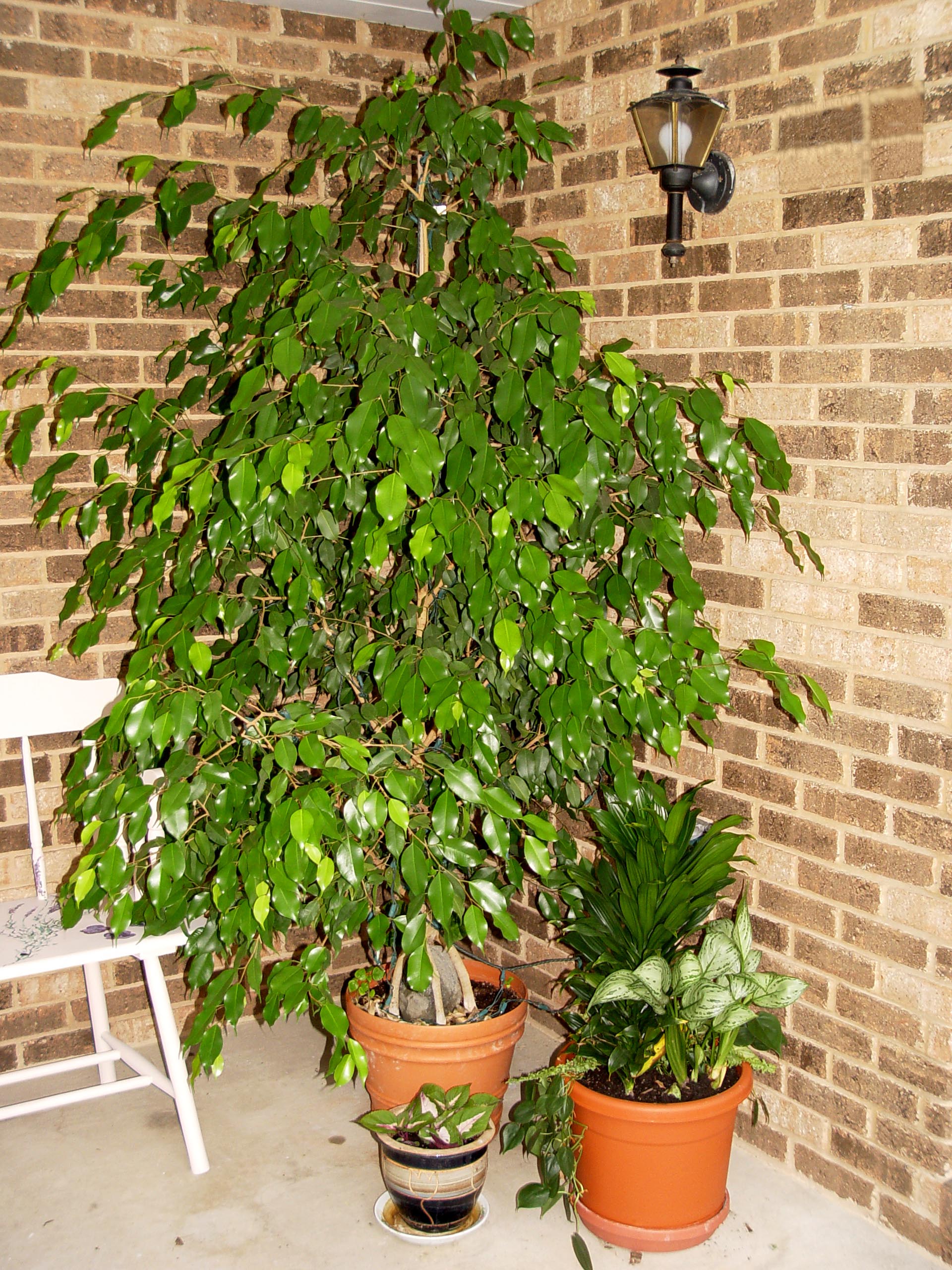
My ficus outside on the front porch before morphing into the Christmas ficus.

My ficus outside on the front porch before morphing into the Christmas ficus.

December had arrived, and it was time to go out and get the traditional cut evergreen to decorate for Christmas. We’d always done that when our kids were little.

But with the kids grown and gone and plans for our families to get together elsewhere, my wife and I wondered, “Do we really need to get a tree this year just for the two of us?”

That’s when my eye caught the 6-foot weeping fig (Ficus benjamina) tree in the living-room corner. I’d been growing this shiny-leafed beauty for about 8 years in a pot. I’d move it out to the front porch in summer, then back inside each fall.

Hmmmm. Why not decorate it?

So that’s what we did, and that was the beginning of our traditional Christmas ficus.

A lot of tree-like houseplants will serve this purpose if you’re looking for an alternative – or addition to – the usual cut needled evergreen.

Read More »


Top 10 Myths about Gardening

December 6th, 2016

So you think you know yard care, eh?

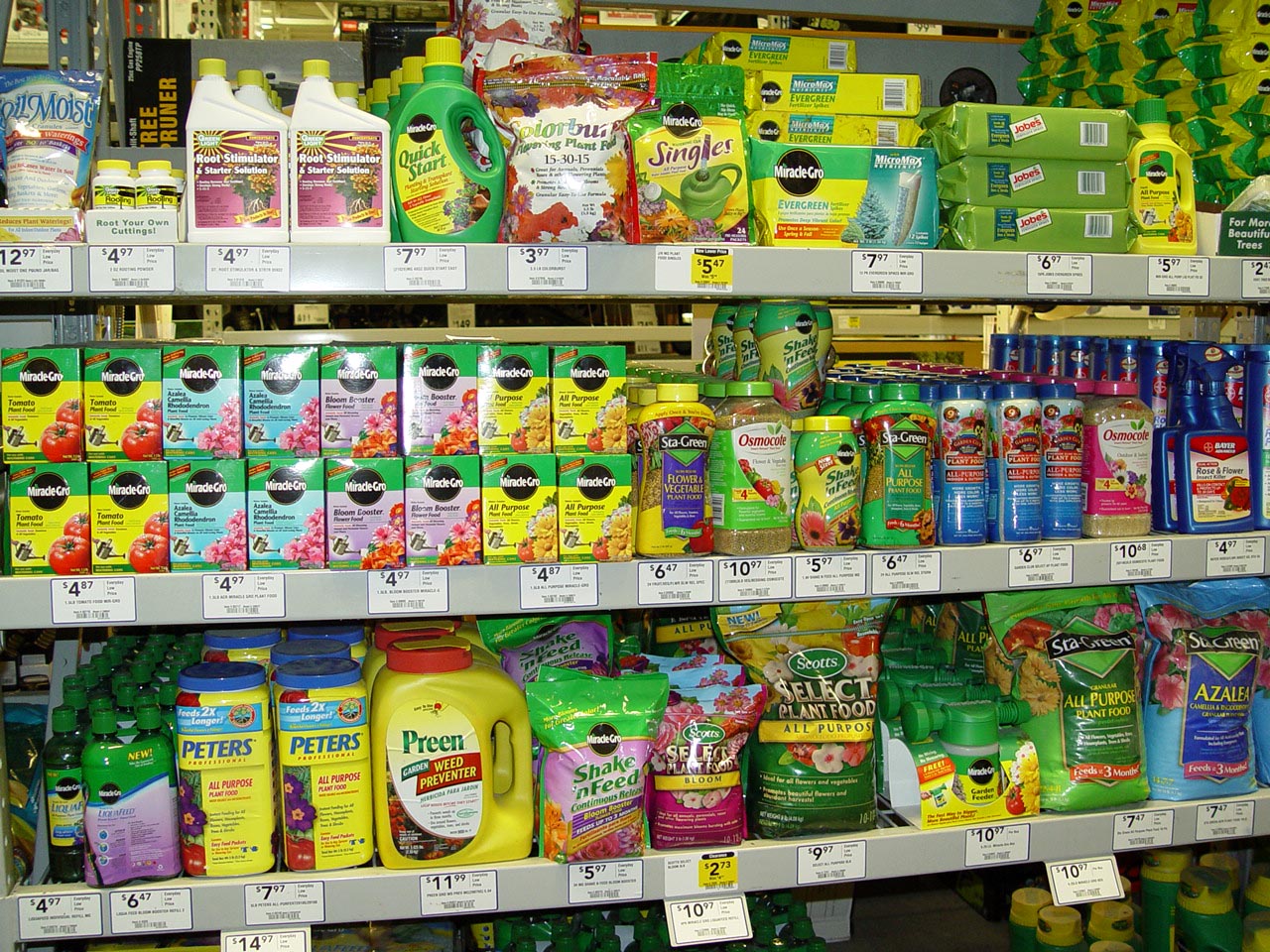
Some is good, so more must be better?

Some is good, so more must be better?

Below are 10 gardening beliefs that people think are true but that are really myths. See how many you thought were true…

   Myth 1.) A little fertilizer is good. More is even better.

Wrong. You’re wasting money by putting down more fertilizer than a plant needs or is going to use. Worse yet, excess fertilizer can burn plant roots, mess with your soil’s nutrient balance, make plants more attractive to bugs and needlessly pollute.

Add only what nutrients your soil and plants need. The best way to determine that is by doing a mail-in, Penn State soil test, available for $9-$10 at county Extension offices, most garden centers, or online at Penn State’s soil test lab.

The report will tell you what you’re lacking and exactly how much of which nutrients you should add (if any). Otherwise, you’re just guessing.

   Myth 2.) A little mulch is good. More is even better.

Two to three inches of wood or bark mulch is plenty around trees and shrubs. One to two inches is enough around flowers. Don’t keep adding more each year if you already have that much.

Excess mulch deprives plant roots of oxygen and stunts growth – even to the point of killing plants. It also takes a lot of rain to get through all of that mulch and down to the plant roots where it’s really needed.

And please don’t pack mulch up against tree trunks (known as “mulch volcanoes”). That can rot the bark and kill trees.

   Myth 3.) Bug-killers, fungicides and weed-killers work better when you mix them extra strong.

Read More »


Christmas Trees: Real or Fake?

November 29th, 2016

I know it’s tempting… those artificial or “permanent” Christmas trees are less work and look a lot nicer these days than the original ones, which were modeled (I’m serious) after toilet brushes.

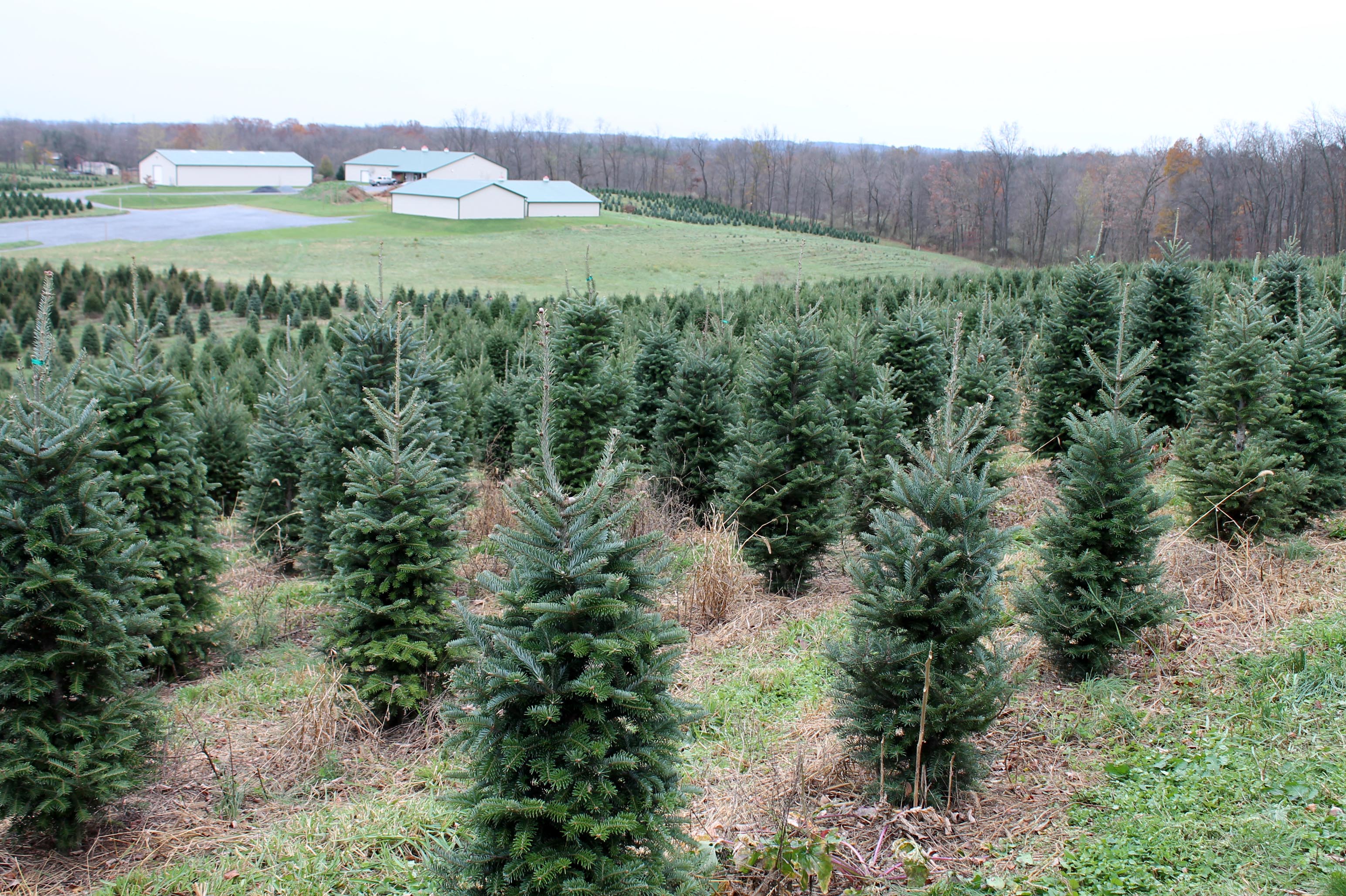
Give me a real Christmas tree from a local farm over a fake one from China.

Give me a real Christmas tree from a local farm over a fake one from China.

Many of these trees come with lights already strung. You just fold out the branches, hang a few ornaments, and you’re good to go.

No wonder so many people have gone this route instead of the old-fashioned tradition of decorating a cut real tree – or better yet, going out to a tree farm and cutting your own.

That’s what we always did when our kids were little. Picking out, cutting down, and decorating the Christmas tree wasn’t just one more chore on the December to-do list. It was a family event, and frankly, one I miss now that the kids are grown and gone.

Bringing the box down from the attic just doesn’t have the same appeal to me.

But beyond the sentimentality, there are plenty of other reasons why I come down on the “real” side of the “real vs. fake” debate.

One concern I hear about going real is that it’s environmentally insensitive to cut down evergreen trees. “Aren’t you killing a living thing in the name of decoration?” the thought goes.

Yes, you’re cutting down and therefore killing a live tree, but the truth is, that tree wouldn’t have been there in the first place if there weren’t a demand for cut Christmas trees.

Christmas trees are grown as crops. They’re planted by tree farmers – to the tune of 40 million new ones per year – specifically because people want them for holiday use.

Read More »


What’s Killing the Japanese Maples?

November 21st, 2016

It’s pretty obvious what’s been killing our hemlocks (woolly adelgids), our ash trees (emerald ash borer), and our Douglas firs (needlecast disease).

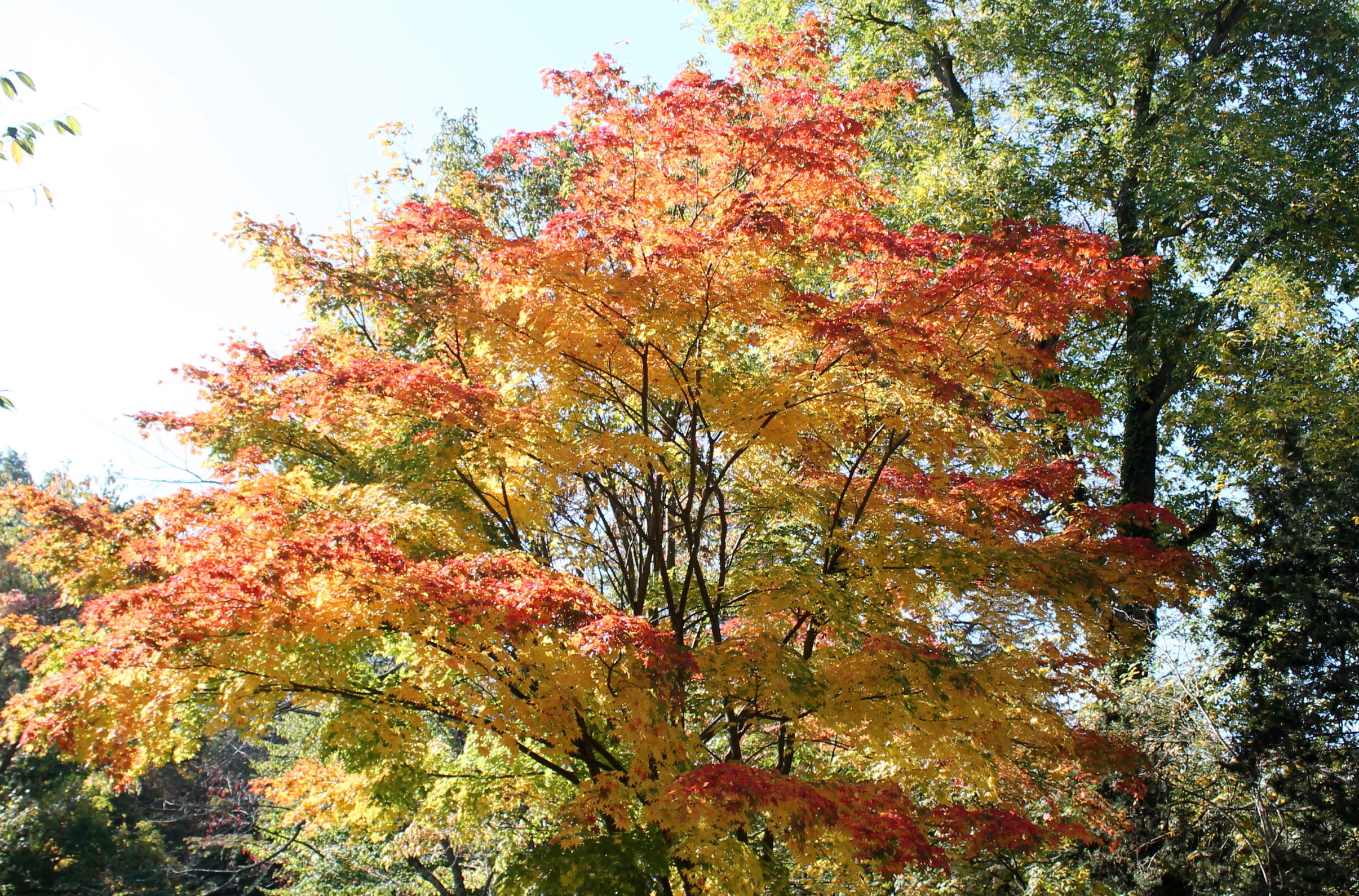
A lot of Japanese maples have been mysteriously dying in the last 2 to 3 years.

A lot of Japanese maples have been mysteriously dying in the last 2 to 3 years.

What’s not as obvious is why so many Japanese maples have been struggling the past 2 to 3 years.

The trees I see are dying slow deaths. A few branches go leafless and die here and there until there’s nothing left after a few years.

A fungal, soil-borne disease called verticillium wilt is behind some of the demise, and so, too, is the erratic weather we’ve been having. But beyond that, there’s no single, blatant explanation for why so many of these beautiful specimens are biting the dust. Worse, there’s no quick and easy fix to make it stop.

Japanese-maple death has been going on to some degree for decades, but I started getting a lot more reports about 3 years ago. That coincided with the arrival of a January “polar vortex” – the fashionable term for a blast of sudden and brutal cold from the North.

I wrote off that trouble as an isolated winter-weather killing event.

But then another round of death and dying happened 2 years ago – this time what I suspected was related to a long string of unusually warm fall weather followed by a sudden temperature nosedive that zapped trees before they had a chance to prepare for cold.

Read More »


« Older Ramblings and Readlings Newer Ramblings and Readlings »

  • Home
  • Garden House-Calls
  • George's Talks & Trips
  • Disclosure

© 2026 George Weigel | Site designed and programmed by Pittsburgh Web Developer Andy Weigel using WordPress