
• Home
  • Contact
  • Site Map
George Weigel - Central PA Gardening
  • Landscape 1
  • Landscape 2
  • Landscape 3
  • Landscape 4
  • Garden Drawings
  • Talks & Trips
  • Patriot-News/Pennlive Posts
  • Buy Helpful Info

Navigation

  • Storage Shed (Useful Past Columns)
  • About George
  • Sign Up for George's Free E-Column
  • Plant Profiles
  • Timely Tips
  • George’s Handy Lists
  • George's Friends
  • Photo Galleries
  • Links and Resources
  • Support George’s Efforts


George’s new “50 American Public Gardens You Really Ought to See” e-book steers you to the top gardens to add to your bucket list.

Read More | Order Now


George’s “Survivor Plant List” is a 19-page booklet detailing hundreds of the toughest and highest-performing plants.

Click Here


Has the info here been useful? Support George’s efforts by clicking below.


Looking for other ways to support George?

Click Here

George's Current Ramblings and Readlings

Gardening Trends of 2023

January 3rd, 2023

   The early 2000s were more about self-indulgence, but heading into 2023, gardeners are making a turn toward self-reliance.
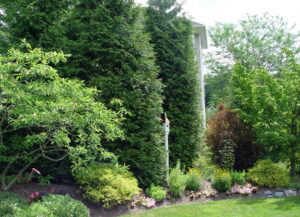
A desire for privacy in the yard is a hot trend heading into 2023.

   That’s the view from Katie Dubow, president of the Chester County-based Garden Media Group, a garden-centric public-relations company that each year produces a Garden Trends Report.

   “We’re fighting to establish ourselves in a crazy, mixed-up world,” says Dubow. “We’re educating ourselves on how to create a life that represents us, meets our needs, and reduces our dependency on people and systems… We got through COVID and grew our own food. What can’t we do?”

   She and other trend-watchers see a variety of ways this outlook will take shape on the gardening front in 2023.

“Living walls”

   Maybe we got used to cocooning during the COVID pandemic… or maybe it’s a desire to create a haven from that crazy outside world.

   Either way, people more than ever are looking for privacy in the yard, says Chris Uhland, a board member of the Pennsylvania Landscape and Nursery Association and president of Harmony Hill Nursery in Downingtown, Pa.

   “With more people living in small spaces, we see them getting creative with natural screening,” he says. “Living walls, as we call them, help create privacy, block noise, and help create rooms outside.”

   This approach goes beyond stark fences and rows of conventional arborvitae into a mix of specimen upright conifers, flowering shrubs, blooming small trees, and vine-covered arbors, trellises, and walls.

Read George’s PennLive post on eight ways to add more privacy to the yard

Gardening as therapy

   An estimated 18 million Americans took up gardening during the COVID pandemic as a way to get outside, do something healthy, eat better, and/or simply improve their mindset.

   Diane Blazek, executive director of the National Garden Bureau, thinks those reasons will continue to fuel interest in gardening even as COVID fades.

   Her take: “As more people realize the health and well-being benefits that gardening provides, they will spread the word, and even more people will garden for the same reasons.”

   Blazek points out that life stresses in general cause people to seek a “safe, calming outlet, and that is the garden… be it your own balcony or back yard, or a community garden, or even your local public garden.”

   And she adds that medical professionals are increasingly encouraging gardening as a form of therapy.

Read More »


In Case You Missed It…

December 20th, 2022

   2022 was another busy and eventful year on the gardening front.

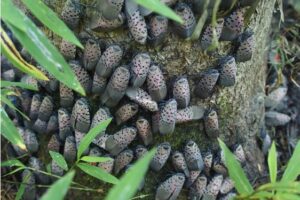
These new bugs — spotted lanternflies — made a big presence in the Harrisburg area in 2022. (Credit: Penn State Extension)

   Lanternflies showed up en masse (at least in some favored areas), lots of excellent new plants debuted, and Pennsylvania banned more plants and enacted new rules that affect how we’re allowed to fertilize our lawns.

   I thought I’d close out the year by highlighting some of what I wrote about in 2022, giving you second-chance links in case you missed a post of interest.

   Here you go… and happy 2023!

On this website (free, unlimited reads):

   I start every new year with a look at what experts say are some of the hot gardening trends of the coming year. See Gardening Trends of 2022.

   I then wrote four e-columns highlighting some of the best new plants hitting the market.

Best New Vegetables, Herbs, and Fruits of 2022

Best New Annual Flowers of 2022

Best New Perennial Flowers of 2022

Best New Trees and Shrubs of 2022

   Another best-plant rundown I do every year is plants that have won awards. See Award-Winning Plants of 2022.

   And these are some of the other topics I wrote about in 2022…

How the State’s New Fertilizing Rules Affect Your Lawn Care

The Philadelphia Flower Show is going back inside for 2023.

Lanternflies: The Grownups Are Here (including a look at whether to take action or not)

Goodbye Burning Bush and Privets (more plants Pennsylvania is banning for invasivness)

Eight Weed Mistakes (things we do and don’t do to make weed problems worse than they ought to be)

Should We Be Cutting Back on Peat Moss? (some say peat moss should be banned for environmental reasons)

My Mini-Meadow… Underwhelming So Far

My Most Favorite Gardening Jobs

My Least Favorite Gardening Jobs

Three More Deer Failures (three more strategies I tried to foil the deer that didn’t work)

Read More »


Retirement: One More Step

December 13th, 2022

   I reached another “maturity” milestone this fall – my official Social Security retirement age.

Young George just getting started with his journalism career. That’s a typewriter in front of him.

   That means I’m now in the dual-old-fogey class of qualifying both for Medicare and full Social Security benefits.

   It also means there’s good reason why I’m tired these days after spreading just two yards of mulch and why my back hurts after a half-hour of pulling weeds.

   As my mom would say, I’m no spring chicken anymore.

   I started to cut back on my typical 60-hour work week a few years ago when I retired from doing drawings and home-garden consults and cut back on the 40 or so talks I was doing every year.

   That’s when my wife, Sue, and I also moved to the Pittsburgh area to be closer to our grandkids.

   Now that I’ve crossed the Social Security waypoint, it’s time to throttle back a bit more.

   After next year’s April 29-May 11 trip to Portugal, I’m going to drastically cut back on the number of gardening trips I’ve been leading for the last 15 or so years for Lowee’s Group Tours.

   We were doing as many as 17 trips a year before COVID, but there’s no way I can keep up that pace. Driving in from Pittsburgh even before a trip goes out has made trip-leading even more tiring.

   The five weekday tours we do every year to the Philadelphia Flower Show are doable, so I plan to keep scheduling those.

   And I may be up for doing a multi-day trip once or twice a year, especially if I can hop on board in or close to Pittsburgh.

   But sorry to say, I’m going to give up the international trips and most of the day tripping we’ve done to great local home gardens as well as to the many amazing public gardens within day-trip range of Harrisburg.

Read More »


Goodbye Burning Bush and Privet

December 6th, 2022

   Five more invasive landscape plants are about to bite the dust in Pennsylvania.

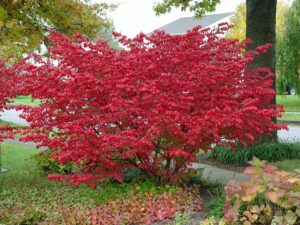
Burning bushes are to be phased out of sale in Pennsylvania for being invasive.

   Come Jan. 10, the state Department of Agriculture is adding burning bush and four species of privets (the Japanese, European, Chinese, and border types) to the state’s Controlled Plant and Noxious Weeds list.

   Burning bush is a widely planted version of euonymus that turns bright red in fall, while privet is an old-fashioned evergreen hedge plant that looks a bit like boxwood.

   Both produce seeds that spread readily, where these wild and durable non-natives usually elbow out natives that are more valuable to our local wildlife and pollinators.

   The burning-bush and privet bans are being phased in, meaning that remaining stocks of the plants will be available for sale until a stop-sale cutoff date.

   Ag Department press secretary Shannon Powers says the department will announce the cutoff dates in January along with procedures for retailers and recommended native alternatives.

   She adds that “homeowners will not be asked to remove bushes,” but they are “encouraged” to do so.

   These latest plant bans are part of a state crackdown on invasive plants that began in late 2021 and early 2022 when Japanese barberries, flowering (callery) pears, ravenna grass, Japanese stiltgrass, garlic mustard, and common and glossy buckthorns were added to the noxious-weed list.

See the full list of plants on Pennsylvania’s noxious-weeds list

   Powers said that Japanese barberries will be banned from sale as of Oct. 8, 2023, and flowering pears will be banned as of Feb. 10, 2024. Glossy buckthorn’s grace period ends in February 2023. (The others aren’t widely available in garden centers or aren’t sold at all.)

Read More »


Pet-Toxic Houseplants

November 29th, 2022

   Lots of new houseplants (gift and otherwise) show up in living rooms this time of year, which can spell bad news for curious pets. And I’m not talking poinsettias either.

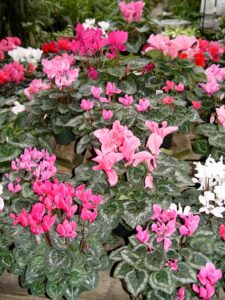
Cyclamens are popular Christmas-season plants, but they’re toxic to cats and dogs.

   Many popular holiday plants are toxic to dogs and cats, including peace lily, amaryllis, mistletoe, cyclamen, and lilies, says Anastasia Zygarowicz, who writes the Leaf and Paw blog.

   She urges pet-owners to avoid those choices in favor of safer options – or at least be a “helicopter parent” to make sure toxic plants stay out of the mouths of pets.

   She lists Christmas cactus, moth orchids, frosty ferns, Norfolk Island pine, and even the poinsettia (often thought to be toxic) as some of the least-toxic holiday plants.

   Zygarowicz is a self-described “animal-lover and plant-hoarder” who started researching pets and plant toxicity after her cat got sick from eating a dracaena.

   She says that while some pets have no interest in eating plants, others will at least sample most anything.

   What she’s learned is that in either case, don’t trust any pet, and don’t put complete trust in training or repellents because pets often act on impulse.

   “Everything can be toxic if it’s consumed in excess,” Zygarowicz said in a Great Grow Along webinar on the topic. “In general, don’t let your pets eat any of your plants. They should be eating other things.”

Read More »


« Older Ramblings and Readlings Newer Ramblings and Readlings »

  • Home
  • Garden House-Calls
  • George's Talks & Trips
  • Disclosure

© 2026 George Weigel | Site designed and programmed by Pittsburgh Web Developer Andy Weigel using WordPress