
• Home
  • Contact
  • Site Map
George Weigel - Central PA Gardening
  • Landscape 1
  • Landscape 2
  • Landscape 3
  • Landscape 4
  • Garden Drawings
  • Talks & Trips
  • Patriot-News/Pennlive Posts
  • Buy Helpful Info

Navigation

  • Storage Shed (Useful Past Columns)
  • About George
  • Sign Up for George's Free E-Column
  • Plant Profiles
  • Timely Tips
  • George’s Handy Lists
  • George's Friends
  • Photo Galleries
  • Links and Resources
  • Support George’s Efforts


George’s new “50 American Public Gardens You Really Ought to See” e-book steers you to the top gardens to add to your bucket list.

Read More | Order Now


George’s “Survivor Plant List” is a 19-page booklet detailing hundreds of the toughest and highest-performing plants.

Click Here


Has the info here been useful? Support George’s efforts by clicking below.


Looking for other ways to support George?

Click Here

George's Current Ramblings and Readlings

Bulbs Ahoy

April 1st, 2010

    That was sudden. Seems like we were just staring at mountains of white, and now the grass is greening, and the first main wave of spring bulbs is in full glory.

   The sudden and sustained warm-up has really moved things along the last two weeks. Many bulbs went from bud to peak bloom almost overnight. No problem there, but if it stays unusually warm for too long, that can shorten our show.

   Two of my favorite under-used bulbs are hitting stride right now: Siberian squill (Scilla siberica)  and glory-of-the-snow (Chionodoxa forbesii). Both of these are short bulbs 4 to 6 inches in height that slowly spread, get better with age and make excellent front-of-border edgings late March through mid-April.

   Siberian squill have blue hanging flowers, while glory-of-the-snow flowers are star-shaped and come in blue, lavender or pink. Most important: rabbits let both alone.

Hershey Gardens' tulip display.

   If your yard is shy on bulbs, check out Hershey Gardens’ humongous bulb displays. The Gardens just opened for the season last Friday, and patches of various bulbs are already up.

   The real eye-popper, though, is mid-April through the first week of May when the tulips open. Hershey’s staff planted 30,000 new ones last fall. Most are massed in patterns in the area above the rose beds – the same spot that gets replanted with thousands of annuals later in May.

   Tulips are the queen of bulbs, but they’re hard for home gardeners because rodents often eat the underground bulbs while rabbits and deer are big fans of the flower buds in spring. Tulips tend to peter out after a few years, too, which is why Hershey yanks theirs after bloom and plants fresh each fall.

   Don’t worry about covering your bulbs or even the emerging buds on your roses and other shrubs when the weather turns cold again (and it will). I got a question about that last week when frost threatened. One reader was going to go out and cover the hydrangeas and roses because leaf buds had begun emerging.

   No need to do that. Most of our trees, shrubs and perennials are adapted to our start-and-stop springs. Buds open according to day length and sunlight as well as temperature. The more tender plants are later to bud out. Early-to-open species are the ones better adapted to cold. In other words, nature usually knows what she’s doing. It’s only when we get those really erratic curveballs that bud damage happens.

   Now if you’re an adventurous gardener who likes to push the envelope by planting species that aren’t reliably hardy here (skimmia, photinia, palms, ‘Encore’ reblooming azaleas, etc.), you’ll need to take heroic action sometimes or just figure on replacing whatever wimps out on you.

   The two main classes of plants to worry about in a spring frost are annual flowers and warm-weather veggies such as tomatoes, peppers and beans. Most of these will croak when the overnight low dips below 32 degrees. That’s why most people wait at least until Mother’s Day to plant these.

Veggies Round 1

March 26th, 2010

  More than half of my vegetable garden is planted… how about you?

   Cool-season crops tolerate frosts. End of March is normally not too soon to plant onion sets, cabbage and broccoli plants, and seeds of radishes, spinach, peas, lettuce and mesclun.

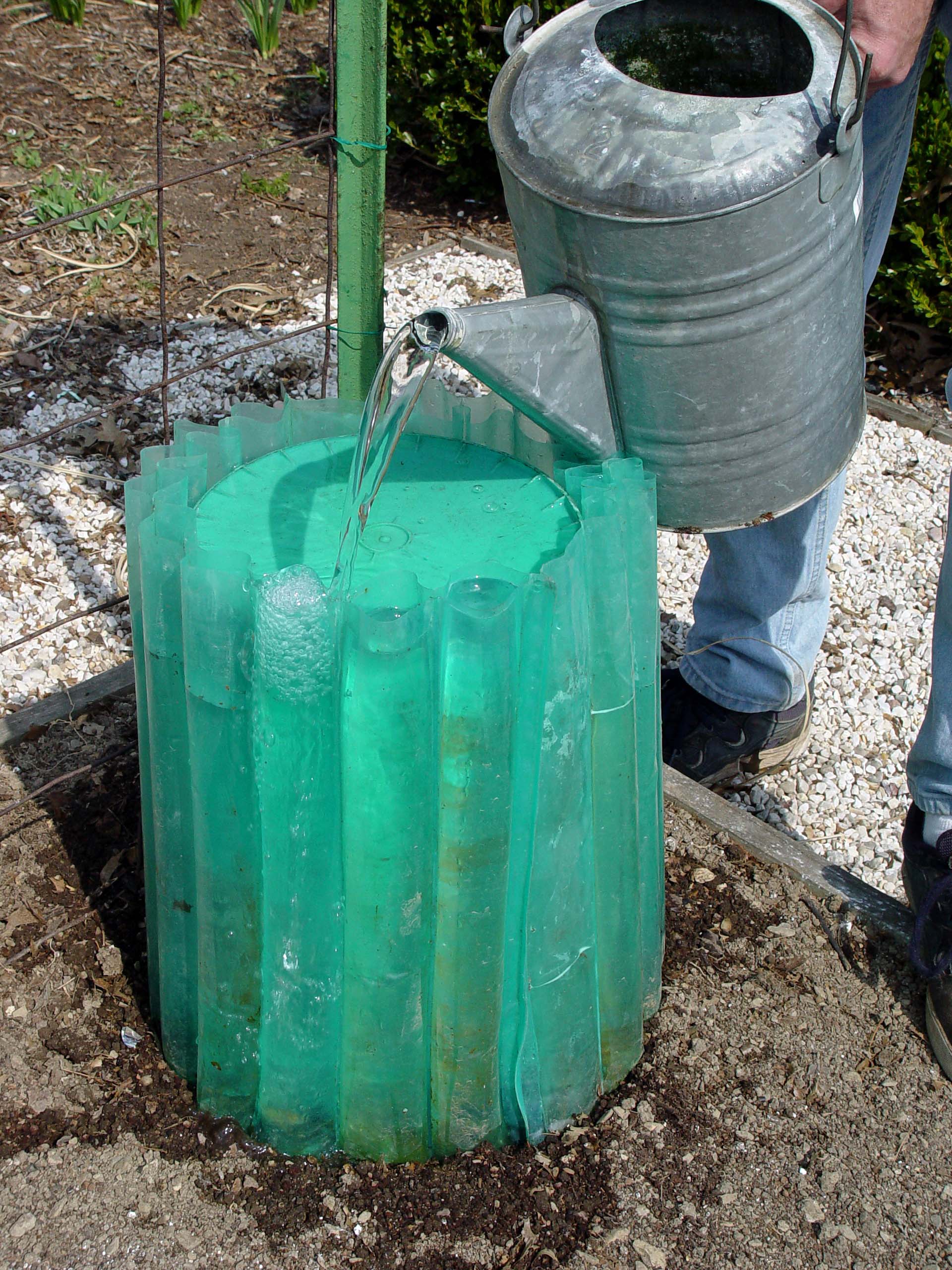
Me filling a Wall-o-Water.

   I also planted eyes of ‘Red Norland’ potatoes and even two tomato plants under Wall-o-Water plant protectors. Wall-o-Waters are circular plastic gizmos with foot-and-a-half-tall cylinders that you fill with water. Place it around a tomato, and it makes a little teepee-like portable greenhouse. The water warms during the day and keeps the plants above freezing at night inside.

   I’ve used Wall-o-Waters for 20 years and have never lost a tomato yet, even though I set the plants out April 1 or sooner. You don’t get fruits 6 weeks early, but the protection usually gives me ripe tomatoes by late June. I start my own early tomatoes under lights in the basement in late January and speed ripening by using cherry tomatoes and a very early variety (i.e. ‘Early Girl’ or ‘Ultimate Opener’) for my Wall-o-Water starts.

   Garden centers usually carry Wall-o-Waters (at least some of the time), and they’re also available through most seed and garden-product catalogs. Here’s a link to Planet Natural’s page listing them at three for $8.95: http://www.planetnatural.com/site/wallo-water.html.

   In the next two weeks, I’ll be planting seeds of red beets and carrots plus transplants of cauliflower, radicchio, chard and leeks that I started inside under the basement plant lights. Round 3 happens in mid-May when I plant the main-season tomatoes plus peppers, hot peppers, cucumbers, melons, beans and squash.

   There was a time not long ago when just about everybody had vegetable gardens. In the last 20 years, though, they’ve become almost rare around here. If I see them in one out of every 10 yards, that’d be pushing it.

   It’s been heartening to see veggies making a comeback. Lots of newbies gave it a shot last year, and I’m getting even more questions from people interested in starting edible gardens this year. I don’t think this was a 1-year fad. Hopefully it’s not just a 2-year fad either.

   Now’s a good time to dig up some of the lawn and put it to better use. Here’s a link to a past column that has some basic, get-started veggie info: https://georgeweigel.net/favorite-past-garden-columns/edibles/vegetable-gardening-rebirth.

   I just ran into a retired Hershey fellow who’s just started a business in which he’ll come out to your house and dig and install a raised-bed garden for you. His name is Jerry McNeal, and here’s a link for more info on his service: http://inadaygardens.com. The cost is $165 for a 4-by-4 garden and $259 for a 4-by-8, including materials, soil, labor and some seeds to get you started.

   Haven’t seen any groundhogs yet…


Clean-up in High Gear

March 17th, 2010

   Who needs a health club when you’re a gardener in March?

   I sure hope you all are burning calories in the glorious weather (finally!) We needed this to start whipping the landscape back into shape after the gardener-unfriendly winter. Just don’t hurt your back!

Edging with my Mantis tiller (edging blade attached).

   Although I was out edging in the rain last Sunday, it’s been perfect ever since to get all kinds of stuff done. Here’s a rundown of what I’ve been doing to help you figure out what you should be doing (or not doing) in your own yards…

   1.) Edging all the beds. The ground is soft now, which makes this job easy. I use a combination of an ice-chopper, a hoe and my handy-dandy Mantis tiller, fitted with a wheel and edging blade. Let a lip of about 2 inches to contain the mulch to be added in a few weeks. Of all the yard jobs, this really makes things look manicured.

   2.) Prune. The bulk of my plants get it now. I’ve already trimmed the hollies, nandina and boxwoods; pruned the apple and pear trees; thinned out the snowbell tree; shortened long arms on a goldthread cypress and ‘Gold Lace’ juniper; cut the red-twig dogwoods and ornamental grasses to stubs, and cut back the summer-blooming spirea, roses, caryopteris and butterfly bush. It’s all on piles ready to be chipped into mulch that goes back on my beds. Winter left surprisingly little damage.

   3.) Perennial cleanup. I don’t do much fall cleanup. Leaves make good winter insulation, and so does the dead foliage of the plants themselves. But now’s when I get out there and remove last year’s browned-out foliage of things like sedum, daylilies, mums, coneflowers, coreopsis, salvia, leadwort, etc. Although liriope is still green, it’ll brown after new growth emerges, so I just got done whacking all of mine to stubs with a rechargeable battery-operated string trimmer. For semi-evergreen perennials such as hardy geraniums, coralbells, ajuga and lamium, I just rake out the leaves and ratty foliage. All of this residue gets tossed in my compost bins.

Trimming liriope with the weed whacker.

   4.) Leaf and lawn cleanup. I still don’t clean every last leaf out of the garden beds (I’ll just mulch over top), but I do rake out bigger piles or thick mats that threaten to hinder emerging bulbs and perennial foliage. I also raked scattered leaf mattings off my lawn, and this year I raked off a few patches of dead blades caused by snow mold – a result of the long-melting snowcover. That all got composted, too.

   5.) Lawn work. I scattered 10 pounds of Greenview Fairway Classic grass seed over bare and thin spots in the lawn and roughed it in with a leaf rake. This is one of the best seed blends you can get in stores, which tend to carry cheapo stuff since most people think grass is grass and buy based on price. I found Fairway Classic at Stauffer’s of Kissel Hill. You’ll pay a few bucks more, but I think the better performance is worth it. After seeding, I put down a spring fertilizer. I used Espoma Lawn Food, a mostly organic granular product.

   6.) Veggies at the ready. I bought a bag of ‘Red Norland’ seed potatoes and a supply of ‘Stuttgarter’ onion sets at Ashcombe’s to go in the vegetable garden by the end of March. I wasn’t the only one. Early sales are off to a great start. The day I was there, the 5-pound bags of ‘Yukon Gold’ potatoes were gone. My basement-grown seedlings of cabbage, leeks, broccoli, cauliflower and lettuce also will be going outside shortly to begin hardening off and then into the garden by the first week of April.

   7.) Oil on the fruit trees. The dormant-oil spray is usually on the fruit trees by now, but the snow delayed that one until now. Oil smothers overwintering bug eggs.

   Gotta go now to transplant my tomato seedlings…


Time to get to work… er, I mean, play!

March 6th, 2010

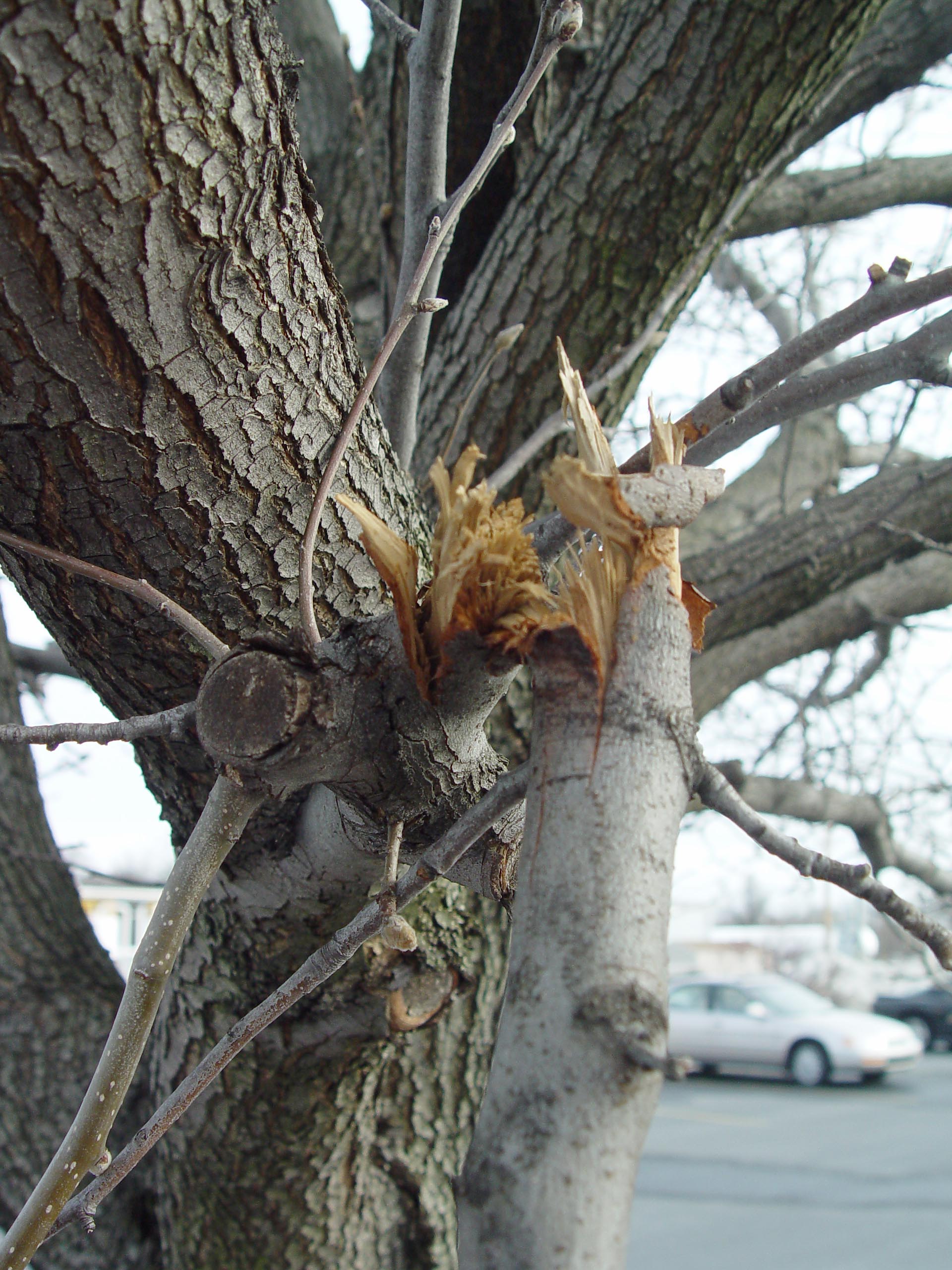
This splintered tree branch has no chance of surviving.

   The snow is gone enough that we can get out there and start to reconnect with our long-lost gardens. Soon, it’ll all be gone (the snow, not the gardens).

   I’m getting a ton of questions about broken branches – especially on Japanese maple, hydrangeas, boxwoods, white pines and similar brittle-branched species.

   Except in really horrendous break-aparts, these plants are going to live. They just might be misshapen, lop-sided or “saggy” for awhile until they fill back into shape. You can help with judicious pruning.

   First, anything that’s snapped off or that’s hanging by a thread is a goner. Prune it off as soon as you can get to it. Shattered and splintered breaks also are unlikely survivors.

   Clean splits are a different story. You might be able to bind those back together. Use a piece of old nylons to wrap the split parts back together if the branch is the size of your pinkie or less. If it’s bigger, drill a small hole and use a small galvanized bolt (or two) to hold the break together.

   If the wood hasn’t calloused over, it’s possible the split will fuse together. You’ll know by summer. If the branch puts out new growth, it worked. If it browns out, it’s dead. Then prune off the dead wood back to just above the next live shoot.

   For early-spring bloomers like azaleas, lilacs and weigelas, limit pruning now to just taking care of the breaks. If you do any heavier reshaping, you’ll cut off the flower buds that would’ve opened in April or May. Do that kind of work right after these plants bloom.

   Later bloomers such as the tree-type hydrangeas, butterfly bushes and rose-of-sharons can be whacked back as needed any time in the next few weeks. These put out flowers on wood that grows this season, so getting rid of the old wood going into the season is OK.

   Isn’t it amazing how many of the spring bulbs pushed up their foliage shoots even under 2 to 3 feet of snow? They’re going to bloom just fine and on schedule (barring any Arctic windstorms from here on out). I’ve got snowdrops blooming already and have plenty of daffodil shoots up. Some of them have yellow tips, probably from lack of sunlight buried under the snow. I’m optimistic the leaf tips will green up shortly. Even if the yellowing is from cold injury, that won’t affect the flowers. The flower shoots are still safely nestled under the mulch. 

Vole trails in the lawn.

   The snow cover was great for protecting tender and borderline-hardy perennials. And we’ll be going into the season with good soil moisture… not like a few years ago when we had some really dry winters.

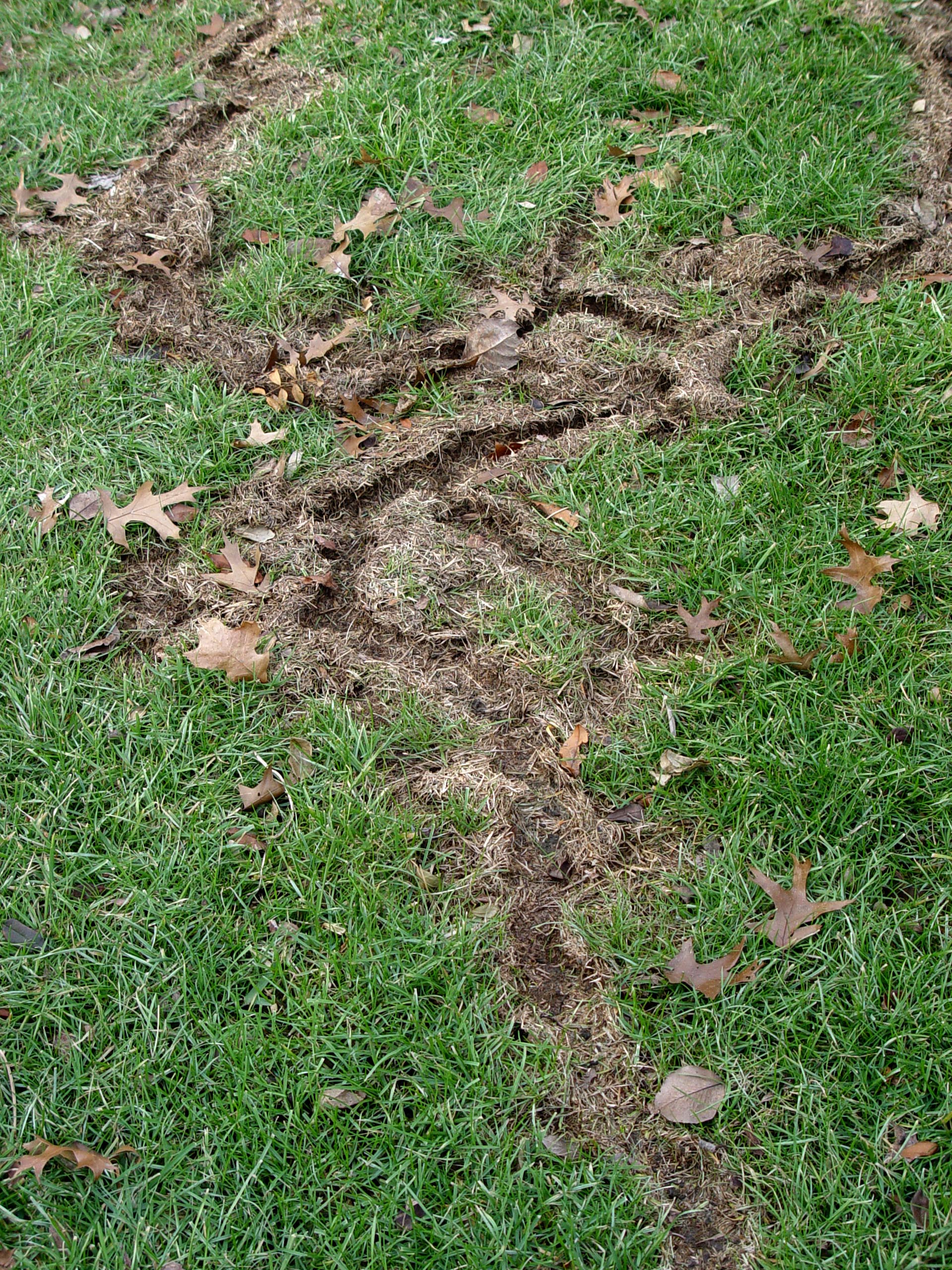
   One other thing to watch for – surface tunnels on the lawn from voles. These are the little rodents that venture out onto the lawn under cover of snow to feast on the tender blades and roots. Just rake away any browned-out left-overs and scatter a little grass seed in early April to help fill in the tunnels. Even without overseeding, the existing lawn will do a fairly good job filling back in all by itself.

   I can’t wait for a few warm days to finally get out there and get things cleaned up. Remember, if the ground is thawed, St. Patrick’s Day isn’t too early to plant the peas. I do my cabbage, onions and spinach toward the end of March.


So Much for the Edging…

February 15th, 2010

   Get used to seeing white. We’ll be looking at it for a long time. Maybe we can’t edge the beds (what beds?) or cut back the switchgrass, but a little thing like 3 feet of snow doesn’t put gardeners totally out of action until April.

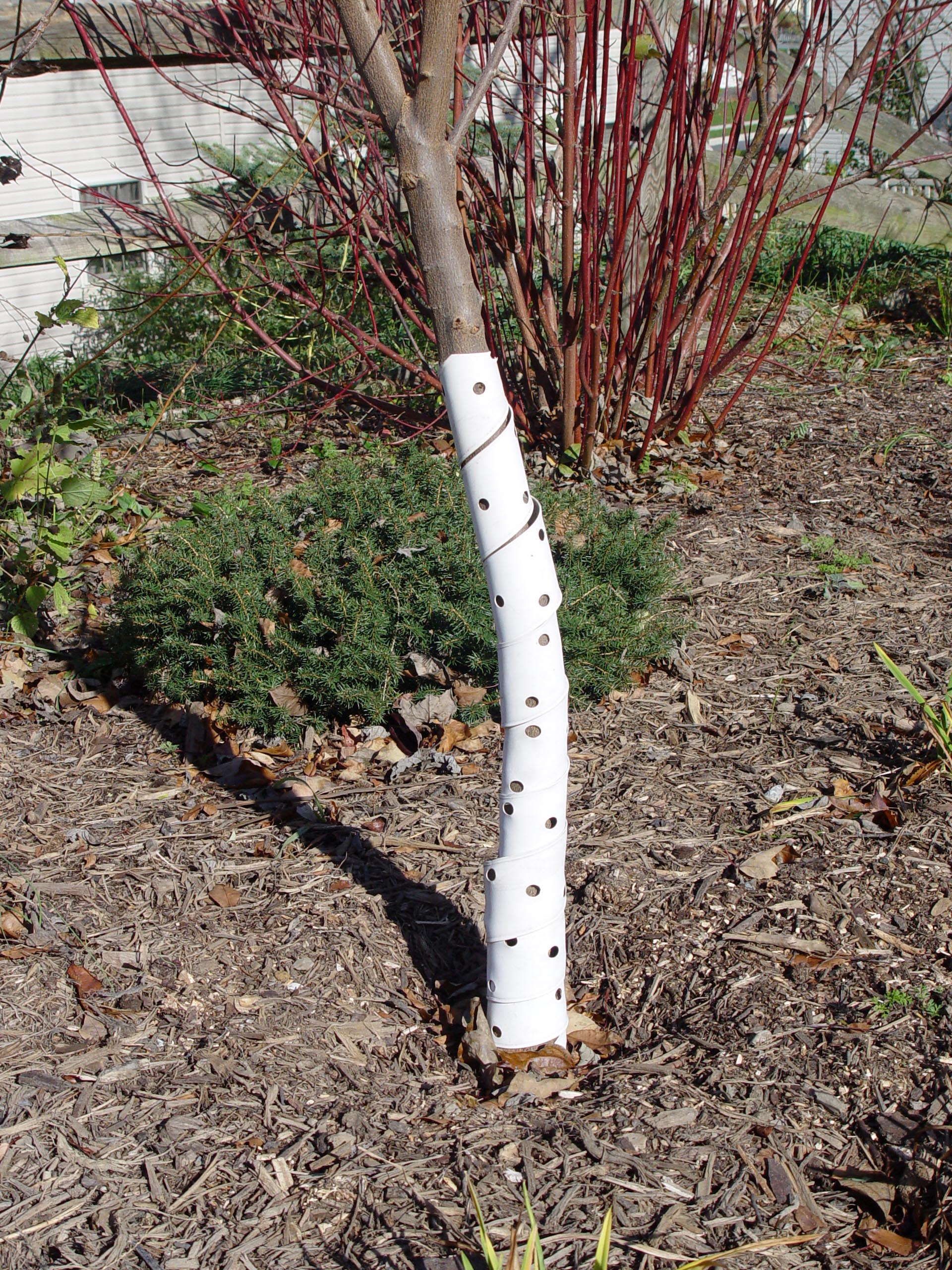
This tree-trunk protection is doing you no good now.

   One thing to watch for is animal damage high up on young trees. Rabbits in particular love tender bark – especially fruit-family trees like cherry and apple. They can kill trees by “girdling” them (chewing off a band of bark the whole way around). That’s why it’s not a bad idea to wrap young trees with plastic cylinders, wire cages or corrugated-paper wrap heading into winter.

   The problem is, unless you wrapped your trees 6 feet up, those normal 3-foot wrappings are doing you no good now. The last time we got this amount of snow, a rabbit girdled my young ‘Gala’ apple tree about 4 feet up. He/she hopped across the snowpack and had a nice snack about a foot above my protective cage.

   The good news is that although the tree died above the girdling, I salvaged it by training a shoot that sprouted in spring from below the girdling. I staked it upward to create a new leader. However, it’d be a lot easier if you just extended your wraps now. Once bark toughens up, animals usually let it alone. It’s primarily those 1-, 2- and 3-year-old trees that are at risk.

   Watch for vole damage in the lawn once this all melts. Voles (little mouse-like rodents) won’t venture out into open lawns for fear that a hawk will swoop down on them. But given cover of snow, these little root-eaters will make surface tunnels all over the grass. I’ll bet they’re down there right now having a good ol’ time. We’ll have to worry about this one later because there’s nothing we can do now.

   What you can do now is start seeds of cool-weather veggies.  I’ve got my cabbage, broccoli, leeks, cauliflower and a few early tomatoes for the Wall-o-Waters already going under lights in the basement.

   Now’s a good to order seeds if you haven’t already done that or to browse the seed racks at the garden center. The selection is best before all of the less obsessed gardeners get around to buying them in April and May.

   Get your planting plans done so you’ll be ready to hit the ground running once we can actually see the ground again. Get ideas by snooping around the Plant-of-the-Week Profiles or by visiting some of the sites listed under Links and Resources.

   Enjoy those houseplants. Sharpen your pruners. Clean your mower blades. Replenish your fertilizer supplies. And if you’re really suffering chlorophyll withdrawal, go to the garden center and wander around the greenhouses. We’ll make it.


« Older Ramblings and Readlings Newer Ramblings and Readlings »

  • Home
  • Garden House-Calls
  • George's Talks & Trips
  • Disclosure

© 2026 George Weigel | Site designed and programmed by Pittsburgh Web Developer Andy Weigel using WordPress