


Help Those Heat-Beat Plants Recover
August 26th, 2025
We should be past the worst of another summer’s heat and dryness and, if we catch a break, about to head into at least a few weeks of ideal growing time.

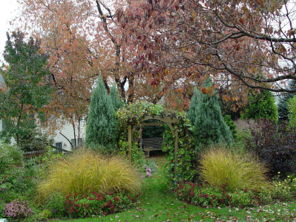
Don’t worry too much about scorched tree leaves like these.
September and October can be two of our best months for plant growth. Baking temperatures back off, the soil stays warm enough for good root growth, and we usually get a little more useful rain.
Those same conditions also are exactly what our heat- and drought-stressed plants need to recover.
Don’t despair too much over plants with brown-edged leaves or bare branches. So long as the roots are OK, most plants should bounce back. Shedding leaves is one strategy that trees and flowering shrubs employ to survive drought since those are the main way they lose moisture in summer.
The most important thing gardeners can do now to aid in plant recovery is give the ground a good, deep soaking and then keep it consistently damp right up until the ground freezes.
That should be easier to do in fall as water demands go down and rainfall goes up (usually).
Damp soil in fall aids root growth and helps plants recover from summer stresses. It also prevents plants from going into winter already dry and stressed, which is a particular threat to broadleaf evergreens, such as rhododendrons, azaleas, hollies, cherry laurels, nandinas, and boxwoods. (Evergreens continue to lose moisture in winter through their needles and leaves at a time when frozen ground can prevent them from taking up new moisture through the roots.)
Bottom line: Don’t put away the hose too soon. We can get dry spells in September and October.
You might see some of your battered woody plants and perennials push out new growth in the coming weeks. That’s a good sign, but don’t expect spring-caliber fullness since plant growth naturally slows this time of year as day length shortens and temperatures cool.
Because plants are beginning their gradual slide into winter dormancy in the coming weeks, that’s also the reason most horticulturists advise against fall fertilizing – at least with fast-acting, high-nitrogen products.
A light topping of compost is usually fine, but otherwise, fertilize only if a soil test indicates there’s a need. Otherwise, end of winter and early spring are better times to fertilize.
Read more on whether it’s a good idea to fertilize in fall or not in a Garden Professors blog post.
Another job not to do now is prune trees, shrubs, and evergreens.
First, those bare branches probably aren’t dead, so if you remove them, you might be removing perfectly healthy wood that will leaf out normally next spring (if not this fall yet).
Second, pruning woody plants now will open wounds that increase moisture loss from the plants. For trees, shrubs, and evergreens already stressed and thirsty after a hot, dry summer, that’s the last thing they need. Skip the pruners, and let the plant’s energy go into root growth and releafing – not wound-healing.
Third, pruning in fall can stimulate new growth to replace the tissue that was lost. That’s counter-productive to plants’ natural growth slowdown in fall and might produce tender young buds and shoots that only freeze to death at the first really cold spell anyway.
As for flowers, they not only coped with the same hot, dry conditions but also may have suffered from bugs or disease or raids by bunnies, groundhogs, and deer.

Dead foliage can be trimmed off of heat-beat perennials.
Most perennials should bounce back and grow normally next spring. In the meantime, it’s fine to pull off or snip off any dead or badly damaged foliage and give the plants a good soaking if the soil is dry.
You might even be able to get a second wind out of some of your annuals before fall’s first frost ends their season.
Some annuals prefer cool weather and will perk up as the weather cools, especially if you give them a light trim, a shot of fertilizer, and a good soaking. Among those that often go into a late-season flourish are alyssum, African daisies (Osteospermum), snapdragons, verbena, diascia, nemesia, lobelia, and pansies.
You can try the trim/fertilize/water routine on any other sad-looking annuals as well, but if they don’t perk up in a couple of weeks, consider yanking them and replacing them with fresh fall color.
Garden centers are loaded with cool-season annuals such as pansies, violas, ornamental kale, and ornamental cabbage this time of year, not to mention other fall ornamentals, including mums, goldenrod, asters, ornamental hot peppers, colorful-leafed herbs (sage, thyme, oregano, etc.), and baby gourds.
In the vegetable garden, keep harvesting as your summer-planted crops mature (carrots, beets, beans, etc.) and replace empty space with cold-tolerant greens, such as lettuce, spinach, and mesclun.
These quick-maturing crops still have time to mature before really cold weather ends their season in November or beyond.