




Mulch Thought Went into This
May 7th, 2013
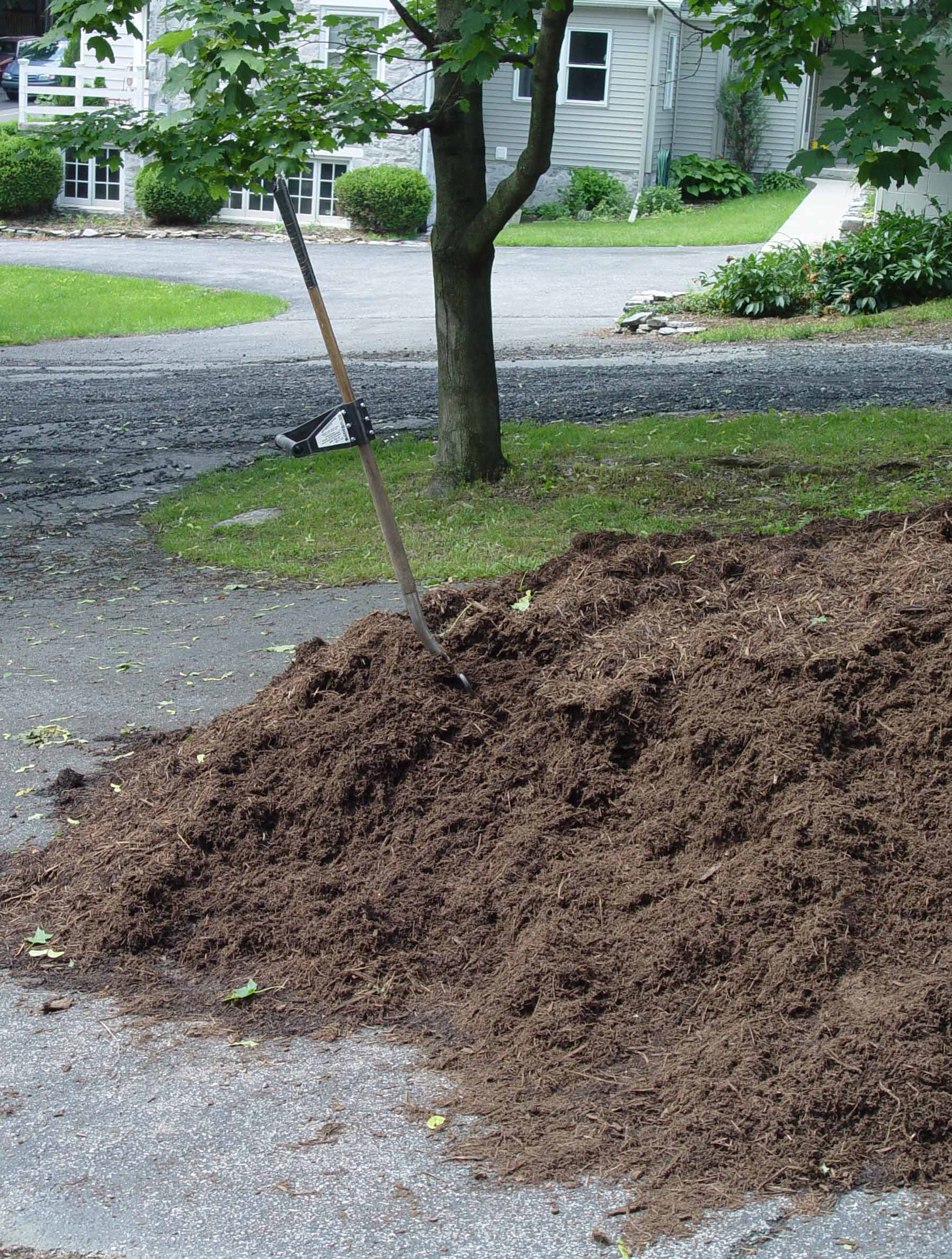
A sign of spring.
Now’s the time of year when driveways all across suburbia start sprouting large brown mounds.
That’s right, it’s prime time for mulching. And this is one gardening job that most people time correctly.
Mulch is our front-line weed defense, and it makes sense to get it down before most weeds germinate, yet not so early that you’re keeping the soil from warming up at the end of a cold, wet spring.
The dilemma I always run into is cramming mulch work into that narrow window between when the spring bulbs are ready to come down and new annuals are ready to go in.
If you don’t do much in the way of daffs and tulips and hyacinths, it’s much easier. Just get your new mulch layer down before the perennials get going and before you plant your annuals. You’ve got weeks from early April to mid-May in that case.
Some people mulch first and then plant their annuals.
Either way is fine. Just go easy on any mulch around annuals. One inch is plenty… and keep it back from touching the tender, young stems.
What gets me as an obsessive bulb-planter is that my bulb foliage usually isn’t “ripe” enough to cut yet when I’d like to get my summer annuals planted in that space (right around Mother’s Day).
You’ll weaken the bulbs and their future bloomability if you cut the foliage while it’s still green and making nutrition.
So what I do is mulch around the bulb foliage, then plant the annuals as soon as I cut the bulb foliage in a few weeks. It’s not an ideal arrangement, but at least the mulching is done before the bulb/annual switchover.
If I had the time, I’d do it all in one shot in this order: A.) Cut the bulb foliage when it’s yellowing, B.) Lay down a fresh 1-inch layer of mulch where the annuals will go (assuming there’s not already an inch left over), and C.) Plant the new annuals into it.
Since that’s not going to happen any time this side of retirement, I do what I can when I can. Lately, I’ve been shifting about half of my mulching to fall after the annuals are out and many of the perennials are cut back.
While an inch is plenty around annuals, 1 to 2 inches is good for around perennials and 2 to 3 inches is good for around trees and shrubs. That’s total, by the way. If you’re shooting for a 2-inch layer, for example, and you already have an inch left from last year, then just add a 1-inch topping.
Don’t keep dumping more and more on top so you end up with a thick crust that can interfere with the soil’s oxygen intake and its ability to take on water in dry weather and give it up after a heavy rain.
That brings us to the big question of what kind of mulch to use. For what it’s worth, here’s my Twitterish opinions on various types:
* Shredded hardwood. Also referred to as “tanbark,” this is the most common kind that’s made of ground-up wood. It’s cheap, readily available and does an excellent weed-choking job. But it’s also prone to growing the artillery fungus that shoots those annoying sticky dots onto siding and to crusting over, at which stage it repels water. Shredded hardwood is best on slopes (where its crusting tendency is a plus) and shrub beds away from surfaces where you don’t want to risk artillery fungus.
* Bark mulch. My favorite choice because it isn’t a likely source of artillery fungus, it looks natural and it “breathes” better than the knit-together shredded hardwood. It’s available in bulk or bags, although not all mulch vendors sell by bulk. I like the ground-up, nearly soil-like version of it as opposed to bark nuggets (look like big brown cookies to me) or mini-nuggets (which slide down banks and sometimes blow around).
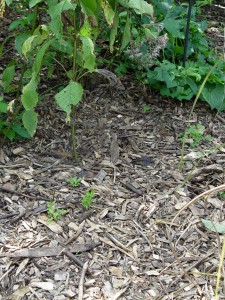
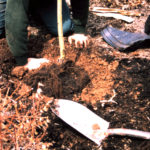
Wood chip mulch.
* Wood chips. Also an excellent choice, these are more thick flakes than shreds and come from tree companies cutting down dead or overgrown trees. Some people don’t like them because they look a little “rough” compared to that brown-carpet look of shredded hardwood. But chips can be cheap (maybe even free), and they don’t “rob the soil of nitrogen” as often accused (at least not to any meaningful degree where it counts in the root zone).
* Colored mulch. Pass. First, these dyed mulches look unnatural to me, especially the brick-red version. Second, I suspect some of this wood comes from ground-up pallets that may have who-knows-what, depending on what was shipped on them. And third, it’s hard to say what’s all in the colorant. Black, from what I’ve read, contains “carbon black,” which comes from burned coal tar. And fourth, I’ve had users tell me they’ve had the dye wash off in cases where it wasn’t processed correctly. It’s also more expensive.
* Pine needles. I like them. They breathe well, they’re a good way to recycle natural materials, and they don’t cause excess soil acidity as some people believe. These are widely used in the South. I’m not sure why they’ve never caught on here. I think it’s because Northerners just aren’t used to the look. As a result, they’re also not readily available here, and when they are, they’re expensive.
* Mulch over weed fabric. This sounds like a good idea to people trying to reduce maintenance. Unfortunately, it doesn’t work out that way long term. At first, the combination seems to do a great tag-team job. But then as the mulch breaks down, it becomes an excellent weed-germination medium. By years 4 and 5, I typically see grassy weeds coming up through microscopic holes in the fabric, weeds growing on top in the decomposed mulch, and plants gasping for air from the fabric’s interference with the soil’s oxygen-exchange and evaporation ability. You could pull or spray the weeds or put down new mulch at that point, but if you’re doing that anyway, what’s the point of the fabric?

Pine needles or “pine straw” as mulch.
* Stone over weed fabric. Stone alone doesn’t do a very good weed-preventing job, unless you put down a heckuva lot of it (back-breaking and expensive). The thinking is that if you put fabric underneath, the two will do the job. But similar to mulch over fabric, you’re good for the first year or two, but then leaves and dirt blow in to make a good weed-germination medium. And again, the fabric interferes with soil oxygen exchange and evaporation. This option is a decent one in pathways where you’re not growing plants, but be aware you’ll still have to do some weed policing down the line – or take up everything to clean it out and start over if/when the weed outbreaks get bad enough.
* Leaves and/or grass clippings. Both good because they’re natural and recyclable (and free) on-site materials that add organic matter and nutrients as they break down. Leaves work best when they’re shredded (less likely to mat down), but they’re fine when left where they fall at moderate levels to mulch tree, shrub and evergreen beds. Grass clips are good when no herbicide has been used and when they’ve been left to dry a bit first. Green ones can heat up and cause plant wilting. These are my top two picks for veggie gardens. They do break down fairly fast, though, so you’re getting one season – if even that – from them.
* Cocoa shells. Even Hershey Gardens doesn’t use this as mulch, so that should tell you something. I’ve seen them blow around and also mold. They’re not that great of a weed-preventer in the first place, and they’re more expensive than most mulches. Some people question pesticide content. The main attraction is the chocolately scent, but that goes away quickly once the shells are laid out in the air.
* Peat moss, mushroom soil or compost. Definitely not peat moss. It dries fast and then doesn’t rewet well. The other two are excellent soil amendments (i.e. worked into the soil to improve it), but they’re not all that great on top as mulch. One reason: weeds germinate very well in this good stuff. Bark and wood block sprouting much better.



and the coco mulch is attractive to pets but poisonous
Poisonous at least to dogs… another good reason why I don’t think this is a good choice for mulch material.
I am in the middle of a mulch matter! One gardening friend says “don’t mulch too close” to perennials “it’ll kill them”. The other gardener mulches right up to the perennial’s stem. I tried the “mulch pretty close to the stem” this spring and my perennials seemed to “cook” a bit in the first sunny days. Even my hearty “Angelina” groundcover is looking pretty sparse now. I pulled some of the mulch back and things seem better. What’s your advice?
George, what are your thoughts on mulch and leaf cleanup in the fall. How do you get the leaves up without raking up or vacuuming up the mulch? But if you let the leaves lie where they fall on top of the mulch, won’t they break down (for the most part) into lovely humus by spring? I haven’t been a big mulch user, but I need to become one as the weeds are winning.
Susan,
I get to be the mulch referee, eh?
The ideal is to keep mulch off of plant stems. Especially when mulch is hot, it can shock the tender stems of emerging perennials (as you’ve seen). That happens a lot because most people mulch at the same time that those young shoots are just emerging (i.e. early May).
However, a few plant species are sensitive to the tannins in wood mulch at any temperature.
Usually you won’t see this kind of reaction if the mulch isn’t hot (i.e. off the top of the pile) or if you’ve mulched first and are planting into it. Once the mulch is spread over the ground and aired out a bit, it cools off enough to head off heat shock.
Another option if you’re putting down hot mulch is to hose down sections as you go.
Or periodically rake out the pile so the mulch has a chance to cool off before you spread it.
In all cases, it still helps to always let a little air between your plant stems and the mulch.
Margaret,
I let most of my leaves fall into my garden beds and then I top the partly decayed leaves with a light, fresh layer of wood mulch in the spring.
That game plan saves raking and wasting leaves, and the mulch topping gives that clean look in the spring.
The only leaves I remove are ones getting too thick to mow on the lawn and ones that are matting down evergreen groundcovers.
I’ve found mulch and leaves not only stop most weeds, they add nutrients and organic matter to the soil as they break down. It’s when you leave the soil bare that most weeds really get going. Removing leaves (nature’s main “mulch”) is likely to lead to more of a weed problem.
I also hold down weed problems by getting plants that I want filled in. My beds don’t have a lot of open space to start with – a strategy that limits how much mulch I have to use, too.
I’ve got more on this leaf-the-leaves issue in a garden column at http://georgeweigel.net/georges-current-ramblings-and-readlings/love-em-and-leave-em.
George,
I had a terrible time with artillery fungus a few years ago. Research on line advised to pull up the old shredded hard wood which provides a very likable environment for the stuff and try cypress. I couldn’t locate cypress so I returned to the internet. The second choice was a “Right Dress” (dare I drop a commercial name?) of licorice root mulch. It seems to have solved the problem. It’s a bit more than “typical” mulch but it sure does beat scrapping off the little black dots from my white PVC railing. It seems to break down less rapidly as well. Comments? Someone told me to avoid using it around pine trees but I can’t find anything to confirm that.
Jim,
Penn State did a study years ago on how susceptible various mulches are to artillery fungus. Shredded hardwood (the kind most people use) came out high on the list. I think licorice root was fairly low, but pine bark nuggets also came out as very good at discouraging artillery fungus growth. Pine bark mini-nuggets and pine bark mulch are more finely ground versions of the same thing. Pine bark mulch is available in bulk and more affordable than licorice root or cypress.
Another good solution is blending 40 percent mushroom soil with 60 percent wood mulch. That pretty much stops the fungus in its tracks. Don’t know if anyone locally is selling it pre-mixed, but most bulk vendors sell both mulch and mushroom soil and should be able to mix a load for you. Or else you could mix it yourself as you go if you opt to try that over bark mulch.
Here’s a link to a piece I wrote on this: http://georgeweigel.net/favorite-past-garden-columns/artillery-fungus-answer
Happy Spring George !
Was reading all about people’s experience with artillery fungus, including your input on it. From what I have learned about this obnoxious stuff is that once you have it you cannot get rid of it. It is permanently in your soil and will grow in mulch with ANY WOOD in it. Shredded, bark, licorice root, etc. is not immune. I just had to take out all my old shredded mulch and put down leaf compost to prevent it from emerging. People can prevent it from emerging also by putting down a fresh layer of mulch every year in early Spring before the rainy season starts (rain causes them to explode) but they HAVE to be diligent about doing it every year.
Thank you for your articles on gardening and have a wonderful year.
Hi Debbie,
That is correct that this fungus feeds on wood, so if you have any wood in the mulch, infestation is possible — until all of the wood finally decays. Penn State research found that some types of wood are a better medium for artillery fungus than others. The more wood you have (especially in the second year once decay is under way), the greater the potential fungus population.
Penn State also found that the fungus didn’t grow well in bark. So if you stick with 100 percent bark mulch, you should be able to drastically limit those annoying sticky black dots on the siding. The problem is, from the bulk “bark” I’ve bought, there is wood mixed in.
Switching to non-wood mulch like leaves or pine needles is an excellent option. So is mixing 60 percent mulch with 40 percent mushroom soil, which Penn State research found greatly diminishes the “dotting.”
And as you mention, an entomologist at the state Department of Agriculture once told me that continually topping your mulched bed with fresh mulch each year is enough to keep a lid on rampant problems.
George